


Ethicist: It is widely believed that it is always wrong to tell lies, but this is a rule almost no one fully complies with. ██ █████ █████ ██ █████ ███ ███████ ███████████ █████ ██ ███ ██ ██ ███████ ███████ ██ ███ ████ ███████ ███ █████ ███████ ███ ██████████ ███████████ ██ █████████ ████████████ ████████ ██ █████████████ ████ ██ ███████
The ethicist presents a conditional statement that tells us when it’s okay to lie:
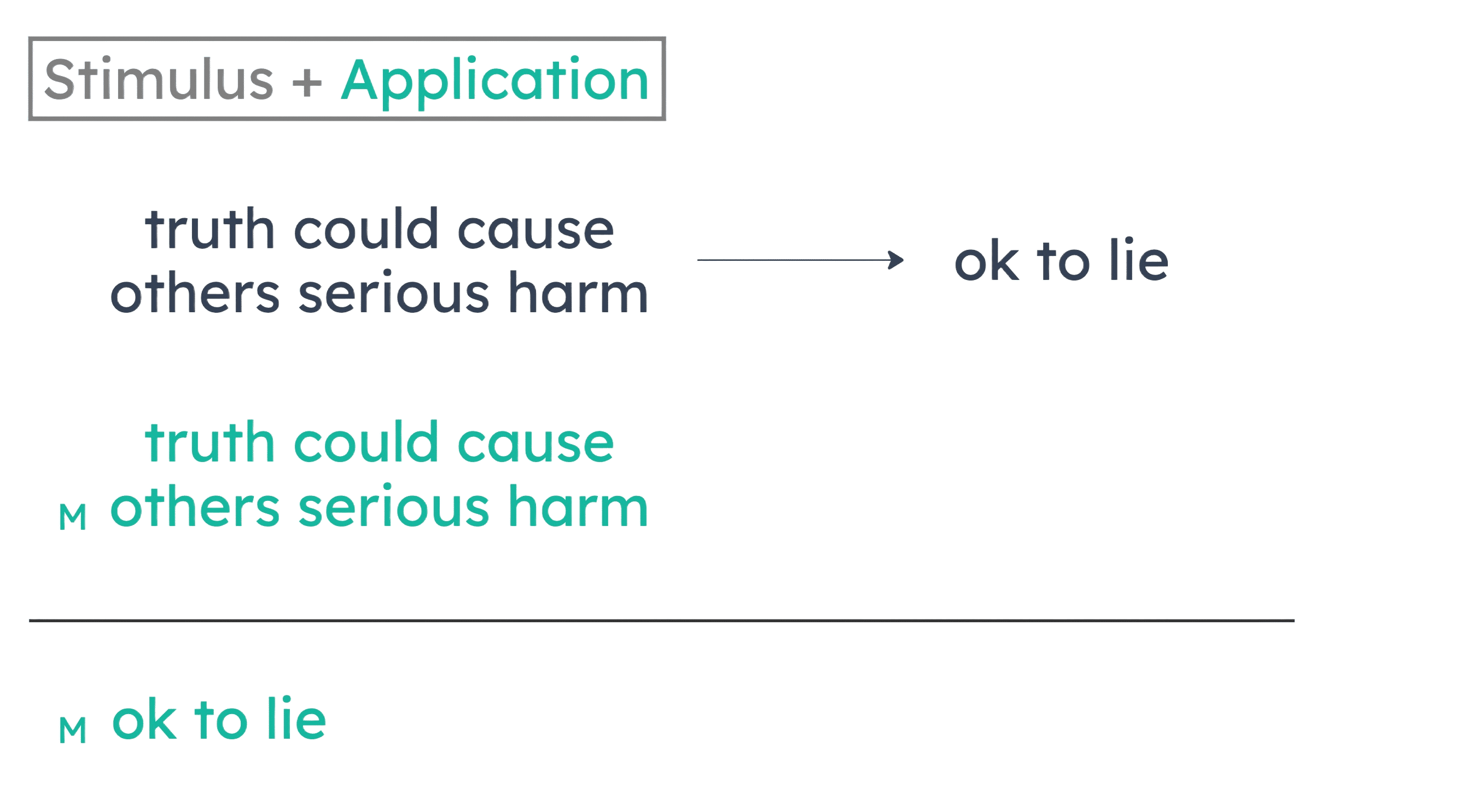
If the truth would cause other people significant physical or emotional harm, then it’s okay to lie.
We need to find the right application of the ethicist’s principle. We’ll do this by choosing the answer choice that highlights a situation in which it’s okay to lie. This means we’ll be looking for a situation where the truth would cause other people significant physical or emotional harm.
Which one of the following ████ ███████ ████████ ██ ███ █████████ ███ ████████ █████████
When Juan asked ████ ██ ███ █████ ████ ████ █████ ██ ███ █████ ██ ██████████ ████ ████ ████ ██████ ███ ████ ████ ███████ ███ ███████ ████████ ████ ███ ███ ████ ███ ████ █████ ███ ███ ████ ███ █████ ██████ ██ ███████████ ███ ██ █████████████ ████████ ███████████
Wrong trigger. Judy lied to Juan, but we don’t know if it was okay. We’re looking for a situation where the truth would cause significant harm, not simply make someone miss a good movie.
A daughter asked ███ ██████ █████ █████████ ██ ██████████ ███████ ██ ██████ ██████ ██ ████ ██ █████████ ██████ ███ ██████ █████████ ██ ██████ ██ █████████ ████████ ██ █████ ██ █████ ███████████
Wrong trigger. The dad lied to avoid having to talk to his daughter about politics. We don’t know if an awkward political discussion would have caused any serious harm, so we don’t know if it was okay for him to lie.
A husband told ███ ████ ██ ████ █████ ██ ██ ██ █ █████ █████ ██████ ██ ███ ████████ ███ ██████ █████ ██████ ███ ████ ███ ██████████ █ ████ ███ ████ ████ █████ ██ ██ ████ █████ ██ ██ ███ ██ ██████ ███ █████ ██ █████████████
Wrong trigger. The husband lied to avoid any inconvenience. Inconveniencing someone is not the same as causing them serious harm, so we don’t know if it was okay for him to lie.
A young boy █████ ███ ██████ ██ ███ █████ ███ █████ ██████ ████ ████ ███ █████ ████ ███ ██████ ████ ███ █████ ████ ████ ██ ███ ████ ███████ ████ ██████ ██ ███ ███ █████
A mother telling her young son she loves his sister more than him could reasonably be expected to cause serious emotional harm. This triggers the sufficient condition of our conditional statement, so it was okay for the mother to lie.
A friend invited █████ ██ █ ██████ ███ █████ ███ ██████ ████ ██ █████ ███ ███ ███████ ███ ███ ███ ███████ ██████ ██ █████ ███████ █████████ █████ ██ ████ ██ ███ █████████████ ██ ███████ ███ ██████ ███ ██ ███ ███ ████ ██ ███ █████ ███████ ███████ ██ ███ ██ █████
Wrong trigger. We want a situation where other people would be seriously hurt by the truth. Jamal is lying for his own selfish reasons, and isn’t sparing anyone else harm.
Answer five questions and we'll estimate your score.
It takes about five minutes.
Take the free diagnosticWant to know why the right answer is right?
7Sage membership unlocks explanations of every question. Every answer choice. On every official PrepTest. Start with a free account.
By signing up you agree to our
terms of service.
This site is protected by reCAPTCHA and the Google
Privacy Policy
and
Terms of Service
apply.