


Support People who do not believe that others distrust them are confident in their own abilities, so Conclusion people who tend to trust others think of a difficult task as a challenge rather than a threat, since Support this is precisely how people who are confident in their own abilities regard such tasks.
People who tend to trust others think of a difficult task as a challenge rather than a threat. Why? Because people who don’t believe others distrust them are confident in their own abilities, and those confident in their own abilities think of a difficult task as a challenge rather than a threat.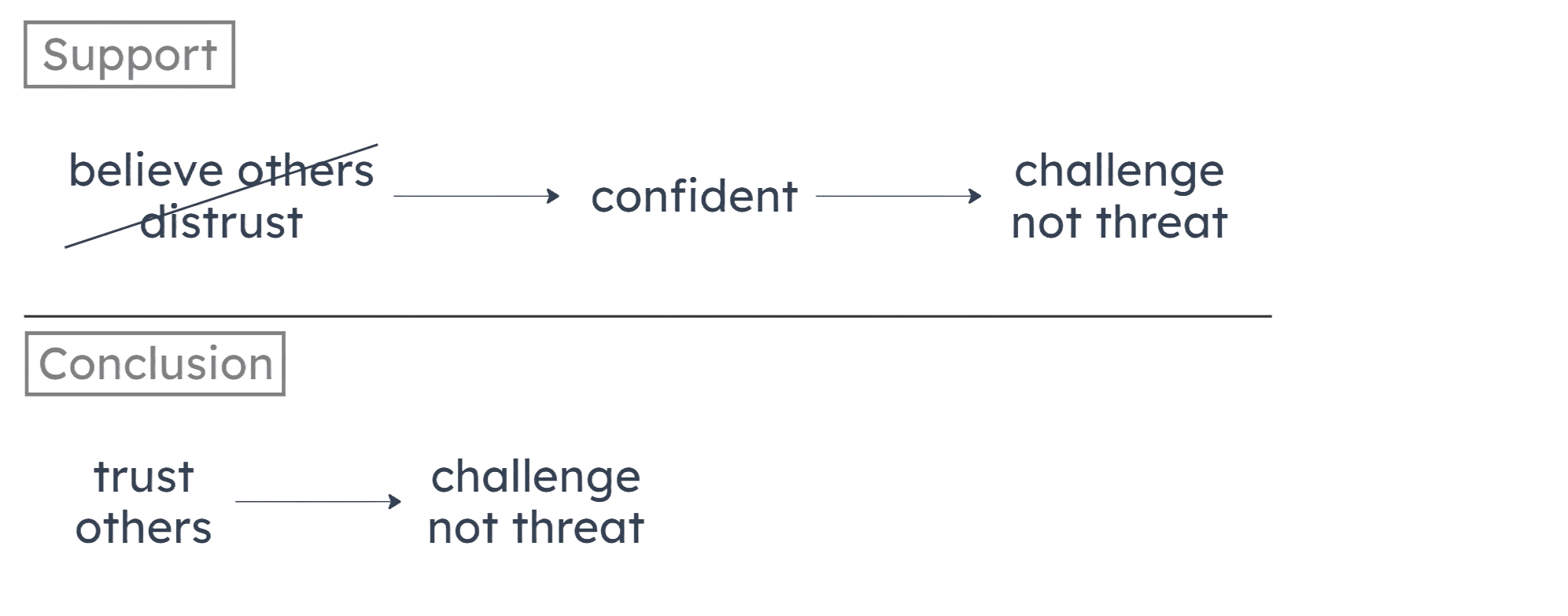
The conclusion is that those who tend to trust others think of a difficult task as a challenge rather than a threat, but the premises say nothing about people who tend to trust others.
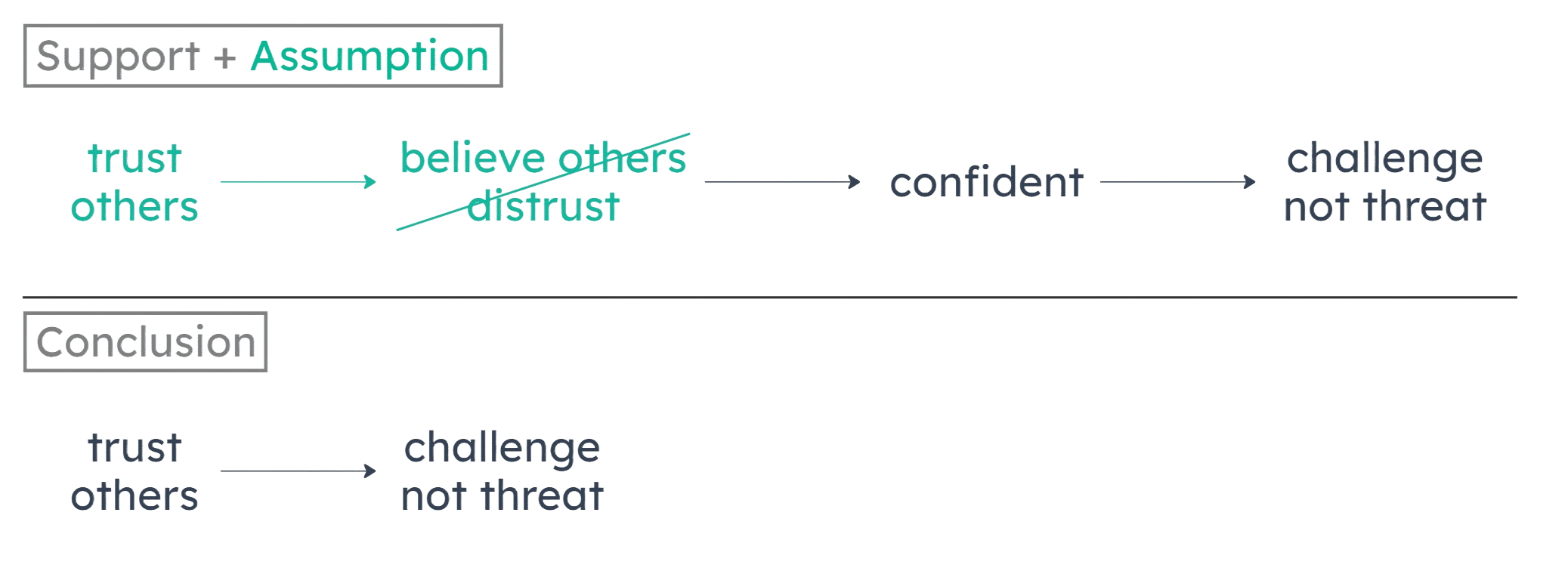
How to get from the premises to the conclusion? Based on the premises, we know that those who don’t believe others distrust them are confident in their own abilities and, therefore, think of a difficult task as a challenge rather than a threat. We can make the argument valid if we assume that people who tend to trust others don’t believe that others distrust them or that people who tend to trust others are confident in their own abilities.
The conclusion above follows logically ██ █████ ███ ██ ███ █████████ ██ ████████
People who believe ████ ██████ ████████ ████ ████ ██ █████ ███████
We don’t need to know whether people who believe that others distrust them tend to trust others. To validate the author’s conclusion, we need to know that people who tend to trust others don’t believe that others distrust them or that they are confident in their own abilities.
Confidence in one's ███ █████████ █████ ███ ██████████ ██ ███ ███████████████ ██ ███████
Whether having confidence in one’s own abilities leads to one trusting others doesn’t affect the author’s conclusion. Rather, if this answer choice were flipped and said that trusting others led to confidence in one’s own abilities, it would validate the author’s conclusion.
People who tend ██ █████ ██████ ██ ███ ███████ ████ ██████ ████████ █████
We know that people who don’t believe that others distrust them think of difficult tasks as challenges rather than threats, so (C) guarantees the author’s conclusion. If people who tend to trust others don’t believe that others distrust them, then they also think of difficult tasks as challenges rather than threats.
People who are ███ ██████████ ██ █████████ █████ ████ ██ ████ ████ █████ ████████████
(D) doesn’t address people who tend to trust others, so it can’t be right. The conclusion is about people who trust others, yet the premises don’t mention people who trust others. (D) fails to explain what, if anything, people who tend to trust others have to do with the argument’s premises.
People tend to ████████ █████ ███ ████ ███████ ████ ████████████████
This says nothing about people who tend to trust others, so it can’t be right. The conclusion is about people who trust others, and the premises don’t mention people who trust others, so the correct answer choice must bridge this gap.
Answer five questions and we'll estimate your score.
It takes about five minutes.
Take the free diagnosticWant to know why the right answer is right?
7Sage membership unlocks explanations of every question. Every answer choice. On every official PrepTest. Start with a free account.
By signing up you agree to our
terms of service.
This site is protected by reCAPTCHA and the Google
Privacy Policy
and
Terms of Service
apply.