


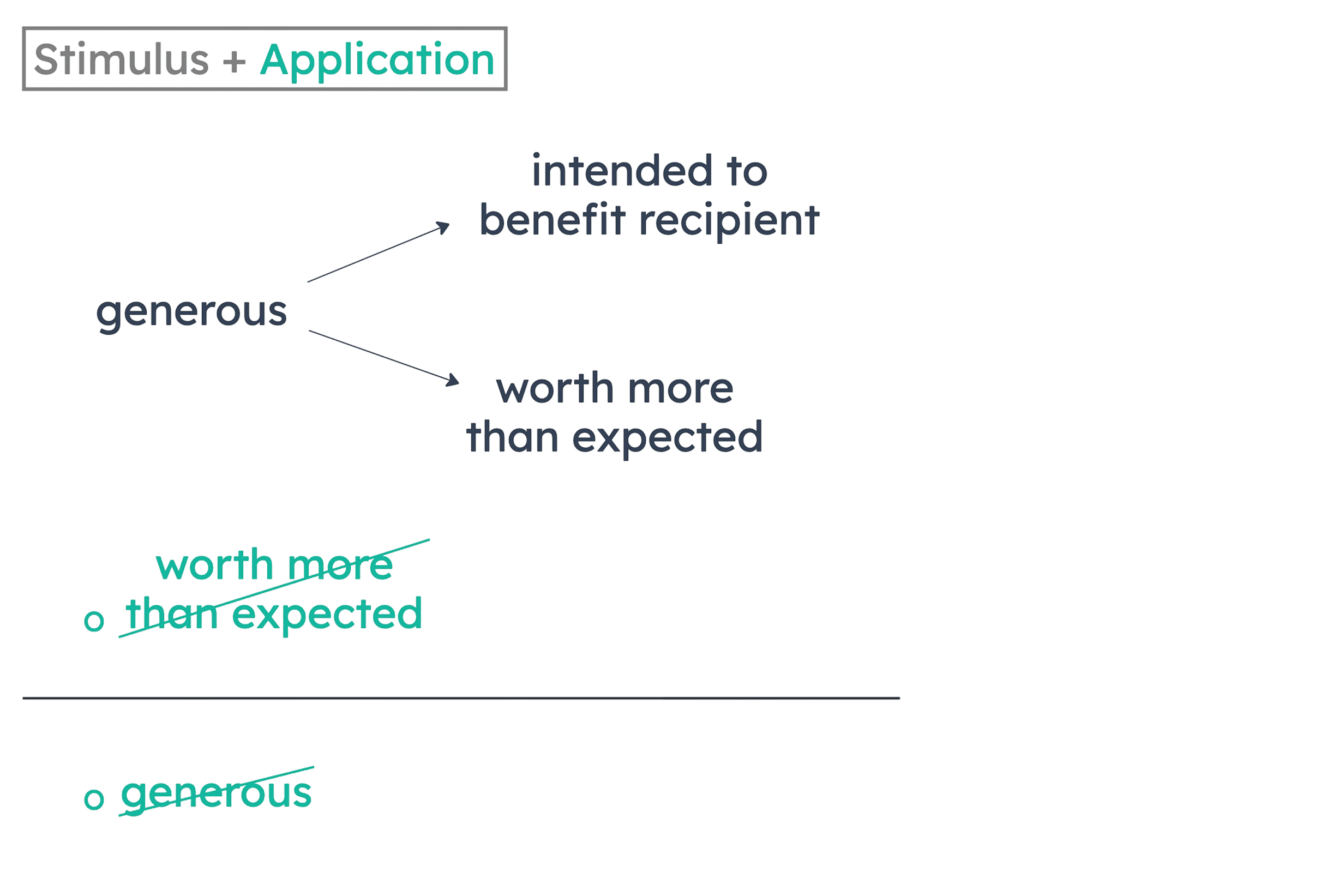
A gift is not generous unless it is intended to benefit the recipient and is worth more than what is expected or customary in the situation; a gift is selfish if it is given to benefit the giver or is less valuable than is customary.
We’re given two conditional statements about gifts:
(1) If a gift is generous, then it is intended to benefit the recipient and is worth more than expected.
(2) If a gift is given to benefit the giver or is worth less than expected, it is selfish. 
We need to find the right application of these statements. We can support conclusions over when a gift is not generous or is selfish, but we can’t support conclusion over when a gift is generous or is not selfish.
We can conclude a gift is not generous if it is either not intended to benefit the recipient or is not worth more than expected.
We can conclude a gift is selfish if it is either given to benefit the giver or is worth less than expected.
Which one of the following █████████ ████ ███████ ████████ ██ ███ █████████ ██████
Charles, who hates ██████ ███ █████ ███ █████████ ███████ ██ ███ ██████ ██ ██ ████ ████ ████ ██ ███ ███████ ███ █████ ██████ ██ █ ████████ █████ █████████ ████ ███ ███████ ███████ ██ ████ ███████ ███ ███ ████████
Wrong trigger. To prove a gift is selfish, we need to know that it’s either given to benefit the giver or worth less than expected. (A) tells us the gift is expensive, while also giving us no information on whether Charles intended to benefit from the gift, so we can’t justify that it is selfish.
Emily gives her ███████ █ ██████ ██████████ ██ █ ██████ █████ ███ ██████ ████ ████ ████ █████ ███ ███████ ██ ███ ███ ████████ ██ ██████ ████████ ███ ████ ██ ███████ ███████ ███████ ███████ ██ ████ ███ ████████ ██ ███
Wrong trigger. To prove a gift is selfish, we need to know that it’s either given to benefit the giver or worth less than expected. Offending the recipient is not one of these conditions, so we can’t prove the membership is selfish.
Amanda gives each ██ ███ ███████ ██ █████████ ██████ ██ ████ █████ █████ ████████ █████ ███ █████████ █████ ████ █████ ███ ███████ ██ ████████ ██████ ██████ █████████
Wrong conclusion. We are only given necessary conditions for a gift to be generous, so we can only conclude that a gift is not generous—not that it is.
Olga gives her ████████ █ ████████ ██ █ ██████████ █████ █████ ████ ██ ███ ████ ████ ███ ████████ ██ ██████ ██████ ███████ ███ ███████████ ██ ██ ███ █████████
One of the necessary conditions for a gift to be generous is that it is worth more than expected. If every child receives a computer upon graduation, the gift is worth exactly as much as is expected, and fails this necessary condition.
Michael gave his ██████ ███ ██ █ ████████ █████ ████ ████ ██ ███ ████ █████ ███████ █████████ ███████ ████████ ████ ███ ██████ ██████████ █████████ ████ ███ ███ ████████ ███████ ██ ███ ███ ███████ ███ ██████████
Wrong trigger. One of the necessary conditions for a gift to be generous is that it must be intended to benefit the recipient. We know the money didn’t actually benefit his nephew, but we have no clue whether it was intended to, so we can’t conclude the gift wasn’t generous.
Answer five questions and we'll estimate your score.
It takes about five minutes.
Take the free diagnosticWant to know why the right answer is right?
7Sage membership unlocks explanations of every question. Every answer choice. On every official PrepTest. Start with a free account.