


Support The government will purchase and install new severe weather sirens for this area next year if replacement parts for the old sirens are difficult to obtain. ███ █████████ ██████ ████ ██████ ██████ ██ ███ █████ ██ ██████ ███████ █████ ██ ████████ ██ ███ ██████ ████ ██ ██ ██████████ ███ █████ ███████ ████ █████ ███████████ █████ ████ █████████ ████ ████ ███ █████ ████ ███ ██ █████████ ███ ██ ███ █████████ ██ ████████ ███ ██████ ████ ██ █████ ██████ ██████ ███████ ██ ███ ███████
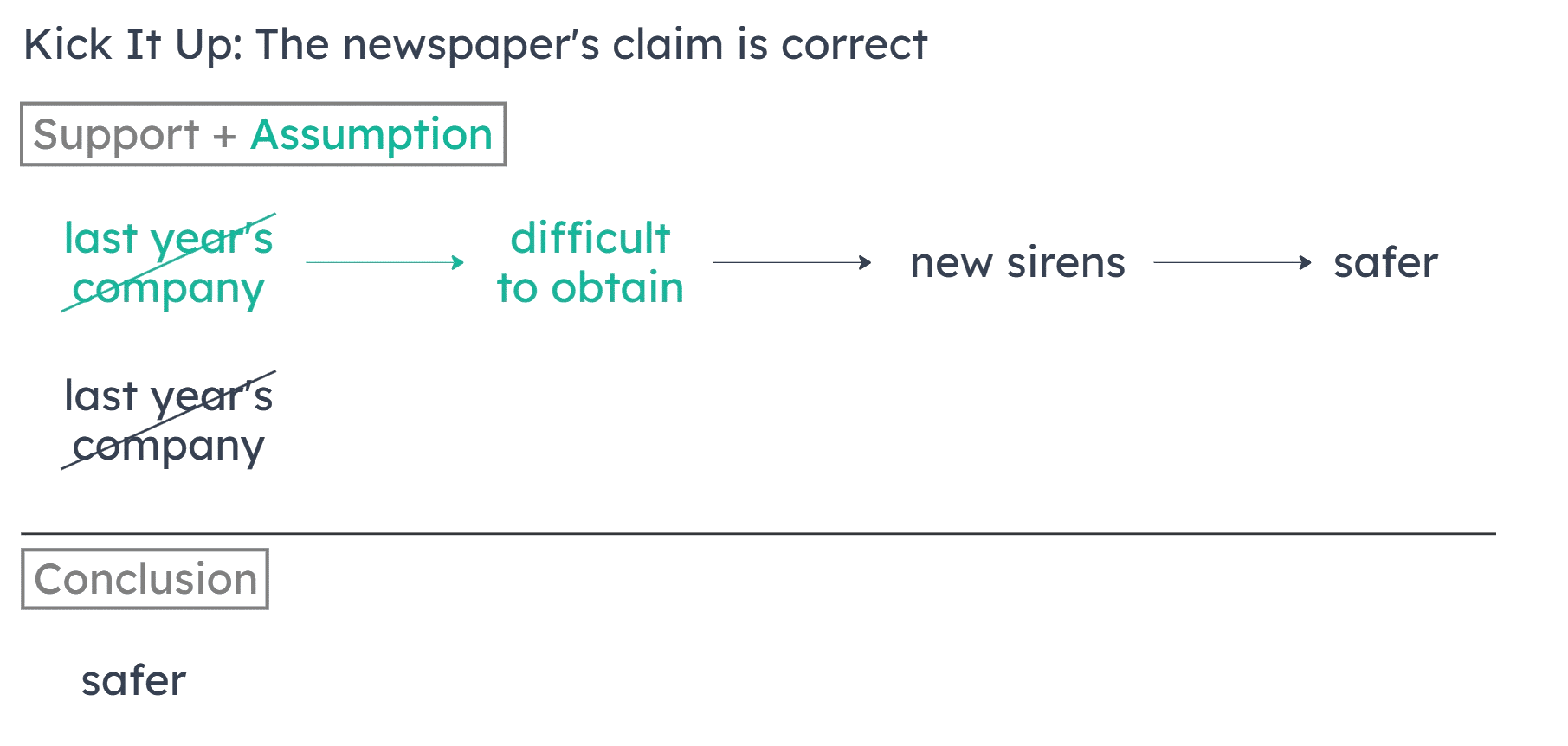
The author concludes that if the newspaper is correct, the public will be safer during severe weather. He supports this by saying that if replacement parts for old weather sirens are hard to obtain, then the government will install new ones. If new sirens are installed, the newspaper claims that the public will be safer. He then notes that the company the government bought parts from last year is now out of business.
We know that the public will be safer if the government installs new sirens, but the author never establishes that replacement parts will be hard to get. He only says that the company the government bought parts from last year is out of business.
To get from his premises to his conclusion, the author must assume that if the government can't get parts from that company, then replacement parts will be difficult to obtain.
The argument's conclusion follows logically ████ ███ ████████ ██ █████ ███ ██ ███ █████████ ██ ████████
If public safety ██ ███ █████ ██ ██████ ███████ ██ ████████ ████ █████ ██ ████ ██ ███████ ███ ██████ ████ ████ ██████████
This says nothing about whether the parts will be difficult to obtain. We know new sirens will make the public safer. The fact that safety will only be enhanced if new sirens are installed doesn’t prove that they’ll actually be installed or that the public will actually be safer.
The newspaper was ███████ ██ ████████ ████ ██████ ██████ ██ ███ █████ ██ ██████ ███████ █████ ██ ████████ ██ ███ ██████ ████ ██████████
The author says that “if the newspaper is correct,” then the public will be safer. In other words, his conclusion only addresses the scenario in which the newspaper is correct. (B) doesn’t guarantee his conclusion because it doesn’t establish that the parts will be hard to obtain.
The local company ████ █████ ███████████ █████ ███ ███ ███ ██████ ████ █████████ ████ ████ ███ ███ ████ ███████ ██ ███ ████ ████ ████ █████
We can’t assume that the parts are difficult to obtain just because no other companies in the area sell them. Maybe the government could order parts online. Since it doesn’t establish that the parts are difficult to obtain, (C) doesn’t guarantee that the public will be safer.
Replacement parts for ███ ███ ██████ ████ ██ █████████ ██ ██████ ██ ███ ██████████ ██████ ██████ ████ ████ ███ ███████ ██ █████████ ████ ████ ████ █████
This guarantees the conclusion that the public will be safer. Since the government can’t get parts from last year’s company, the parts will be difficult to obtain. If the parts are difficult to obtain, the government will install new sirens, which will make the public safer.
Because the local ███████ ████ █████ ███████████ █████ ███ ████ █████████ ████ ███ ██ █████████ ███ ████ █████████ █████ ███ ██ ████ ████████ ███████ ████ ███ ██ ████ █████ ████ ███ ██████ ████ █████████
Just because the only available parts are bad quality doesn’t prove that replacement parts are difficult to obtain. The government could still buy inferior parts, which might make the public less safe. (E) doesn’t guarantee the conclusion that the public will be safer.
Answer five questions and we'll estimate your score.
It takes about five minutes.
Take the free diagnosticWant to know why the right answer is right?
7Sage membership unlocks explanations of every question. Every answer choice. On every official PrepTest. Start with a free account.
By signing up you agree to our
terms of service.
This site is protected by reCAPTCHA and the Google
Privacy Policy
and
Terms of Service
apply.