


Support Radio airplay restrictions are nationally imposed regulations. ███ ████ ████ ███ ████████ █ █████ ██ ███ ██████████ ███████ ███████████ ██████ █████ ███████ ██ ████████ ██ ██ █████ ████ █████ ███████ ████████████ ███ ███████ ███████ ██ ████████ ███ ██ █████ ████ ██ ███ ████ ██████ █████ ██████ █████ ███████ █████████████
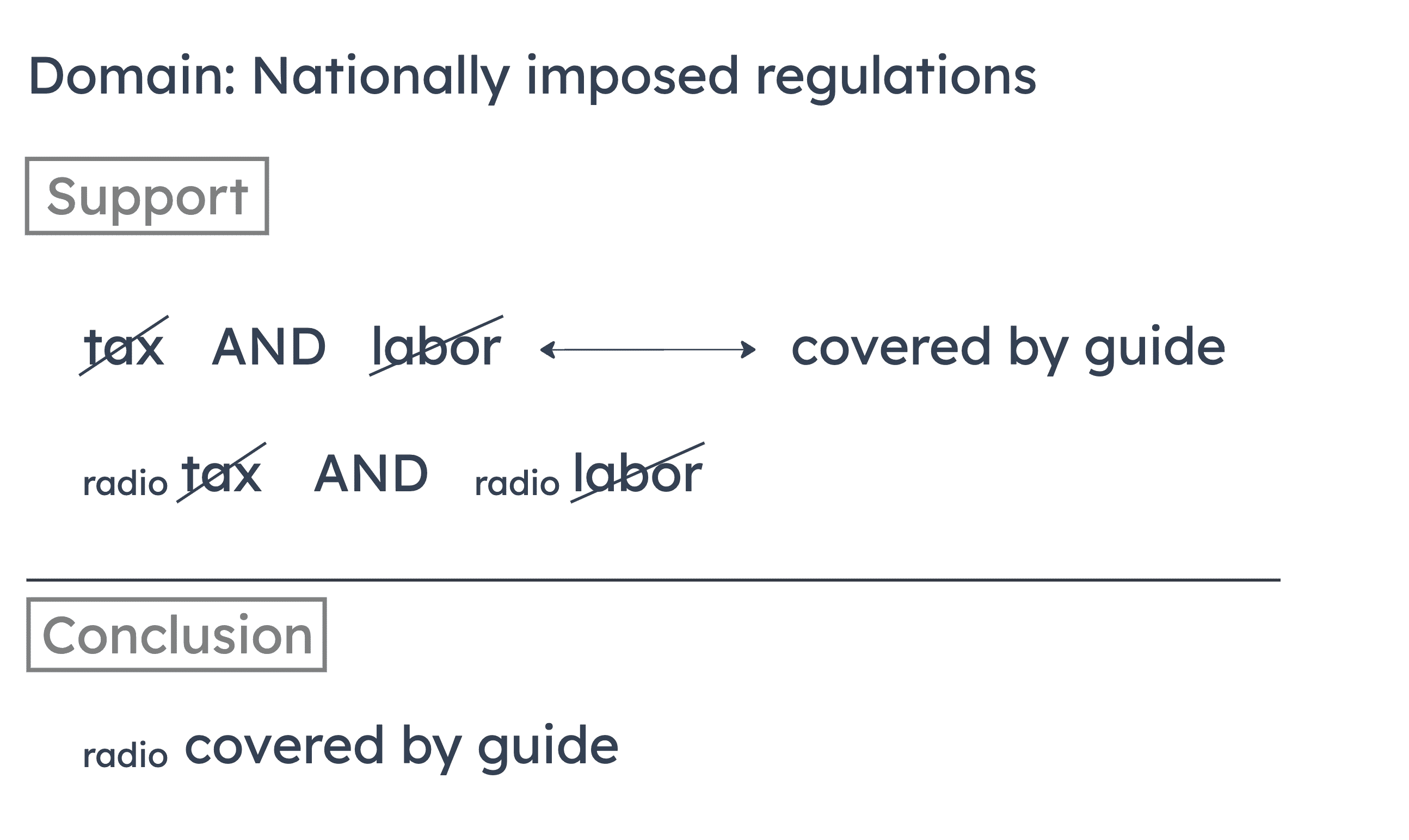
To develop the cleanest abstract model of this argument, we’re going to kick some concepts up into the domain. You can preview the end result if you glance down at the bottom of this spiel, but this summary will walk you through the full process to get there.
Our argument begins with a conditional claim: all radio restrictions are national regulations. It then tells us about a guide that covers all national regulations, with two exceptions: taxation and labor law. It then says neither exception applies to radio, and concludes that the guide covers radio.
After (repeat: AFTER!) reading the full stimulus, you might notice that the concept of national regulations doesn’t do much – it shows up in a few premises, but not in a way that impacts the argument. It’s never used.
To see this more clearly, replace it with the concept of things in general: Radio airplay restrictions are things, and the guide covers everything except tax stuff and labor stuff. This replacement wouldn’t affect the argument’s structure. It’s not important to remember what is and isn’t a thing – everything we’re discussing is a thing. The same logic applies to national regulations.
If the stimulus brought in the idea of an international regulation, or a local regulation, our situation would be different. That’s why you can only kick things into the domain after you have an overall sense of the argument.
What’s the point of all this? It enables us to simplify our abstract model by saying “this whole argument is about national regulations” up front.
Now that we’ve done all that, here’s the distilled summary: The guide covers everything except tax and labor. Radio isn’t either of those things. So it’s covered.
Which one of the following ████████ █ ███████ ██ █████████ ████ ███████ ██ ████ █████████ ██ ███ ████████ ██████
All prepackaged desserts ████ █ ████ ██ █████ ██████ ███ █████████ ██████████ ██████████ ████████ ███ ███████████ ████████ ████ ███ ███ ████ ██ ████████ ██ ████████ ████ ███████████ █████ █████ ███ ███ ██ ████████ ██ ████████ ██ ███ █████████ ██████████ ██████████ ████████ ███████████ █████ █████ ██ █████
(A) features many subtle dissimilarities; here are a few of the clearest ones. First, just like our stimulus, (A) starts by establishing a domain (risk of tooth decay corresponds to nationally imposed regulations). But while the stimulus keeps talking about
Second, (A) establishes a rule about one concept (prepackaged desserts), then goes on to explain why that rule also applies to a different concept (prepackaged snack foods). Our stimulus never brings in a second concept; it just applies the rule to the original concept.
Coreopsis is a ██████████ ███ ██████ ████ ██████ █ █████ ████ ████ ███ ████ █████████ ██████ █████ ████ ███ ██████ ██ ███ ██████ ██ █████ ████████ █████████ ██ ██████ ██ █████ ███████ ███ ██ ███ █ ██████ ██ ███ ██████ ████ ██████ █ █████ ████ ████ ███ ██████████
This fits our hard-earned abstract model. The domain is “perennials” (everything discussed here is a perennial). The garden club hands out awards to everything except shrubs and foreigners. Coreopsis isn’t either of those things. So it gets an award.
The Windsor Coalition ██ ██ ███████ ██ █ █████████ ██████████ ██ ██████████ ████████████████ ███ ████████████ ███████████ ██ ██ █████ ██ ████ ████ ██ █████████ ███████████ ██████ ████ ██ █████ █ ██████ ██ ████████ ████████ ███████ ██████████ ███ ████████████ ███████████ ██ ██ █████ ██ ███ ███████ ██████████
(C) lacks a second exception: we need “except when it poses a threat to regional economic growth or does some other thing.” It also lacks
Compact discs are █ ████ ██ ████ ███████ ███████ ██████ ███████████ ████ ███ ███████ ████ ███████ ███████ ████ ███ ██████ ███████ ████████ ███████ █████ ██ ███ ███ ██████ ███████ ████████ ██ ██ ███████ ████ ██████ ███████████ ████████ ███████ ██████
(D) features several dissimilarities; here are a few of the clearest ones. First, (D) lacks a second condition: we need “does not produce data storage devices that use analog storage methods or do some other thing.”
Worse than that, though, (D)'s claim that “Compact discs do not use analog storage methods” affirms a necessary condition, not a sufficient one. This pattern of reasoning isn't just different – it's flawed.
Compare the diagram below to the diagram in the Argument Summary for a formal logic lens on these differences.

Traffic laws are █ ████ ██ ██████████ ███████████ ███ ███████████ ████████ ███████ ████ ████ ███ ██ ███ ██████ █████████ ████ ██ ████ ████ ███ ████ █████ ██ ██████ ███ ████████ █████ █████ ███ ███████████ ██████ ███████ ███ ██████████ ███████████ ████ ███ ██ ███ ██████ █████████
(E) features several dissimilarities, but here's the biggie: (E)'s conclusion is normative – it's about what the association should do. Our stimulus' conclusion is descriptive – it's about what the guide does do. This distinction is very common on the LSAT and very important in general. (Shoutout to our boy David Hume!)
Answer five questions and we'll estimate your score.
It takes about five minutes.
Take the free diagnosticWant to know why the right answer is right?
7Sage membership unlocks explanations of every question. Every answer choice. On every official PrepTest. Start with a free account.
By signing up you agree to our
terms of service.
This site is protected by reCAPTCHA and the Google
Privacy Policy
and
Terms of Service
apply.