


Philosopher: An action is morally good if it both achieves the agent's intended goal and benefits someone other than the agent.
We’re given a conditional statement to help determine if an action is morally good:
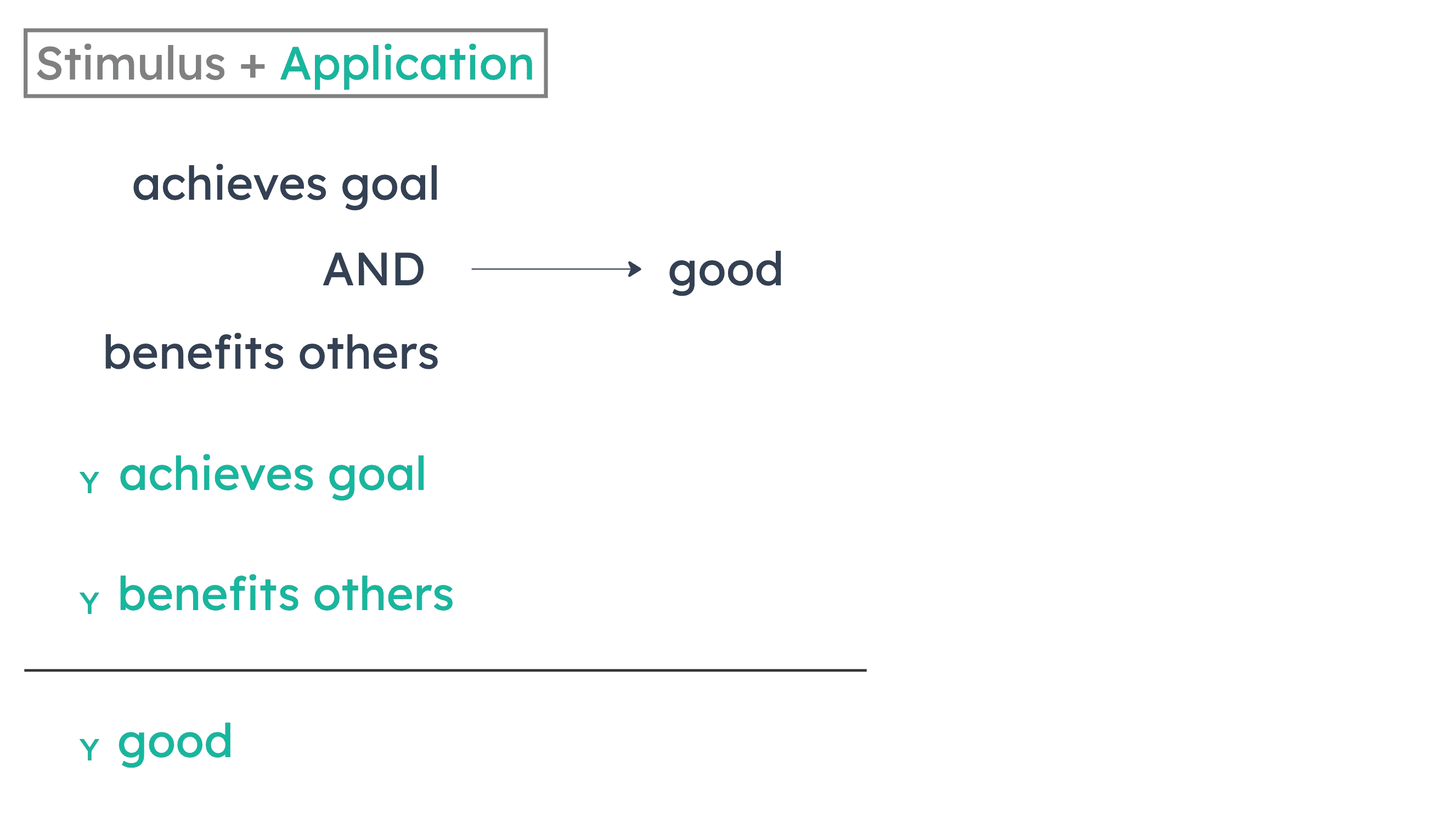
If it achieves its intended goal and benefits others, then an action is morally good. 
We need to find the correct application of the principle. If an action meets both of the sufficient conditions—achieving its intended goal and helping others—then it is morally good. We can’t conclude that an action is not good, however, so any answer choices featuring this conclusion will be wrong.
Which one of the following █████████ ████ ███████ ████████ ██ ███ █████████ █████ ██ ███ ████████████
Colin chose to ███ ██ ███ ███████████ ███████████ ████ ██ ██ ███████ ██ ███████ ███ ████████ ███ ███████████ ██████████ ███ █████████ ███ ████████ █████ ███ ███ ███████ █████████ ███ ███████ ██ █████ ███ ██ ████ ███ ███ ████████ ███████ ██████ ███ ███████ █████
Wrong trigger. We need the action to both succeed in its goals and benefit others to conclude that it’s good. Colin’s lie was discovered, and he and his friends were still punished, so neither of these conditions is met.
Derek prepared a █████ ██████ ██ ███████ ███ ███ █████████ ██ ███ █████████████ ████ ████ ███████ ███ ███████ █████ █████ ███ ████ ███ █████████ ████ ██████ ████████████ ██████ ███ ███ █████████ ████ █████ ████████ ███ ███████ ███████ ██ ███████ █████ ███████ ██████ ███ ███ ███████ █████
Wrong conclusion. We can only support conclusions about when an action is good. We have no clue what makes an action not morally good, so (B) does not match the principle.
Ellen worked overtime ██████ ██ ███ █ ██████████ ███ █████ █████ ███ ██████ ███████ ███ ██████ ██ ████ █ ██████ ████████ ████ █████ ███ ███ ██████ ██ ███ ███ ██████████ █████████████ ███████ ██████ ███ ███████ █████
Wrong trigger. We need the action to both succeed in its goals and benefit others to conclude that it’s good. Ellen benefited her family, but failed to get the promotion, so we can’t conclude that her action was morally good.
Louisa tried to ███ █████ ████ ███████ ███████ ██ ██████ ██ ██████ ████ ██ █████ ████ █████████ ███████ ████ █ ██████ ███ ███ ███████ █████████ ████████ ████ ██████ ████ ███ ██ ██████ ███ ████████ ██████ ████ ██████ █████ ███ ████████ ██ ████ ██████ ████████ ██████ ███ ███ ███████ █████
Wrong conclusion. We can only support conclusions about when an action is good. We have no clue what makes an action not morally good, so (B) does not match the principle.
Yolanda took her ████████ ██ █████ █████ ███████████ ███████ ███ ██████ ███ ████████ ██ █████ █████ ████████ ███ ███ ████ ████ ██████ █████ ████████████ ███ ███████████ ███ ███ ████████ ███ ███████ ███ ██████ ██████ ███████ ███████ ███████ ███ ██████ ███ ██████ ███ ███████ █████
In order to conclude that an action is good, it must succeed in its goals and benefit others. Yolanda succeeded in getting her children to enjoy their vacation, and also benefited them in the process, so her action was morally good.
Answer five questions and we'll estimate your score.
It takes about five minutes.
Take the free diagnosticWant to know why the right answer is right?
7Sage membership unlocks explanations of every question. Every answer choice. On every official PrepTest. Start with a free account.
By signing up you agree to our
terms of service.
This site is protected by reCAPTCHA and the Google
Privacy Policy
and
Terms of Service
apply.