


Principle: Support Only if a professor believes a student knowingly presented someone else's ideas without attribution should the professor make an official determination that the student has committed plagiarism.
████████████ ██ ██ ███ ███ ████ ████ █████████ ██████ ██████ ████ ██ ████████ █████████████ ████ ███████ █████████ ██████████ ██ ███ ████ █████ █████ █████ ██████ ████ ███████ █████ ███ ████████ ██████
The conclusion is the application: Professor Serfin shouldn’t make an official determination that Walters committed plagiarism.
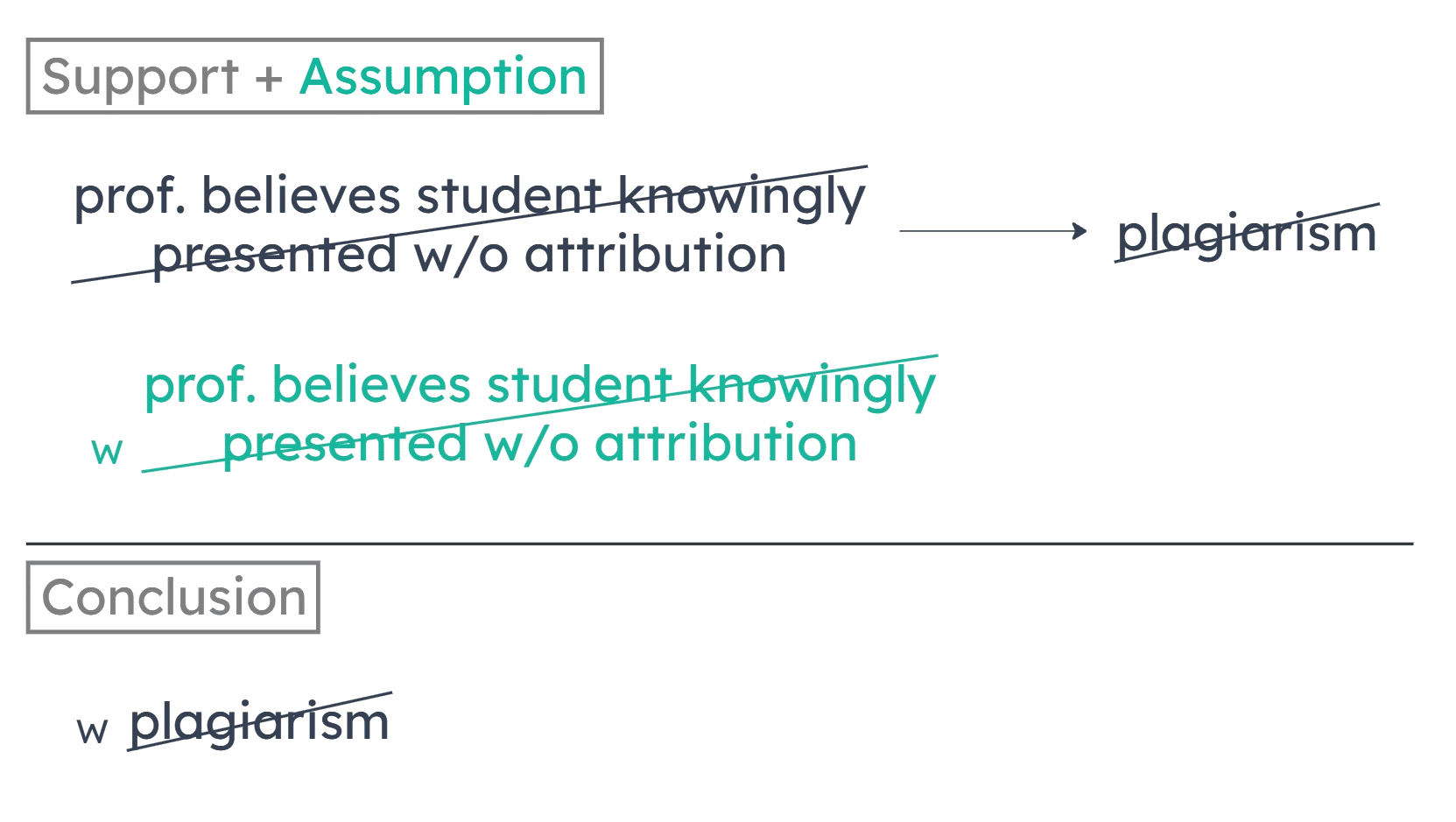
The support is the principle: If they make an official determination of plagiarism, professors should believe the student knowingly presented someone else’s ideas without attribution. By the contrapositive: If a professor doesn’t believe a student knowingly presented someone else’s ideas without attribution, the professor shouldn’t make an official determination of plagiarism.
To justify the application, we need to know that the scenario at hand meets the sufficient condition for “shouldn’t make official plagiarism determination.” So we need to know that Professor Serfin doesn’t believe that Walters knowingly presented someone else’s ideas without attribution.
Which one of the following, ██ █████ █████████ ███ █████ ███████████ ██ ███ ██████████
Professor Serfin does ███ ████ ██████████ ██████████ ████████ ██ ████████ ████ ███████ █████████ ███████ ██████ █████ ██ ██ ████ ████ ███ ███ ██ ███ ████ █████ █████ █████ ███████
It doesn’t matter if Professor Serfin has compelling evidence! We only care about what Professor Serfin believes—and he could believe that Walters committed plagiarism whether or not he has convincing evidence.
If Walters had ████████ ████ ███ ████ ██████ ██ ███ ████ █████ ██ █████████ ██ ███ ████ ██████ ██ █ ████ ██ ███ █████ ███████ █████ ████ ██████████ ███ ████ ██ ███ █████
We don’t care what Walters would have done in some hypothetical scenario—we don’t even care if Walters committed plagiarism! We only care if Professor Serfin believes that Walters knowingly presented someone else's ideas without attribution, and (B) says nothing about that.
Although the main ██████ ██ █████████ ████ █████ ██ █████████ ██ ████ ██ █ ████ ████ ██ ███ ███ █████ █████████ ██████ ██ █████████ ████ ███████ ███ ███ █████████ ███ ██ ████ ██████ ██████ █████ ███ ██ ███ ████
As shown in the diagram below, “shouldn’t officially determine plagiarism” is a necessary condition of “professor doesn’t believe student knowingly presented someone else’s ideas without attribution.” (C) says Professor Serfin satisfies the sufficient condition, so we can conclude that the necessary condition is true!
Walters does not ███████ ████ █████████ ██████ ██████ ████ ██ ████████ █████████████ ████ ██ ████████████
Of course Walters doesn’t want a determination of plagiarism against him! We don’t care what Walters thinks. We only care what Professor Serfin believes, because that’s the sufficient condition for “should not make an official plagiarism determination.”
Professor Serfin has ██ █████████ ██ ██████ ██ ████████ █████████████ ████ ███████ ███████████ ██ ███ ██████
(E) doesn’t address the premise’s sufficient condition, so it doesn’t help us conclude the necessary condition. Futhermore, we don’t care what Professor Serfin will or won’t do—this argument is about what he should or shouldn’t do.
Answer five questions and we'll estimate your score.
It takes about five minutes.
Take the free diagnosticWant to know why the right answer is right?
7Sage membership unlocks explanations of every question. Every answer choice. On every official PrepTest. Start with a free account.
By signing up you agree to our
terms of service.
This site is protected by reCAPTCHA and the Google
Privacy Policy
and
Terms of Service
apply.