


A first-term board member should not be on the finance committee unless he or she is an accountant or his or her membership on the committee is supported by all the members of the board.
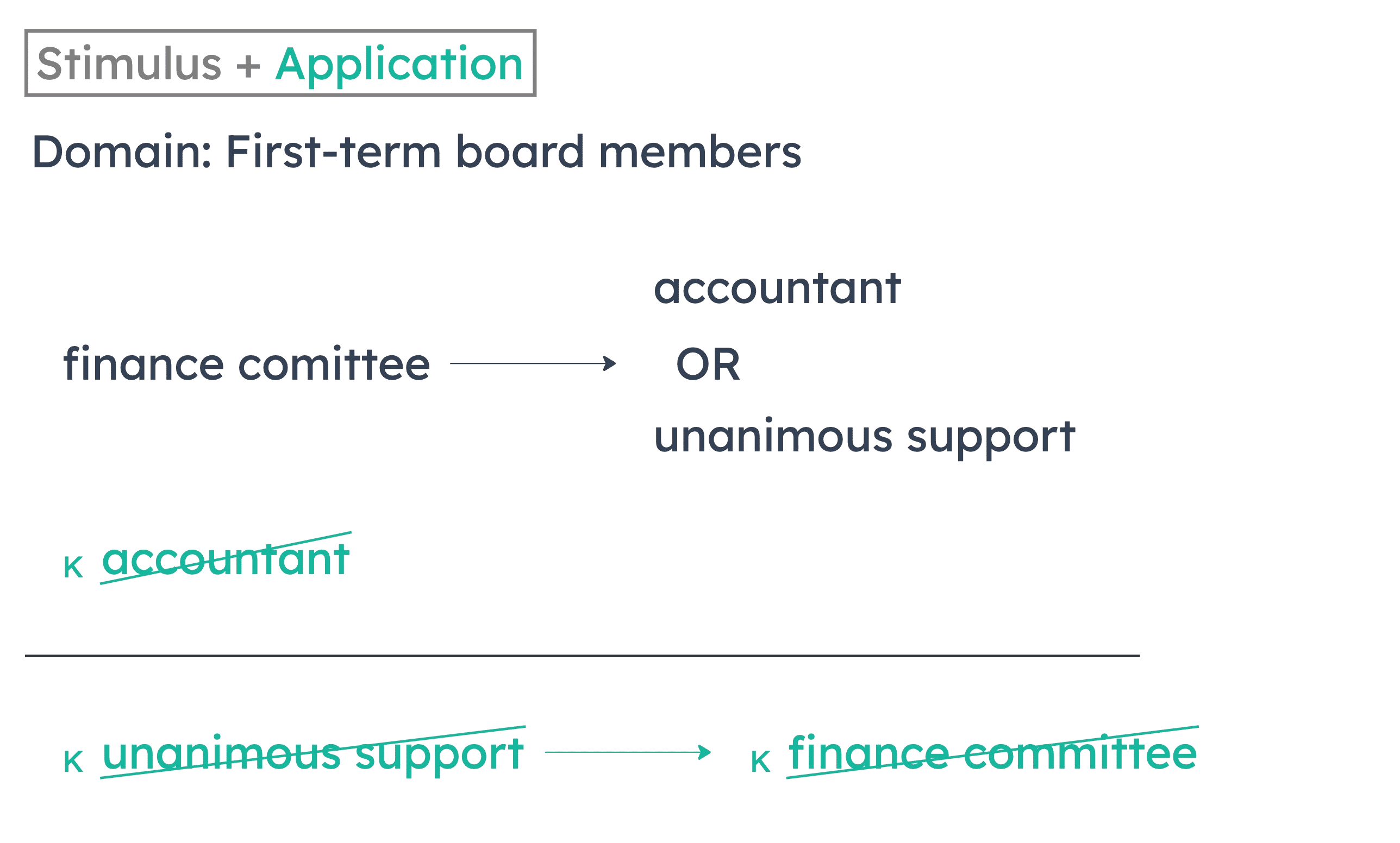
The stimulus sets up a singular conditional statement with two sufficient and two necessary conditions. It can be diagrammed as follows:
We need to find the right application, which will simply be an accurate reading of our diagram. We can conclude that a first-term board member shouldn't be on the finance committee if they aren’t an accountant and don’t have the approval of all board members.
We can also conclude that a first-term member who should be on the finance committee is either an accountant or has their membership supported by all board members.
Which one of the following █████████ ████ ███████ ████████ ██ ███ █████████ ██████ ██████
Simkins is a ██████████ █████ ██████ ███ ███ ██ ███████████ █████ ███████ ██████ ███ ██ ██ ███ ███████ ██████████
First-term board members on the finance committee need to be either accountants or supported by all other board members. (A) leaves open the possibility that Simkin’s membership is supported by all other board members, so we can’t validly conclude that she shouldn’t be on the finance committee.
Timmons is a ██████████ █████ ██████ ███ ███ ██ ███████████ █████ ██ ███ █████ █████ ███████ █████ ████ ███████ ██████ ██ ██ ███ ███████ ██████████ ████ ███████ ██████ ██ ██ ████ ██████████
Our principle can only support conclusions about first-term board members, which Timmons is not. Since this situation falls outside the principle’s domain, no accurate conclusions can be drawn.
Ruiz is on ███ ███████ █████████ ███ ██ ███ ██ ███████████ █████ ██████ ██████████ ████ ████ ████ █████████ ██ ███ ███ ███████ ██ ███ ██████
(C) Is attempting to read our diagram left-to-right by claiming Ruiz meets our sufficient condition, but we don’t know if Ruiz is a first-term member.
Klein is a ██████████ █████ ██████ ███ ██ ███ ██ ███████████ █████ █████ ██████ ███ ██ ███████ ██ ███ ███████ █████████ ██ ███ █████ ██████ ███████ ███████ ███████████ ██ ████ ██████████
(D) removes one of the necessary conditions—being an accountant. It then validly concludes that removing the remaining necessary condition will lead to the absence of the sufficient condition, which is a correct reading of the principle’s contrapositive.
Mabry is a █████ ██████ ███ ██ ███ ██ ███████████ █████ ███████ ███████ ██████████ ██ ███ ███████ █████████ ██ ███████ ██ ████ █████ ████████ █████ ██████ ███ ██ ███████ ██ ████ ██████████
(E) removes both necessary conditions to try and conclude that Mabry shouldn’t be on the committee, but it overlooks the fact that she might not be a first-term member.
Answer five questions and we'll estimate your score.
It takes about five minutes.
Take the free diagnosticWant to know why the right answer is right?
7Sage membership unlocks explanations of every question. Every answer choice. On every official PrepTest. Start with a free account.
By signing up you agree to our
terms of service.
This site is protected by reCAPTCHA and the Google
Privacy Policy
and
Terms of Service
apply.