


Support If the concrete is poured while the ground is wet, it will not form a solid foundation. ██ ███ ████████ ████ ███ ████ █ █████ ███████████ ██ ████ ██████ ██████ ████████ ██ ██████ ██ ██ ███ ████████ ███████ ███████ ██████ ██ ███ ██████ █████ ███ ██████ ███ ███ ██ ██ ████ ██████
The argument proceeds by presenting two conditional relationships that form a valid conditional chain with a disjunction in the necessary condition. It then reaches the conditional conclusion that, if one of the necessary conditions is not met (the concrete is uneven), then either the other necessary condition is met (the concrete will crack) or the sufficient condition is not met (the concrete was not poured when the ground was wet). 
Which one of the following █████████ ██ ████ ███████ ████████ ██ ███ █████████ ██ ███ █████████ ██ ███ ████████ ██████
The film will ███ ██ ████████ ███████ ██ ███ ██████ ██ ███ ███████ █████████ ██ ███ ████ ██ ███ ████████ ████████ ████ ███ ██████████ ████ ██ ██████ ███████ ██ █████ ██ ██ ███ ██████████ ██ ███ ████████ ██████ ███ ██████ ██ ███████ ████████ ██ ███ ██████████ ████ ██ █████
The argument proceeds by presenting two conditional relationships that form a valid conditional chain with a disjunction in the necessary condition. It then reaches the conditional conclusion that, if one of the necessary conditions is not met (the photograph is not blurred), then either the other necessary condition is met (the photograph will be dark) or the sufficient condition is not met (the camera is working properly).
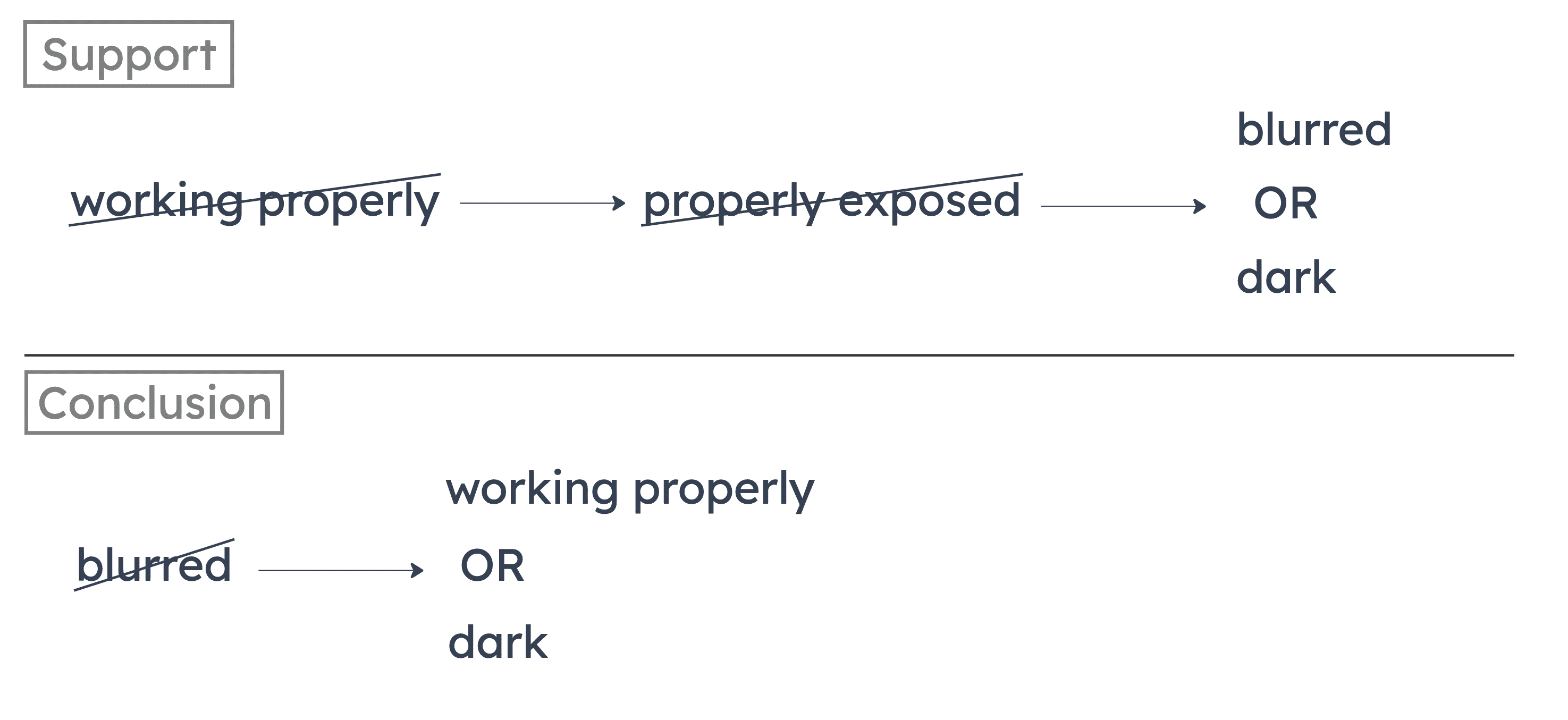
If the camera ██ ███████ █████████ ███ ██████████ ████ ███ ██ ████████ ███ ██████████ ████ ██ ███████ ██ ███ ████ ██ ██████ ███ ████████ ███████ ██ ███ ████████ ██████████ ██ ██ ███ ██████ ██ ███████ █████████ ███ ████ ████ ██ ████ ████████ ███████ ███ ████████ ██████████
Mismatched premises and conclusion. (B) presents a valid conditional chain (Working Properly→Not Blurry→Properly Exposed and Properly Developed), with a conjunction in the necessary condition. It then reaches the valid conditional conclusion that the sufficient condition leads to both necessary conditions. The stimulus, however, presents a conditional chain with a disjunction in the necessary condition, and concludes that the absence of one necessary condition leads to either the remaining necessary condition or the absence of the sufficient condition.
The photograph will ██████ ██ ███████ ██ ████ ██ ███ ██████ ██ ███ ███████ █████████ ████ ██████████ ██ ███ ████████ ██ ██ ███ ██████████ ██ ███ █████ ███ ██████ ██ ███████ █████████
Mismatched premises and conclusion. (C) presents a single conditional statement (Not Working Properly→Blurred or Dark). It then validly concludes that the absence of both necessary conditions implies the absence of the sufficient condition. The stimulus, however, presents two conditional statements in a chain, so (C) doesn’t match.
If the camera ██ ███████ █████████ ███ ████ ████ ██ ████████ ████████ ██ ██████ ███ ████ ██ ████████ ███████ ██ ███████████ ███ ████ ██████ ███ ██████████ ████████ ███ ██████████ ████ ███ ██ █████ ██ ██ ███ ██████ ██ ███████ █████████ ███ ██████████ ████ ███ ██ █████
Mismatched premises and conclusion. (D) presents a conditional chain with a disjunction in the middle variable. It then validly concludes that the sufficient condition leads to the last necessary condition. The conclusion, however, features a conditional chain with a disjunction in the last necessary condition, and concludes that the absence of one necessary condition leads to either the remaining necessary condition or the absence of the sufficient condition.
The camera will ████ ████████ ████ ██ ███ ████ ██ ████████ ████████ ███ ███ ████ ██████ ██ ████████ ███████ ██ █████ ██ ██████ ███ ██████ ██ ███ ████ ██████ ██ ███ ██████ ████ ███ ████ ████████ ██ █████ ██ ██████ ███ ████ ██ ███ ██████ ██████
Mismatched premises and conclusion. (E) presents a valid conditional chain (Work Properly→Properly Exposed→Enough Light and Not Too Much Light), with a conjunction in the necessary condition. It then reaches the valid conditional conclusion that the absence of either necessary condition leads to the absence of the sufficient condition. The stimulus, however, presents a conditional chain with a disjunction in the necessary condition, and concludes that the absence of one necessary condition leads to either the remaining necessary condition or the absence of the sufficient condition.
Answer five questions and we'll estimate your score.
It takes about five minutes.
Take the free diagnosticWant to know why the right answer is right?
7Sage membership unlocks explanations of every question. Every answer choice. On every official PrepTest. Start with a free account.
By signing up you agree to our
terms of service.
This site is protected by reCAPTCHA and the Google
Privacy Policy
and
Terms of Service
apply.