


Support Most kinds of soil contain clay, and Support virtually every kind of soil contains either sand or organic material, or both. Therefore, Conclusion there must be some kinds of soil that contain both clay and sand and some that contain both clay and organic material.
The argument presents a “most” statement (most kinds of soil contain clay), presents another “most” statement (virtually every kind of soil contains either sand or organic material, or both), and then moves to a conclusion (there must be some kinds of soil that contain both clay and sand and some that contain both clay and organic material).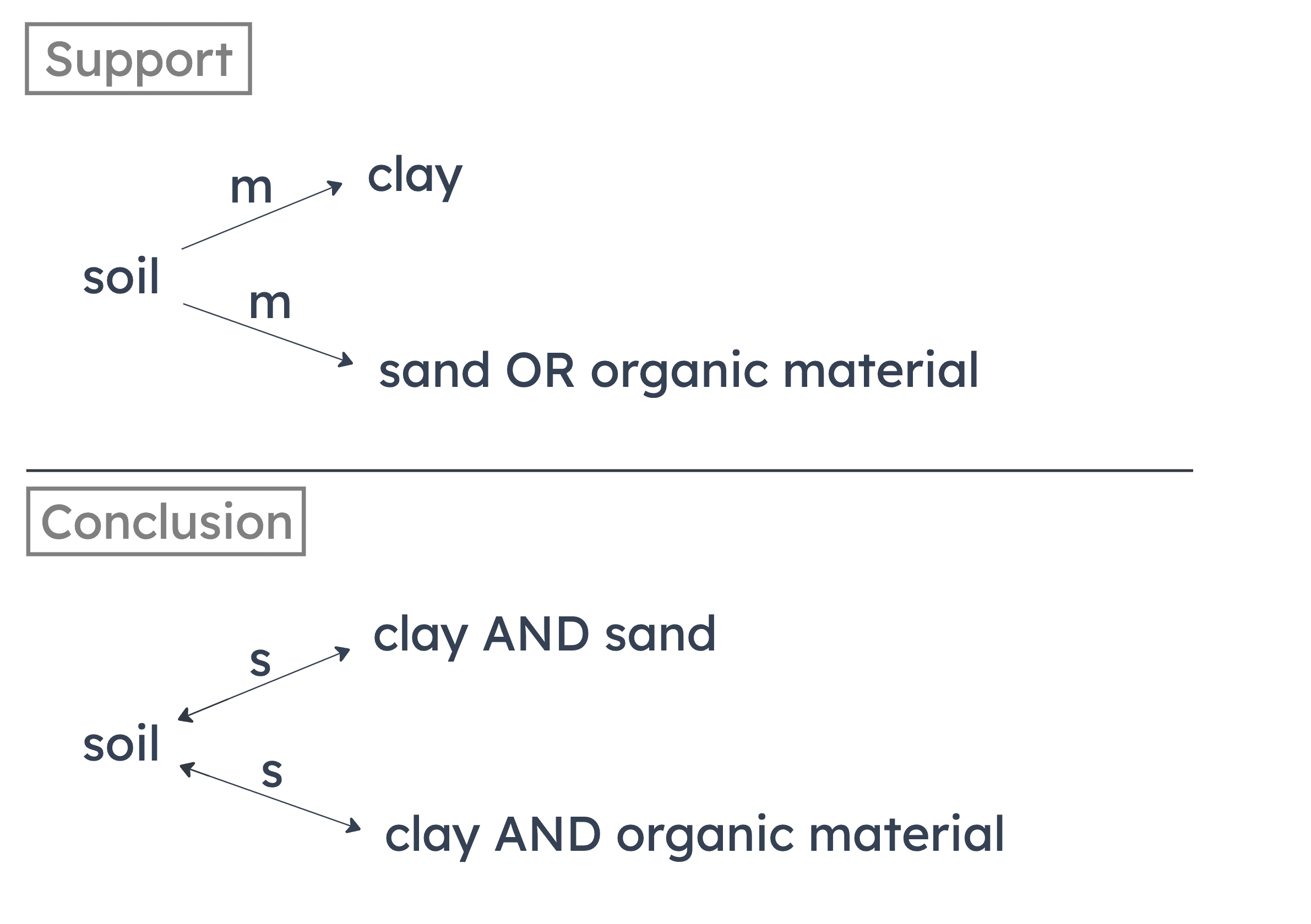
The argument is flawed because overestimates the overlap between “most” statements. While there may be some kinds of soil that contain both clay and sand and some kinds of soil that contain both clay and organic matter, we cannot infer that both of these kinds of soil exist. It’s possible that just soil that contains clay and sand exists or just soil that contains clay and organic matter exists, but we don’t know for sure that both exist.
The pattern of flawed reasoning in which one of the following arguments is most parallel to that in the argument above?
Most pharmacies sell cosmetics. Virtually every pharmacy sells shampoo or toothpaste, or both. Therefore, if there are pharmacies that sell both cosmetics and toothpaste, there must also be some that sell both cosmetics and shampoo.
Wrong flaw. (A) presents a “most” statement (most pharmacies sell cosmetics) and presents another “most” statement (virtually every pharmacy sells shampoo or toothpaste, or both) but then it arrives at a conditional conclusion (if there are pharmacies that sell both cosmetics and toothpaste, there must also be some that sell both cosmetics and shampoo). The stimulus, meanwhile, doesn’t have a conditional statement in its conclusion.
Undoubtedly, most pharmacies sell cosmetics, for almost all pharmacies sell either shampoo or toothpaste, or both, and there are some pharmacies that sell both cosmetics and shampoo and some that sell both cosmetics and toothpaste.
Wrong flaw. (B) presents a “most” statement (almost all pharmacies sell either shampoo or toothpaste, or both), presents two “some” statements (there are some pharmacies that sell both cosmetics and shampoo and some that sell both cosmetics and toothpaste), and arrives at a “most” conclusion (most pharmacies sell cosmetics), which can’t be validly inferred. The stimulus, meanwhile, presents no “some” statements and does not have “most” in its conclusion.
Most pharmacies sell cosmetics. Nearly all pharmacies sell shampoo or toothpaste, or both. Therefore, unless there are some pharmacies that sell both cosmetics and toothpaste, there must be some that sell both cosmetics and shampoo.
Wrong flaw. (A) presents a “most” statement (most pharmacies sell cosmetics) and presents another “most” statement (nearly all pharmacies sell shampoo or toothpaste, or both) but then it arrives at a conditional conclusion (unless there are some pharmacies that sell both cosmetics and toothpaste, there must be some that sell both cosmetics and shampoo). The stimulus, meanwhile, doesn’t have a conditional statement in its conclusion.
Virtually every pharmacy that sells shampoo also sells toothpaste. Most pharmacies sell cosmetics. Therefore, there must be some pharmacies that sell both cosmetics and toothpaste and some that sell both cosmetics and shampoo.
Wrong flaw. (D) presents a “most” statement (virtually every pharmacy that sells shampoo also sells toothpaste), then presents another “most” statement (Most pharmacies sell cosmetics) that’s not connected to the other most statement, and then moves to a conclusion with two “some” statements (there must be some pharmacies that sell both cosmetics and toothpaste and some that sell both cosmetics and shampoo). The stimulus, meanwhile, does not have unconnected “most” statements in its premises.
Nearly all pharmacies sell either shampoo or toothpaste, or both. Therefore, since most pharmacies sell cosmetics, there must be some pharmacies that sell both cosmetics and toothpaste and some that sell both cosmetics and shampoo.
The argument presents a “most” statement (nearly all pharmacies sell either shampoo or toothpaste, or both), presents another “most” statement (most pharmacies sell cosmetics), and then moves to a conclusion (there must be some pharmacies that sell both cosmetics and toothpaste and some that sell both cosmetics and shampoo). This commits the same flaw as the stimulus of overestimating the overlap between “most” statements. While there may be some pharmacies that sell both cosmetics and toothpaste and some that sell both cosmetics and shampoo, we can’t infer that both of these kinds of pharmacies exist.

Answer five questions and we'll estimate your score.
It takes about five minutes.
Take the free diagnosticWant to know why the right answer is right?
7Sage membership unlocks explanations of every question. Every answer choice. On every official PrepTest. Start with a free account.