


Support The company president says that significant procedural changes were made before either she or Yeung was told about them. But, Support according to Grimes, the contract requires that either the company president or any lawyer in the company's legal department be told about proposed procedural changes before they are made. Thus, Conclusion unless what Grimes or the company president said is incorrect, the contract was violated.
The author concludes that if what Grimes and the company president said are correct, then the contract was violated. Here’s what Grimes and the president said:
Grimes said the contract requires that before the proposed procedural changes are made, either the company president or at least one lawyer in the company’s legal department must be told about them.
The president said that the proposed procedural changes were made before the president or Yeung was told about them.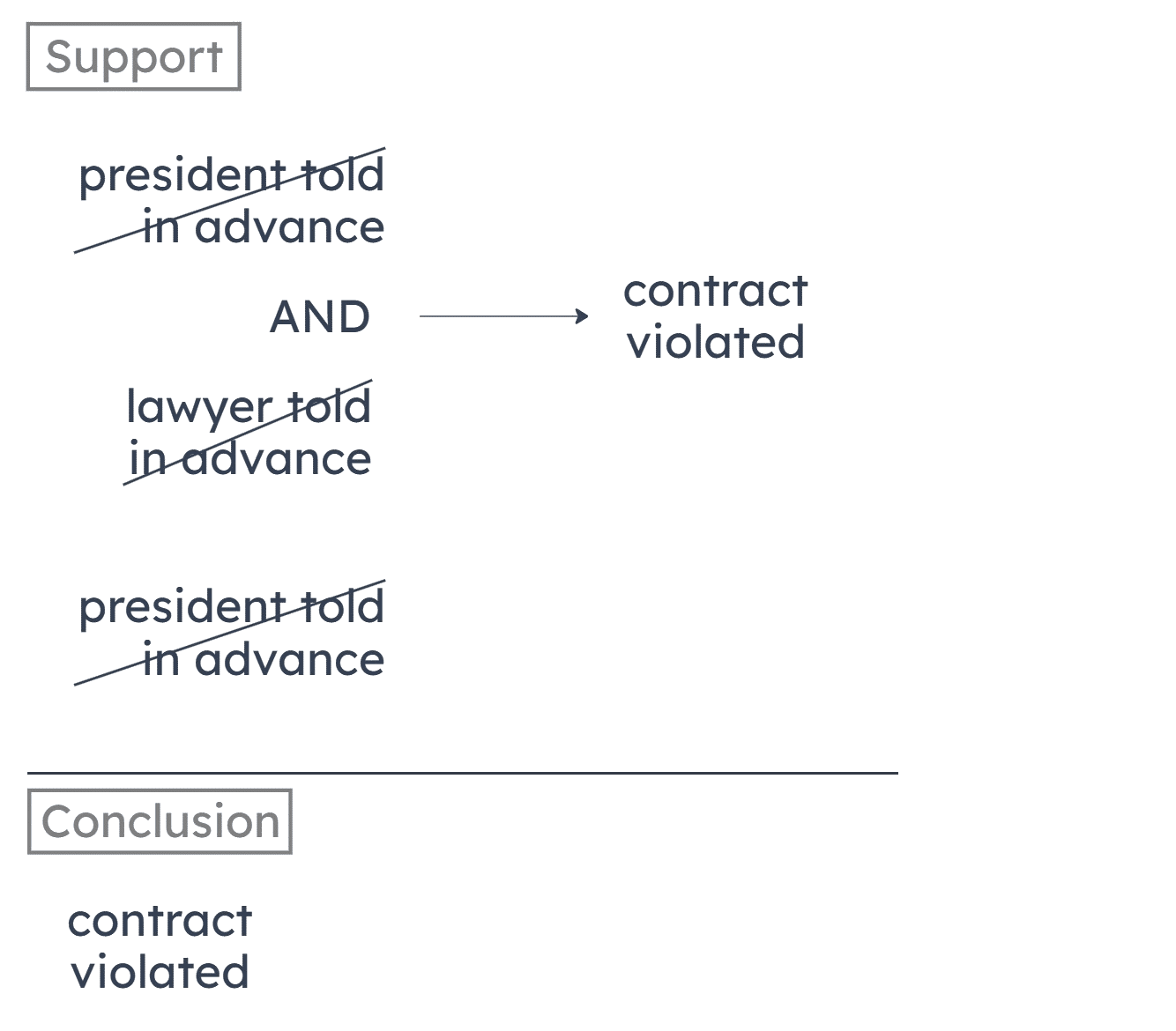
For the purpose of the conclusion, we can accept what Grimes and the president said as true. With that understanding, we’re trying to prove that the contract was violated — in other words, that neither the president nor any lawyer in the legal department was told about the changes before they were made.
We know that the president wasn’t told. But we don’t know that there wasn’t any lawyer in the legal department who was told. We want to establish, then, that no lawyer in the legal department was told.
(You might be thinking that we’re looking for an answer that says Yeung is a lawyer in the legal department. This isn’t enough to make the argument valid, because we wouldn’t know that Yeung is the only lawyer in the department. If an answer says Yeung is THE ONLY lawyer in the department, then it would be correct.)
The argument's conclusion can be properly inferred if which one of the following is assumed?
Yeung is a lawyer in the company's legal department.
(A) doesn’t establish that no lawyer in the legal department was told. Sure, we know Yeung wasn’t told. But there could have been other lawyers who were told.
Neither Grimes nor Yeung was told about the procedural changes until after they were made.
(B) doesn’t establish that no lawyer in the legal department was told.
No lawyer in the company's legal department was told about the procedural changes until after they were made.
(C) establishes that no lawyer in the legal department was told before the changes were made. Now we know that neither of the requirements were met: the president wasn’t told, and no lawyer in the legal department was told. So the contract was violated.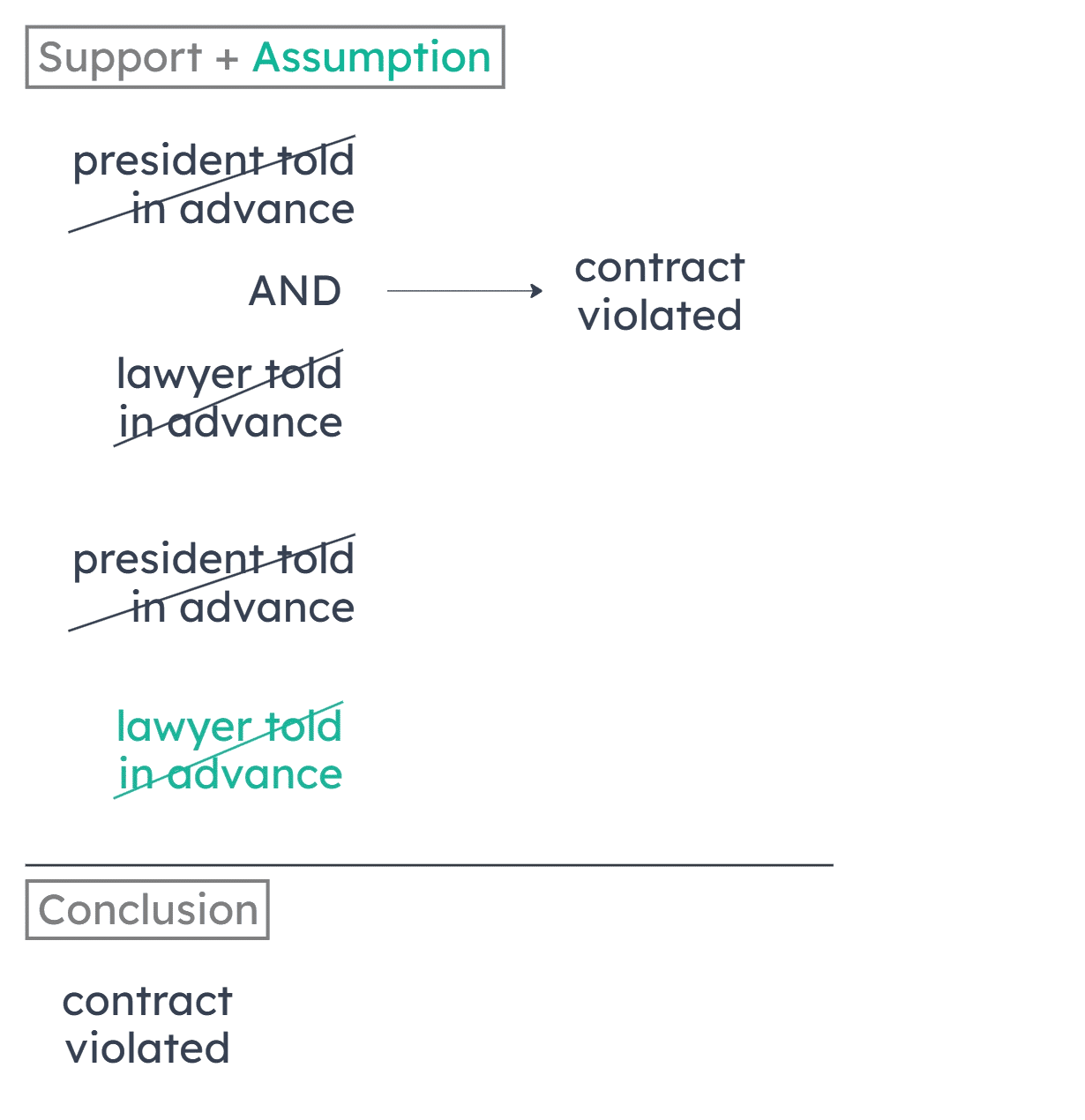
If the company's president was told about the procedural changes before they were made, then the contract was not violated.
(D) doesn’t establish that no lawyer in the legal department was told.
If no lawyer in the company's legal department was told about the procedural changes before they were made, then the contract was violated.
(E) doesn’t provide any new information that we can’t get from the premises. We want to establish that no lawyer in the legal department was told; we already know that if this didn’t happen, the contract was violated.
Answer five questions and we'll estimate your score.
It takes about five minutes.
Take the free diagnosticQuestion explanation


Want to know why the right answer is right?
7Sage membership unlocks explanations of every question. Every answer choice. On every official PrepTest. Start with a free account.
By signing up you agree to our
terms of service.
This site is protected by reCAPTCHA and the Google
Privacy Policy
and
Terms of Service
apply.