


A commission has been formed to report on the nation's preparedness for a major natural disaster. ███ ████████████ ██████ ████ ███ ██ █████████ ██████ ███ ██████████ ██████ ████ █ ███████ ██████ █████ ██████████ ███████ ██ ███ ██████████ ████ ██████████ █████████ █████ ███ ████████ █████ ████████ ████████████ ██ ███ ████ █████ ████ ██ ███████ ██ ██████████ ██ ███ ███████ ██ ████ ███ ██ ██████████
The author concludes that the report won’t be effective. This is based on the following:
In order for the report to be effective, the commission must speak with a unified voice.
Individual members of the commission have repeatedly expressed their own opinions about stuff related to the report before the report was completed.
We have a premise that tells us what’s required for the report to be effective — the commission must speak with a unified voice. So if we can learn that the commission is NOT speaking with a unified voice, then the report won’t be effective.
Do we have enough to establish that the commission is not speaking with a unified voice? Not quite — the other premise tells us that individual members have expressed their own opinions before the report was completed. Does that constitute lack of a unified voice? We don’t know. To make the argument valid, then, we want to establish that if individual members of the commission speak about stuff related to the report before it’s completed, that implies the commission is not speaking with a unified voice.
The conclusion of the argument ███████ █████████ ██ █████ ███ ██ ███ █████████ ██ ████████
Commission members who ████ █████████ █████ ████████ █████ ████████ ████████████ ██ ███ ████ █████ ████ ████ ██████████ █████ ██████████ ██ █████████ ██ █████████ ███████
(A) doesn’t establish that the commission has been speaking without a unified voice.
News organizations should ███ ███████ █ ████████ ███ ███████ ██ ███ ██████████ ██ ███████ █████ ████████ █████ ████████ ████████████ ██ █████ ██ ████ █████████ ███ █████████████ ██ ███ ████████████ ███████
What news organizations should do doesn’t establish that the commission has been speaking without a unified voice.
The commission will ██ ████ ██ █████ ████ █ ███████ █████ ████ ██ ██████████ ████████ ████████ █████ ████████ ████████████ ███ ███ ████ ██████ ██████ ███ ██████ ██ ██████████
(C) establishes that in order for the commission to speak with a unified voice, individual members’ opinions cannot be made public before the report is completed. We know from a premise that members’ opinions have been made public before completion. So (C) establishes that the commission hasn’t been speaking with a unified voice. This allows us to conclude the report won’t be effective.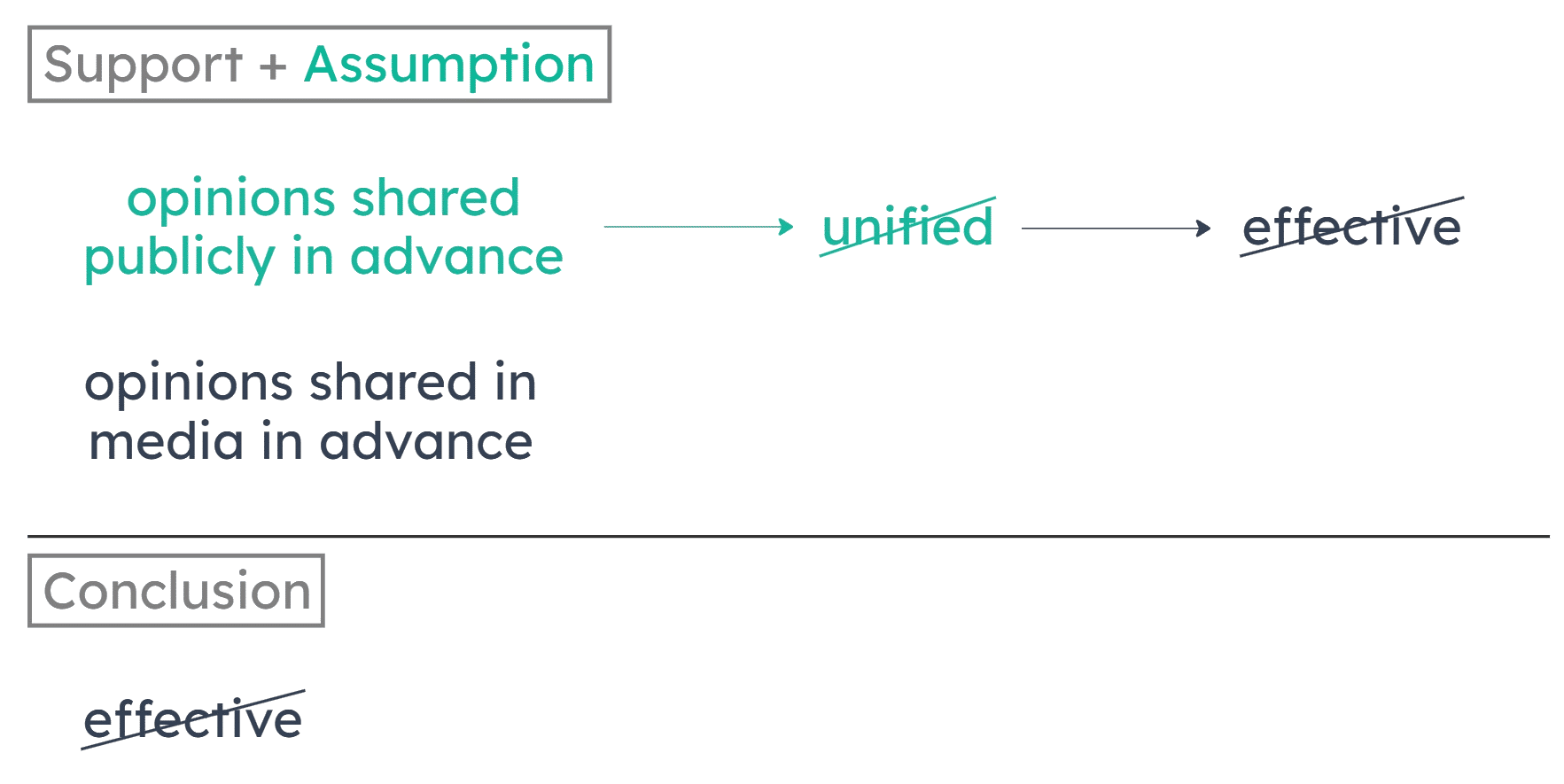
If commission members ███ ███ █████████ █████ ████████ █████ ████████ ████████████ ██ ███ ████ █████ ██████ ███ ██████ ███ ██████████ █████ █████ ████ ████ ████ ██████ ███████████ █████ ████ █████ █████ █████
(D) doesn’t establish that the commission is speaking without a unified voice.
The commission's report ████ ███ ██ █████████ ██ ████ ██ ███ ██████████ ███████ ███████ ███ ████████ █████ ███ ████████ ████████ ████████████ ████ ██████ ███ ██████████ ███ ███████
We don’t know from the premises that any members already had opinions before the commission was formed. We know they have expressed opinions before completion of the report. But this doesn’t imply that they had any opinion before the formation of the commission.
Answer five questions and we'll estimate your score.
It takes about five minutes.
Take the free diagnosticWant to know why the right answer is right?
7Sage membership unlocks explanations of every question. Every answer choice. On every official PrepTest. Start with a free account.
By signing up you agree to our
terms of service.
This site is protected by reCAPTCHA and the Google
Privacy Policy
and
Terms of Service
apply.