


Support A smaller number of short documentary films than of full-length science-fiction films are commercially successful, even though Support there are more short documentary films than there are science-fiction films. ██████████ █ ██████ ██████████ ██ ███████████ ███████████████ █████ ████ ██ █████ ███████████ █████ ███ ████████████ ███████████
If you didn’t write any notes as you considered this question, you’re making your brain do way too much work. There are literally 9 moving pieces to track within the stimulus' three “[Thing 1] is [bigger/smaller] than [Thing 2]” relationships. Thinking about an answer choice as well brings that number to 18.
You might be capable of tracking 18 things simultaneously in your head, but it’s much faster and easier to jot down a few notes.
This stimulus exhibits valid percent vs. amount reasoning. It features two premises about numbers and a conclusion about percents. The core relationship in play is that the percentage of successful films is the number of successful films divided by the number of films created:

The
The
The
*I’ll discuss the jump from “Full Sci-Fi” to “Sci-Fi” underneath (B).
Here’s the argument’s full diagram, with info from premise 1 in pink and info from premise 2 in green:

This conclusion is valid. The Short Docs percent comes from dividing a small number by a big number, and the Full Sci-Fi percent comes from dividing a big number by a small number. The Full Sci-Fi percent is bigger.
The core relationship at play in the answer choices is that the percentage of tubs per apartment is the number of tubs divided by the number of apartments:

We’re looking for the answer choice with a premise about the number of tubs, a premise about the number of apartments, and a conclusion about the percentage of tubs. Oh yeah, and the “bigger than” “smaller than” relationships need to pencil out too.
Which one of the following █████████ ██ ████ ███████ ██ ███ ███████ ██ █████████ ██ ███ ████████ ██████
A greater number ██ █████ ██████ ██████████ ████ ██ █████ █████████ ██████████ ████ ████████████ █████████ ██████ █ ███████ ██████████ ██ █████ █████████ ██████████ ████ ██ █████ ██████ ██████████ ████ ████████████ █████████
(A) should fail your shallow dip because it’s missing an entire premise. It’s a great example of flawed reasoning that follows the percent vs. amount pattern.
(In fact, take a moment to articulate the objection to this reasoning. It’s good practice.)
We’ve got a premise about the number of tubs and a conclusion about the percentage of tubs, but we’re missing the premise about the number of apartments.
A greater number ██ █████ █████████ ██████████ ████ ██ ██████ ██████████ ████ ████████████ █████████ ████ ██████ █████ ███ ████ ██████ ██████████ ████ █████ ███ █████████ ███████████ █████ █ ██████ ██████████ ██ █████ █████████ ██████████ ████ ██ ██████ ██████████ ████ ████████████ █████████
(B) matches the stimulus’ reasoning point-for-point.
The first premise is about the top number (# of tubs). It says the number of tubs in Modern apartments is lower than the number of tubs in Victorian apartments.
The second premise is about the bottom number (# of apartments). It says the number of Modern apartments is higher than the number of Victorian* apartments.
The conclusion is about the percentage of apartments that have tubs. It says the percentage of Modern apartments with tubs is lower than the percentage of Victorian apartments with tubs.
Here’s a full diagram, with info from premise 1 in pink and info from premise 2 in green:
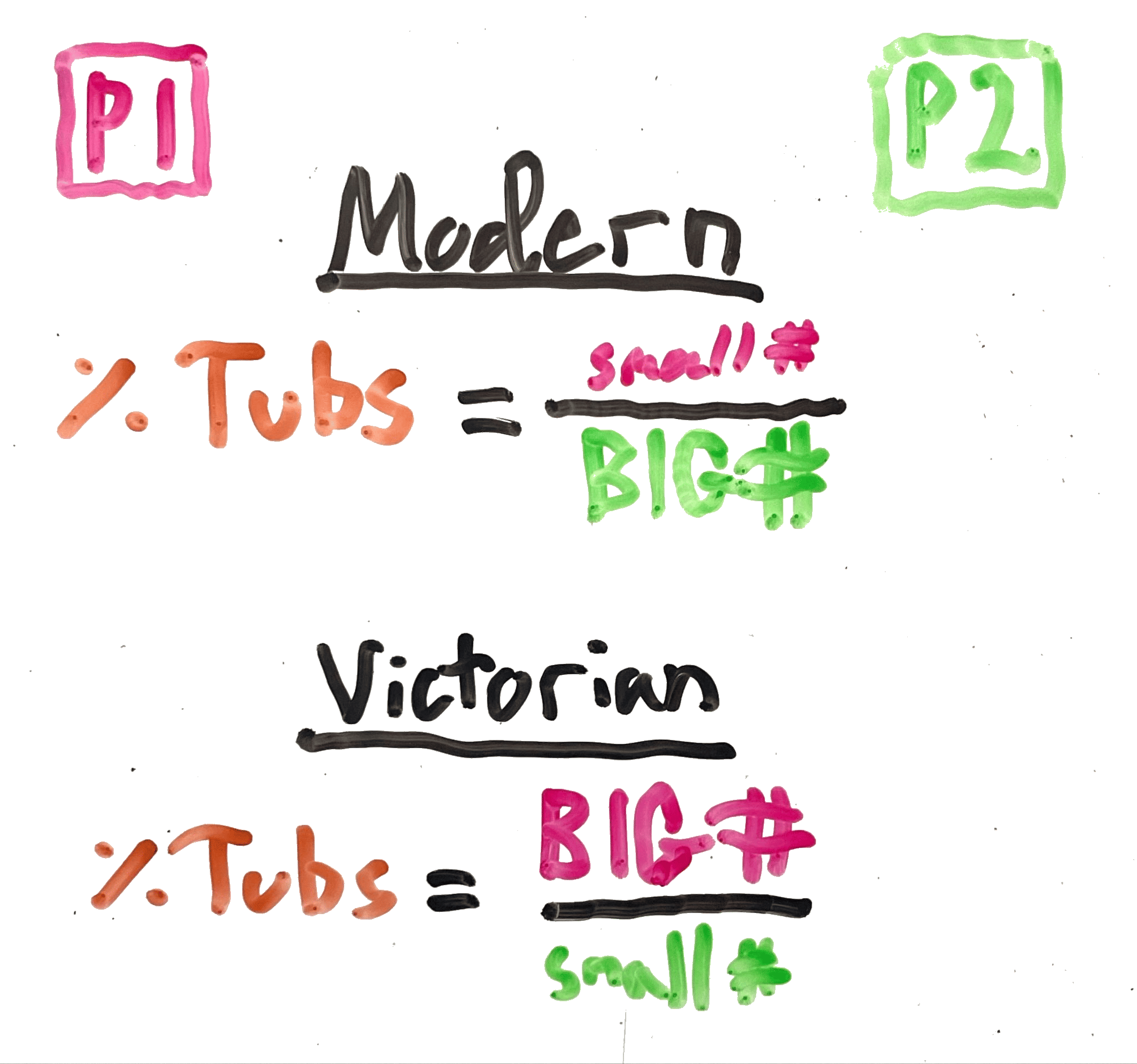
This conclusion is valid. The Modern percent comes from dividing a small number by a big number, and the Victorian percent comes from dividing a big number by a small number. The Victorian percent is bigger.
*But what about the jump from large Victorian apartments in premise 1 to just Victorian apartments in premise 2? Two points on that.
First, the stimulus does the same thing, jumping from full-length Sci-Fi in premise 1 to just Sci-Fi in premise 2. So (B) at least matches up.
Second, although this is indeed a jump between different concepts, it’s a jump from a subset to a superset, which doesn’t interfere with the reasoning in this case because the premise we’re given implies the premise we want. That is:
If there are more Short Docs than there are Sci-Fi films of any kind, then there are more Short Docs than the subset of full length Sci-Fi films.
If there are more Modern apartments than there are Victorian apartments of any kind, then there are more Modern apartments than the subset of large Victorian apartments.
A smaller number ██ █████ ██████ ██████████ ████ ██ █████ █████████ ██████████ ████ ████████████ █████████ ███ ████ ██████ █████ ███ ████ █████ ██████ ██████████ ████ █████ ███ █████████ ███████████ █ ██████ ██████████ ██ █████ █████████ ██████████ ████ ██ █████ ██████ ██████████ ████ ████████████ █████████
It’s subtle, but (C) should die on your shallow dip because (C)’s first sentence is its conclusion, as indicated by the word for in the second sentence.
Everything else matches up, so catching this straight away is critical not just to get the question right, but also to avoid the time sink of comparing (B) and (C) – and (D), by the way – in detail.
You really should aspire to be so keyed in to premise and conclusion indicators that you catch the “for” thing during your shallow dip. If you didn’t, I highly recommend you go back and do some more premise and conclusion drills.
Not even because you’re necessarily bad at telling premises and conclusions apart – you’re probably pretty good at it when you know that’s the game you’re playing. Really the skill to practice is constant vigilance. It’s continual attunement to this foundational LSAT concept, which is so often the difference-maker between right and wrong answers.
A greater number ██ █████ █████████ ██████████ ████ ██ █████ ██████ ██████████ ████ ████████████ █████████ ██ █████ ███ ████ █████ ██████ ██████████ ████ █████ ███ █████ █████████ ███████████ █████ █ ██████ ██████████ ██ █████ █████████ ██████████ ████ ██ █████ ██████ ██████████ ████ ████████████ █████████
(D) should die on your shallow dip because (D)’s second claim is its conclusion, as indicated by the word so at the beginning of the second clause and the word since at the beginning of the third clause.
Everything else matches up, so catching this straight away is critical not just to get the question right, but also to avoid the time sink of comparing (D) and (B) and (C) in detail.
You really should aspire to be so keyed in to premise and conclusion indicators that you catch the “so” thing during your shallow dip. If you didn’t, I highly recommend you go back and do some more premise and conclusion drills.
Not even because you’re necessarily bad at telling premises and conclusions apart – you’re probably pretty good at it when you know that’s the game you’re playing. Really the skill to practice is constant vigilance. It’s continual attunement to this foundational LSAT concept, which is so often the difference-maker between right and wrong answers.
A smaller number ██ ██████ ██████████ ████ ██ █████████ ██████████ ████ ████████████ █████████ ████ ██████ █████ ███ █████ ██████ ██████████ ████ █████ ███ █████ █████████ ███████████ ████ ███████████ ████ █ ██████ ██████████ ██ █████████ ██████████ ████ ██ ██████ ██████████ ████ ████████████ █████████
(E) is wrong because the “bigger than” and “smaller than” relationships don’t pencil:
The Modern tubs # is smaller than the Victorian tubs #.
The Modern apartments # is also smaller than the Victorian apartments #.
This makes the percent comparison inconclusive. When you’re dividing a small number by a small number, that’s not necessarily bigger or smaller than dividing a big number by a big number. Behold this mathematical proof:
Answer five questions and we'll estimate your score.
It takes about five minutes.
Take the free diagnosticWant to know why the right answer is right?
7Sage membership unlocks explanations of every question. Every answer choice. On every official PrepTest. Start with a free account.
By signing up you agree to our
terms of service.
This site is protected by reCAPTCHA and the Google
Privacy Policy
and
Terms of Service
apply.