


Support A book tour will be successful if it is well publicized and the author is an established writer. █████ ██ ██ ███████████ ███████ ███ ███ ████ ████ ███ ███████████ ██ ███ ████ ████ ████ ████ ████ ████ ███████████
The argument starts by establishing a conditional relationship with a conjunction in the sufficient condition. It then concludes that part of the sufficient condition must be present (well publicized) because the necessary condition (successful tour) and the other part of the sufficient condition (established writer) are met. 
This argument features the cookie-cutter flaw of confusing necessary and sufficient conditions. Just because the necessary condition is met (successful tour) does not mean that either element of the sufficient condition must be met. We’re given one part of the sufficient condition (well publicized), but this tells us nothing about the remaining condition.
Which one of the following ████████ █ ███████ ██ ██████ █████████ ████ ███████ ████████ ██ ███ ███████ ██ ██████ █████████ █████████ ██ ███ ████████ ██████
This recipe will ████ ███ ████ ██ ███ ███████ ██ ███████ ███ ████ ████████████ ████████████ ██████ ████████ ███ ██████ ███████ ███ ██ ██████ ████ █████ ██████ ████ ████ ████ ████████████ ████████████
No flaw. (A) gives us a conditional statement with two variables in the necessary condition. It then validly concludes that the presence of the sufficient condition (the recipe turning out) and part of the necessary condition (following the recipe exactly) will lead to the remaining part of the necessary condition (high-quality ingredients). The stimulus, however, features an incorrect reading of a conditional statement with two variables in the sufficient condition, so (A) doesn’t match.
If a computer ███ ███ ███████ ██████████████ ███ ███ ████ ██████ ██████████ ██ ████ ████ ████████ █████ ████ █████ ████ ████████ ███ ████████ █████ ████ █████ ██ ██ ████ ████ ███ ███ ███████ ██████████████ ███ ███ ████ ██████ █████████ ████ █████
Wrong flaw. (B) does give us a conditional statement with two variables in the sufficient condition, but the necessary condition is not met. We need to know that Aletha’s needs were met this year, not last year. The stimulus, meanwhile, concludes that the presence of a necessary condition leads to the sufficient condition, so (B) doesn’t match.
If cacti are ████ ██ ███ █████ ███ ███████ ████ ████ █████ ███████ ████ ████ ████ ████ ██████ ███ ████ ██ ███ ██████ ███ ██ ██ ███ █████ ██████████ ██ ████ ████ ████ ███████ ████ ████ █████ ███████
The argument starts by establishing a conditional relationship with a conjunction in the sufficient condition. It then concludes that part of the sufficient condition must be present (watered more than twice weekly) because the necessary condition (the cactus dying) and the other part of the sufficient condition (kept in the shade) are met. The stimulus also concludes that part of a sufficient condition is met because the necessary condition and the other part of the sufficient condition are met, so (C) matches.
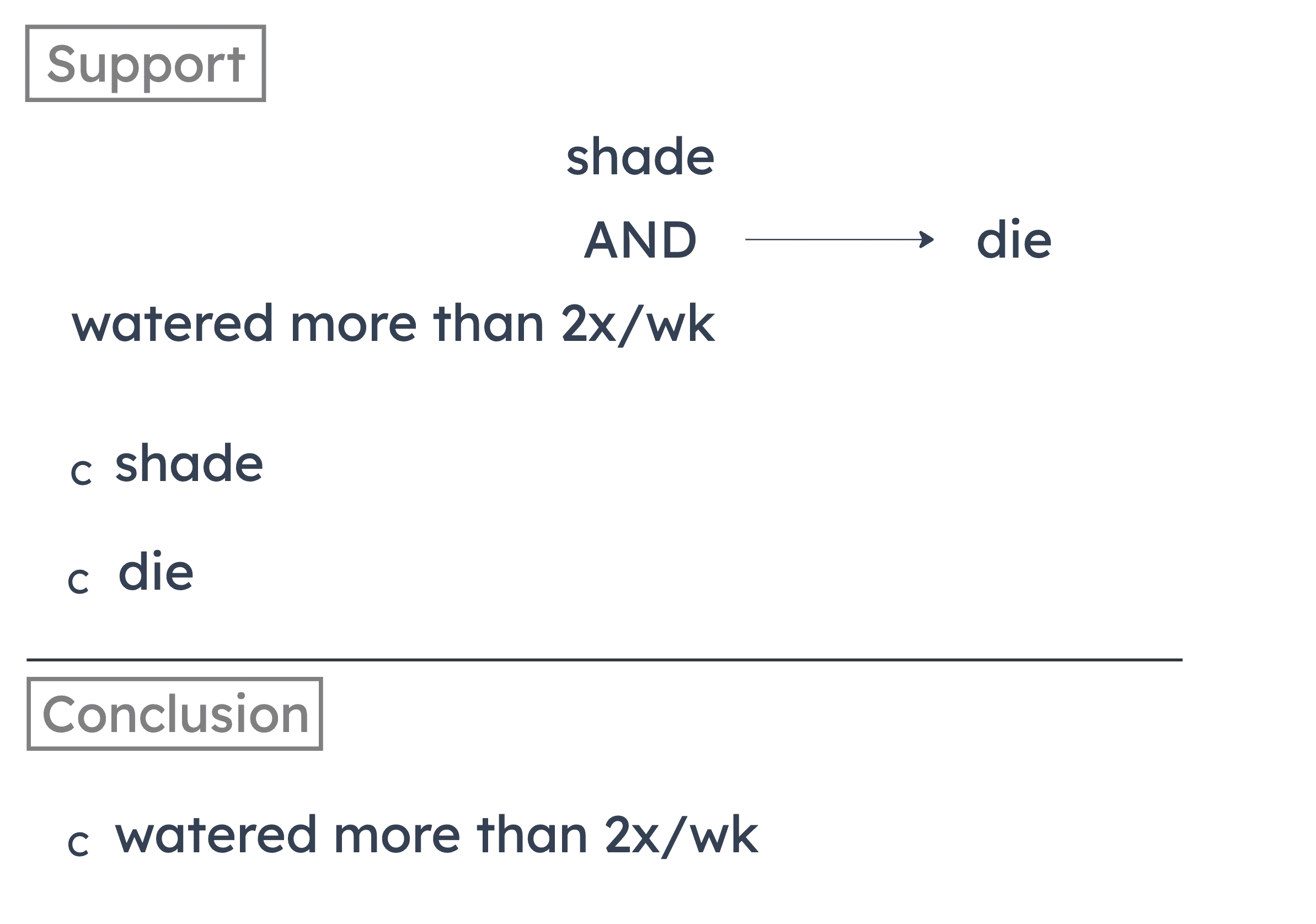
A house will ██████ ████ ███ ███ ███ ████ ████████ ████ ██ ██ ██ █████ ████ █ ████ █████ ██████ ████ █████ ███████ ████ ███ ███ ███ ███ ████ █████████ █████ ██ ████ ████ ████ █████ ████ █ ████ █████ ██████
No flaw. (D) establishes a conditional relationship: if dry rot and poor drainage, then near a high water table. It then correctly concludes that the presence of both parts of the sufficient condition leads to the necessary condition. The stimulus, meanwhile, confuses a necessary condition with a sufficient one, so (D) doesn’t match.
If one wears █ ████ ████ ███ ██████ █████ ███ ██████ ███████ ███ ████ ██ ███████████ ████████ ███ ████ ████ ██████ ████ ██ ██████ ████ █████ ███ ██████ █████ ███ ██████ ███████ ██ ██████ ████ ████ ████ ███████████ ████████
No flaw. (E) establishes a conditional relationship: if double vents and narrow lapels, then fashionably dressed. It then correctly concludes that the presence of both parts of the sufficient condition leads to the necessary condition. The stimulus, meanwhile, confuses a necessary condition with a sufficient one, so (E) doesn’t match.
Answer five questions and we'll estimate your score.
It takes about five minutes.
Take the free diagnosticWant to know why the right answer is right?
7Sage membership unlocks explanations of every question. Every answer choice. On every official PrepTest. Start with a free account.
By signing up you agree to our
terms of service.
This site is protected by reCAPTCHA and the Google
Privacy Policy
and
Terms of Service
apply.