


A promise is defined as any agreement that yields an obligation. ██ ██ ██████████ ███ ██ ████ █████ ███████ ██ ██████ ███ ██████ ██ ████ ███ ███████ ██ ████ █████ ███ ████████ ███ ██ ████ ███ ██ ███ ████████ ██ ██████ ██ ███████ ███ ██████████ ███ ██ █████████████ ██████ ███ ██████████ ████████
We’re given a conditional statement that tells us when it’s okay to break a promise:
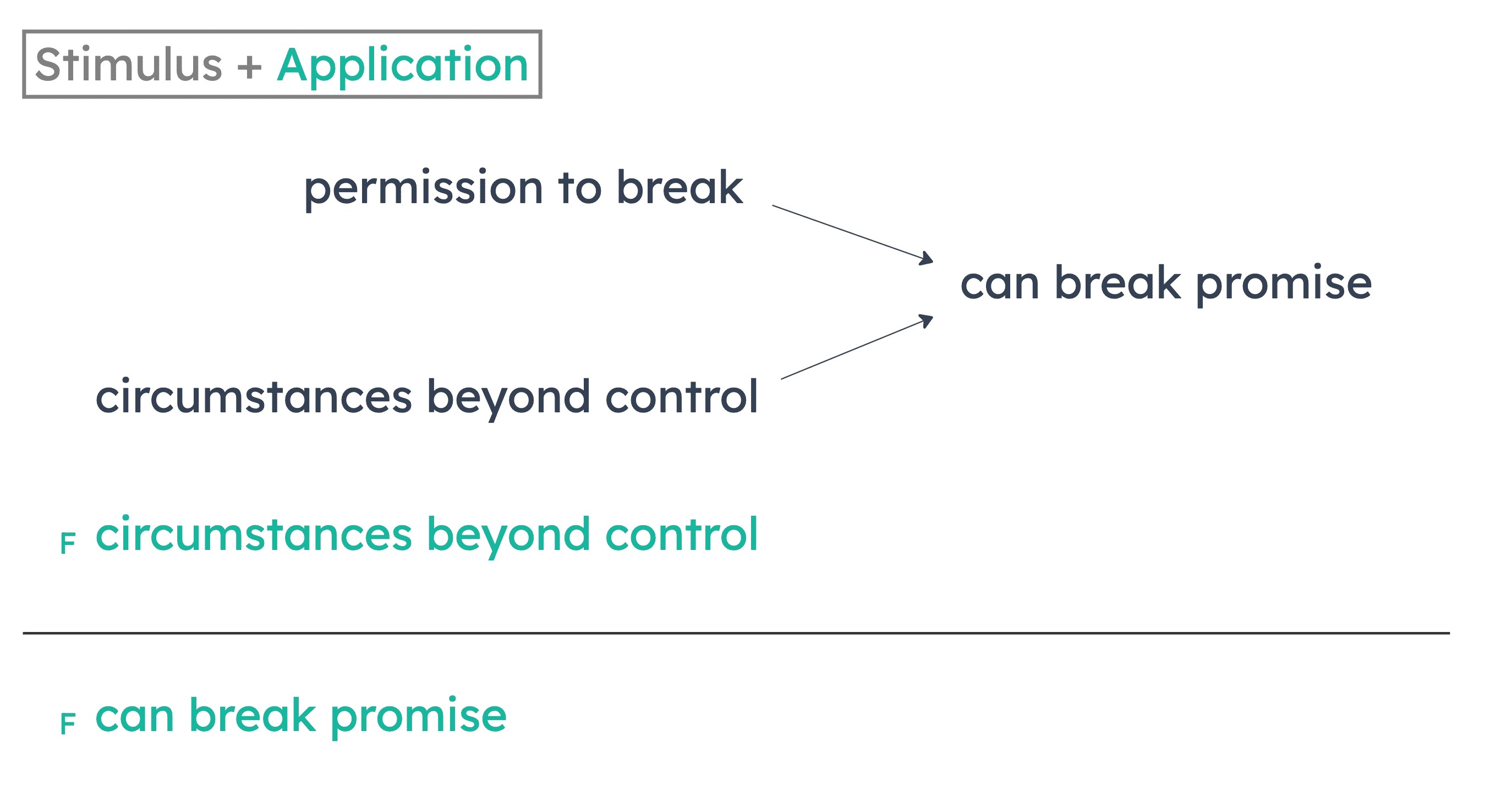
If the person we made the promise to says it’s okay to break it, or if we can’t fulfill the promise due to a situation outside our control, then it’s okay to break a promise.
We need to find the right application of the principle. We can prove conclusions about when it’s okay to break a promise, but we can’t prove anything else—e.g. when we should keep a promise.
If either condition is satisfied—either the person we made a promise to says we can break it or we can’t fulfill the promise due to outside forces—then we can conclude it’s okay to break the promise.
Which one of the following ██ ██ ███████████ ██ ███ █████████ █████ ██████████ ██ ██████████
Paul agreed to ████ ███ ████ ███ ████ ████ ████ █████ ████ ██ ██ ██ ████████████ ███ ████ ██ ███████ ███ ███████ ██ ████ ███ ███ █████ ██ █████ ████ █████ ██████
Wrong conclusion. We can’t prove when it’s wrong to fulfill a promise. We can only conclude when it’s okay to break one.
Felicia agreed to █████ ████ ██ ███████████ ██ ████████ ████████ ██ ███ ███ ██ ███ ████████ ████████ ████ ███ ███████ ██ █ ███ ████████ ███ ███ ██████ ██ ██████ ████ ████ █████ ██ ███ ██████████ ███ ███████ ███ ██ █████ ████ ██ ███████████ ██ ████████
Felicia made a promise to tutor Alan, but an outside force—Alan’s accident—made the promise impossible to fulfill. Thus, according to our principle, it was okay for Felicia to break her promise.
Mika agreed to ████ ████ ████ ██ ███████ ███ ████ ██████ ████ ██ ███ ████████ ██████ ███ ████ ███ █████ ███ ██ ████ ███ ████ ██ ████████ ████████ ██ ██ █████ ██ ████████████ ███ ████ ███ ██ ███████ ██ ████ ████ ████ ██ █████████
Wrong conclusion. Owen is trying to get Mika to make a new promise—helping him on Saturday instead. Our principle only supports conclusions on when it’s okay to break a pre-existing promise, so we can’t conclude if Mika must make the new promise.
Quinn agreed to █████ ███████ ██████ █████ █████ ███ ███ ██ █████ ███ █████ ███ █████████ ██ ████ █████ ███ ████ ██ ███ ██████ ████████ ██ ███ ████████████ ███ █████ ██ ████ ██ ███████ ███ ███████ ██ ██████ █████ █████ ███ ███ ██████ █████ ████ ███ ██████████ ██ █████ ███ ███████
Wrong conclusion. We can only conclude when it’s okay to break a promise. We have no information on when it’s not okay to break a promise, so (D) is the opposite of what we’re looking for.
Ian agreed to ████ ██ ███ ██ ███ █████ ████████ ███ ███ ███████ ██ ████ ███ ██████ ███ ███████ ███████ █████ ██████ ██ █ ███████ ███ ███ ██████ ██ ████ ██ ███ ██ ███ █████ ████████ █████ ██ ███ ██████████ ███ ███ ██ ████ ██ ████ ██ ███ ██ ███ █████ ████████
Wrong trigger. We need to know that Ali told Ian he could break his promise, or that some factor outside Ian’s control prevented him from keeping his promise. It was entirely Ian’s decision to stop by the library, so we can’t conclude it’s okay to break his promise.
Answer five questions and we'll estimate your score.
It takes about five minutes.
Take the free diagnosticWant to know why the right answer is right?
7Sage membership unlocks explanations of every question. Every answer choice. On every official PrepTest. Start with a free account.
By signing up you agree to our
terms of service.
This site is protected by reCAPTCHA and the Google
Privacy Policy
and
Terms of Service
apply.