


Support All poets, aside from those who write only epigrams, have wit. ███ ███████ █████████ ███ ██████ ██████ ████ ███ █████ █████████ ██████ ██ ██ █ ███████ █████████ ██ ██████ ███ ████
If thinking about this question in English is easier for you than using formal logic, you need more practice gaining fluency in formal logic. Think of English and formal logic as two closely-related tools, like a hand screwdriver and a power screwdriver. While it’s true that any job you can complete with one you could also complete with the other, they each have niche uses in which they excel. If you find yourself tackling a line of 100 wood screws with a hand screwdriver, you need to get better with the power screwdriver.
This argument has a thorny structure, and the walkthrough for getting there is gonna get pretty real. In hindsight, this question is arguably best answered by just trying to match up all the statements one-for-one instead of trying to keep the entire structure in mind. I’ll walk you through the structure, though.
First, here’s an answer key of sorts – a full list of premises and (sub)conclusions, and a janky diagram laying out the core logic:
Premise 1: Poet and /Epigram → Wit
Premise 2: Lyrical → Poet
Premise 3: A/Epigrams
Premise 4: ALyrical
Sub-Conclusion (P4 + P2): APoet
________
Conclusion (SC + P3 + P1): AWit
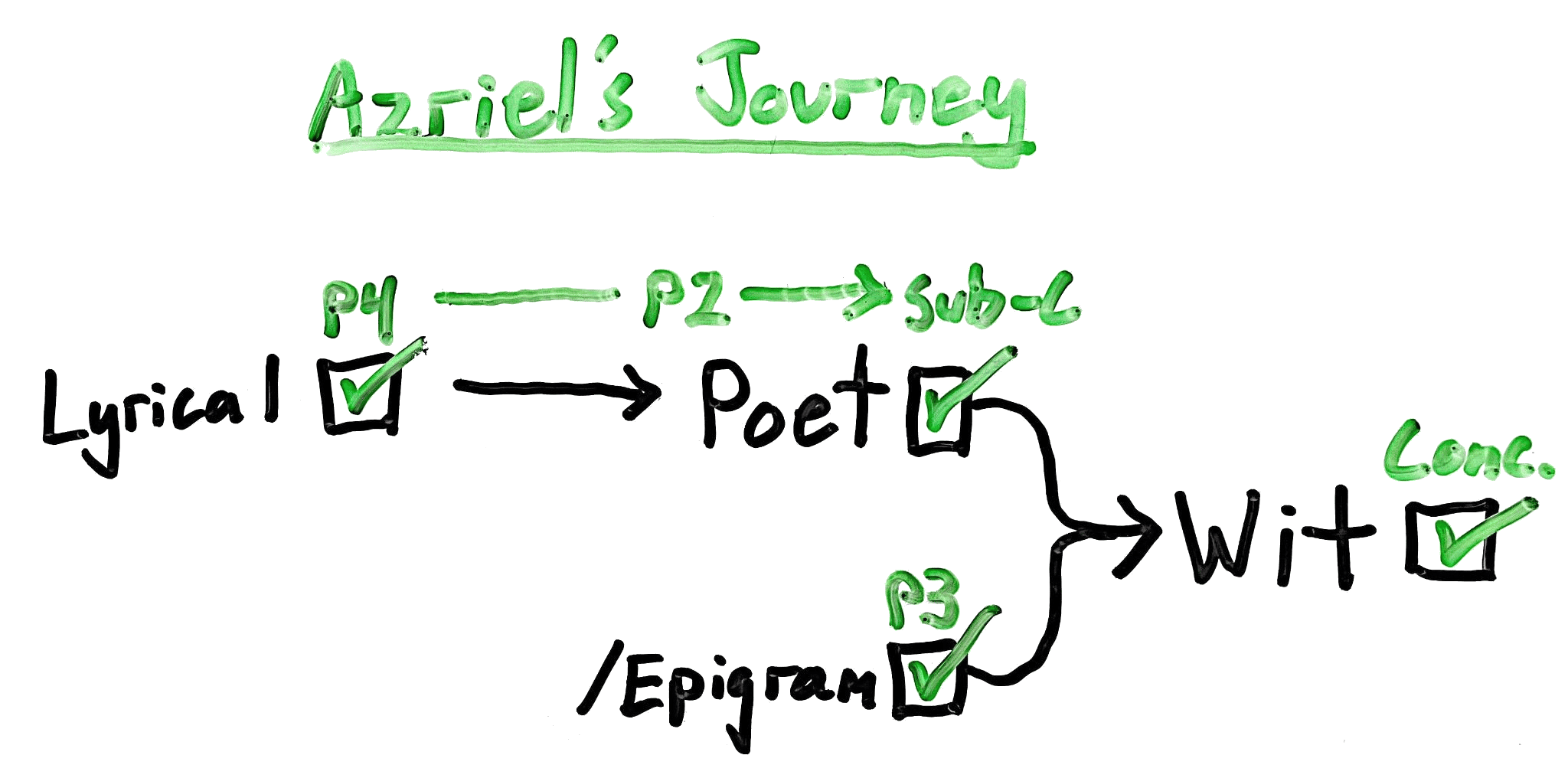
This argument is a syllogism with a few extra steps. We’ve got two sufficient conditions (Poet and /Epigram) that, when both fulfilled, lead to Wit. We’re given one of them (/Epigram) directly. The other one (Poet) comes indirectly – we’re given another sufficient condition (Lyrical) that leads there, and then that condition is fulfilled.
Premise 1 is probably the hardest. Here it is again:
Premise 1: Poet and /Epigram → Wit
A couple things to break down here. First is how to arrive at the [Blah] and [Blah] structure. For that, let’s just ask who this rule applies to. Well, it kinda applies to all poets:
Poet → Wit
But no, I guess not all poets. There’s a subset of poets (the Epigram ones) who are exempt from the rule. But our focus isn’t on those exceptions – our focus is on the people to whom the rule does apply. Those are the Poets who aren’t in the exempted group: the Poet and /Epigram people.
Next, the word
Premise 2 is comparatively simple. It establishes a conditional link between lyrical composers and poets:
Premise 2: Lyrical → Poet
If we learn someone is a Lyrical-type person, we can infer they’re a Poet-type person.
The third sentence gives us two characteristics that apply to a specific individual, our boy Azriel:
Premise 3: A/Epigrams
Premise 4: ALyrical
(If you’re rusty on this notation, review it here.) Premise 3 says Azriel is not a member of the “writes only epigrams” club. That’s huge. It gives us one of the two conditions we need to conclude he has Wit.
Premise 4 says he is a member of the “lyrical composers” club. That’s a bit meh on its own, but we can combine Premise 4 with Premise 2 to infer that Azriel is a Poet:
Sub-Conclusion 4+2: APoet
That’s big: now that we know he’s a Poet and a /Epigram-type person, we can use Premise 1 to infer he has Wit.
Conclusion (SC + P3 + P1): AWit
It’s a complex structure for sure. Now that we have all the claims laid out cleanly, though, matching each claim in the answer choices up with its counterpart in the stimulus will be a lot easier.
The pattern of reasoning in █████ ███ ██ ███ █████████ ██ ████ ███████ ██ ████ ██ ███ ████████ ██████
All squeeze toys, ██████ █████ ████████ ███ █████ ███ ████ ███ ████████ ███ ███████ ████ ███ ████ ███████████ ████ ████ ██ ███ ████████ ███ █████ ███ ██ ██ ████ ███████████ ██ ██ ████ ██ ████ ███ ████████
(A) should fail your shallow dip at its second sentence, when its Premise 2 reuses a sufficient condition from Premise 1.
Premise 1: Squeeze and /Cats → Safe
Premise 2: Squeeze → Prewrapped
To match the stimulus’ Premise 2, we’d need to tack another rule on to the left of Squeeze. Like:
Premise 2 (match): Prewrapped → Squeeze
(A)’s Premise 3 and Conclusion both match, so the argument would match if you swapped Premise 2 left-to-right. In other words, it’s the converse of the Premise we need.
Aside from the ██████████ ███ ███ ██████ ██████ ███ ██ ███ ███████████ ██ ████ ███ ████████ ███ ██ ███ ███████████ ██ ████ ████ █████████ ███ ██ █ ██████████ ██ █████ ███ ██ ███████ ███ ██████████ ███ ███ ██████ ██████ █████ ███ ██ █ ██████████ ██ ████ ██ ████ ████ █ ████████
(B) is immediately a bit sus because its first Premise includes two exceptions instead of just one.
Premise 1: Politician + /Dogcatcher + /Chief → Lawyer
Like (A), it should fail your shallow dip when Premise 2 reuses a sufficient condition from Premise 1:
Premise 2: Politician → Website
To match the stimulus’ Premise 2, we’d need to tack another rule on to the left of Politician. Like:
Premise 2 (match): Website → Politician
From there (B) gets weird. Without tracking everything else, simply note that its conclusion just applies Premise 2 to Sal without inferring anything from Premise 1 at all.
All visas are ████████ ██ ████ ███████ ██████ ███ █████ ████ ███ ██████ ███████ ██████████ █████████ ███ █████ ███████ ███ ██████ █████ ███ █████ ██████ ██ ██████ ████████ ███ ████████ ███████ ██████████ █████████
(C) starts off great, with Premises 1 and 2 matching our stimulus:
Premise 1: Visa and /Diplomatic → This Office
Premise 2: Visit → Visa
The wording is a bit weird, but (C) also matches the stimulus’ Premise 4, letting us link up with Premise 2 to infer Will has a Visa:
Premise 4: WillVisit
Sub-Conclusion (P4 + P2): WillVisa
Then (C) stops matching in a few ways – it comes to a mismatched conclusion, and it’s missing a Premise entirely:
Conclusion: WillDiplomatic (should be WillThis Office)
Missing Premise: Will/Diplomatic
All of this ███████ ██████ ████████ ███ ██ █████ ██████ ███ ███ ████████ ████████ ████ ██ ███ ██████ ██ ████ █████ ███ ████████ ████████ ████ ██████ ██████████ █████ ██ ██ ██ █████ ██ █ ██████ ████████
Premises 1 and 2 match, even though Premise 2 links a new concept up with the second (negated) term instead of the first. Negations aren’t a core structural element we need to preserve.
Premise 1: Winter and /Designer → Sale
Premise 2: Shirts → /Designer
(D)’s last sentence is complicated – it holds three claims. The first one matches our Premise 4, letting us link up with Premise 2, just like in the stimulus:
Premise 4: This ObjectShirt
Sub-Conclusion (P4 + P2): This Object/Designer
Now it’s finally time for (D)’s mismatch – it swaps Premise 3 with the Conclusion:
Premise 3: This Object Sale (that’s supposed to be our Conclusion)
Conclusion: This ObjectWinter (that’s supposed to be Premise 3)
All residential buildings ███ ███████ ██ ███ ████████ ████ █████ ██████ ███ █████ █████ ████ █████ ███ ██████████ ███ ███████████ ██████████ █████ █████ ███ ███ █████ ████ █████ ███ ██ ██ █ ██████████ ██ ██ ██ ███████ ██ ███ ████████ ████ █████
(E) matches our stimulus one-for-one. It didn’t have to match so closely – they could have swapped the order around, or fiddled with the negations, or incorporated some contrapositives – but the test-writers seem to have thought it was hard enough as is. Fair. Here’s the logic:
Premise 1: Residential and /Built Last Year → OG Code
Premise 2: Townhouse → Residential
Premise 3: Bloom/Built Last Year
Premise 4: BloomTownhouse
Sub-Conclusion (P4 + P2): BloomResidential
________
Conclusion (SC + P3 + P1): BloomOG Code
Answer five questions and we'll estimate your score.
It takes about five minutes.
Take the free diagnosticWant to know why the right answer is right?
7Sage membership unlocks explanations of every question. Every answer choice. On every official PrepTest. Start with a free account.
By signing up you agree to our
terms of service.
This site is protected by reCAPTCHA and the Google
Privacy Policy
and
Terms of Service
apply.