
Self-study
Newspaper editor: Law enforcement experts, as well as most citizens, have finally come to recognize that legal prohibitions against gambling all share a common flaw: no matter how diligent the effort, Support the laws are impossible to enforce. ███████ ██████ ████████████████ ████ █ ███ █████ ██ ██ ██████████ ██ ██████ ███ ██ █ ████ ████ ██ ███ █████ ██████ ██ ██ █████ ███████████ ███████ █████████
Summary
The conclusion is that there shouldn’t be a legal prohibition against gambling. This is based on the following:
Gambling laws can’t be enforced.
If a law is not effective, it should not be a law.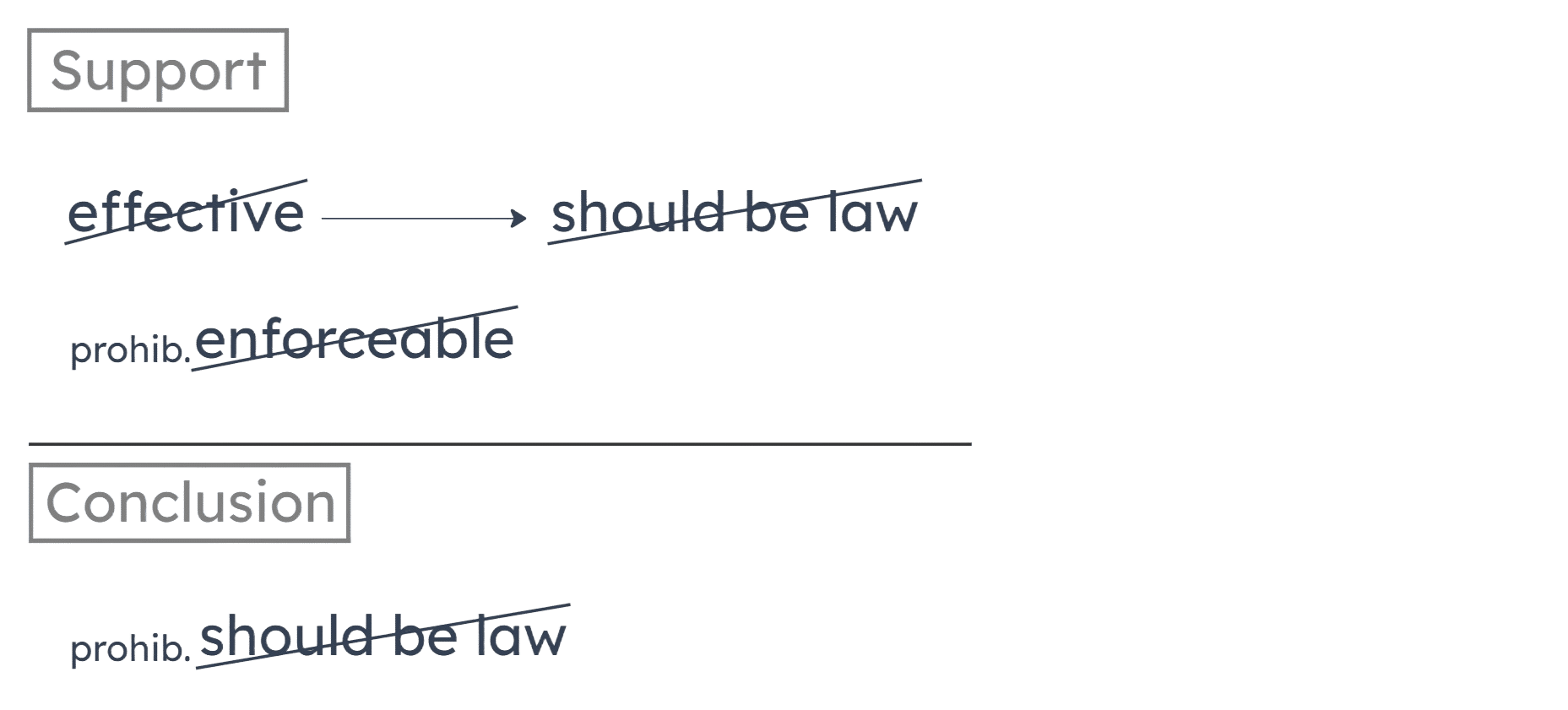
Missing Connection
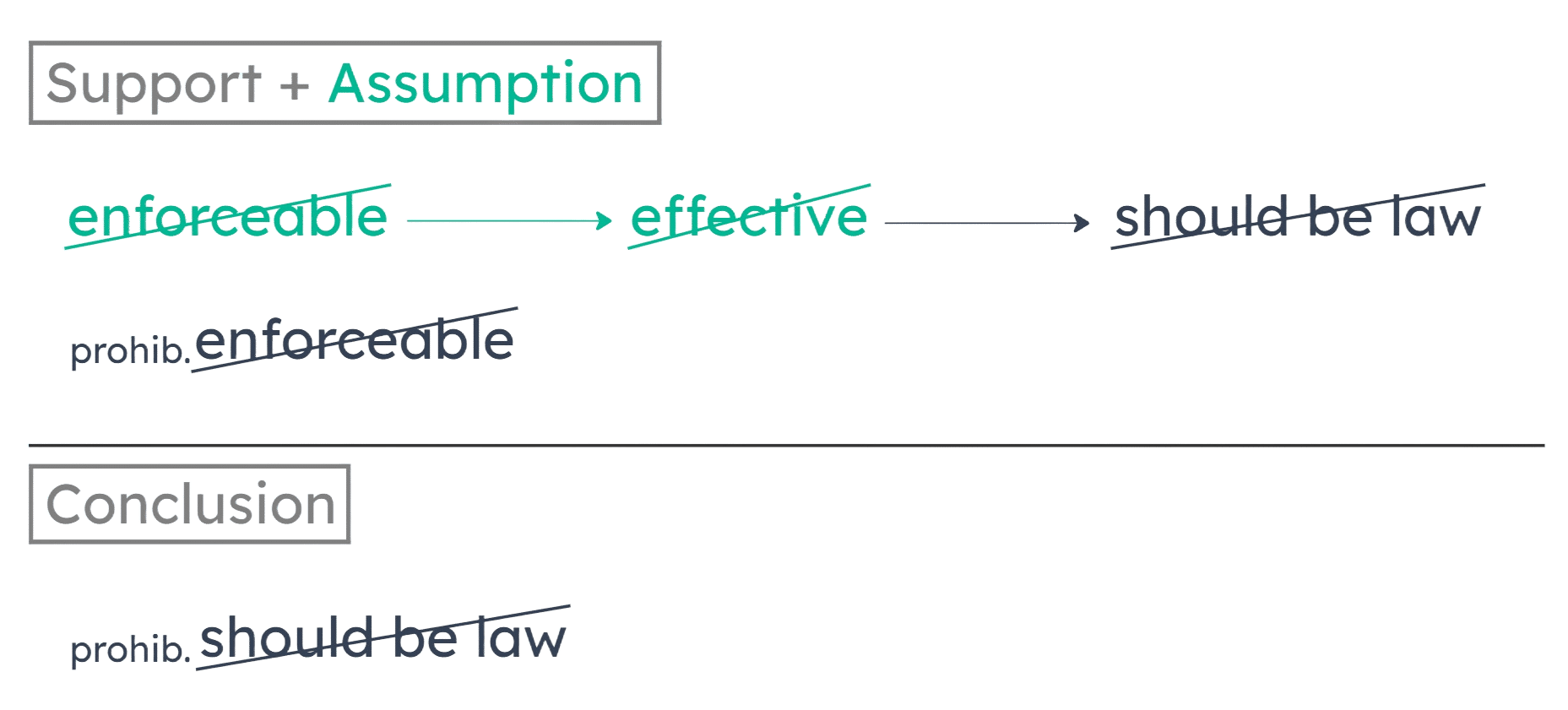
The second premise (if a law is not effective, it should not be a law) gives us a way to prove that something shouldn’t be a law. So if we can learn that gambling laws aren’t effective, we can prove that they shouldn’t be laws. The first premise establishes that gambling laws can’t be enforced. There’s a missing link between “can’t be enforced” and “not effective.” We should go to the answers looking for “If a law can’t be enforced, then it’s not effective.” Or, the contrapositive: “If a law is effective, it has to be enforceable.”
 Analysis by KevinLin
21.
Which one of the following, ██ ████████ ██████ ███ ██████████ ██████████ ██ ██ ████████ ██████
a
No effective law ██ ██████████████
b
All enforceable laws ███ ██████████
c
No legal prohibitions ███████ ████████ ███ ████████████
d
Most citizens must █████ ████ █ ███ ███ ███ ███ ██ ██ ██████████
e
Most citizens must █████ ████ █ ███ ███ ███ ███ ██ ██ ████████████