


Newspaper editor: Law enforcement experts, as well as most citizens, have finally come to recognize that legal prohibitions against gambling all share a common flaw: no matter how diligent the effort, Support the laws are impossible to enforce. ███████ ██████ ████████████████ ████ █ ███ █████ ██ ██ ██████████ ██ ██████ ███ ██ █ ████ ████ ██ ███ █████ ██████ ██ ██ █████ ███████████ ███████ █████████
The conclusion is that there shouldn’t be a legal prohibition against gambling. This is based on the following:
Gambling laws can’t be enforced.
If a law is not effective, it should not be a law.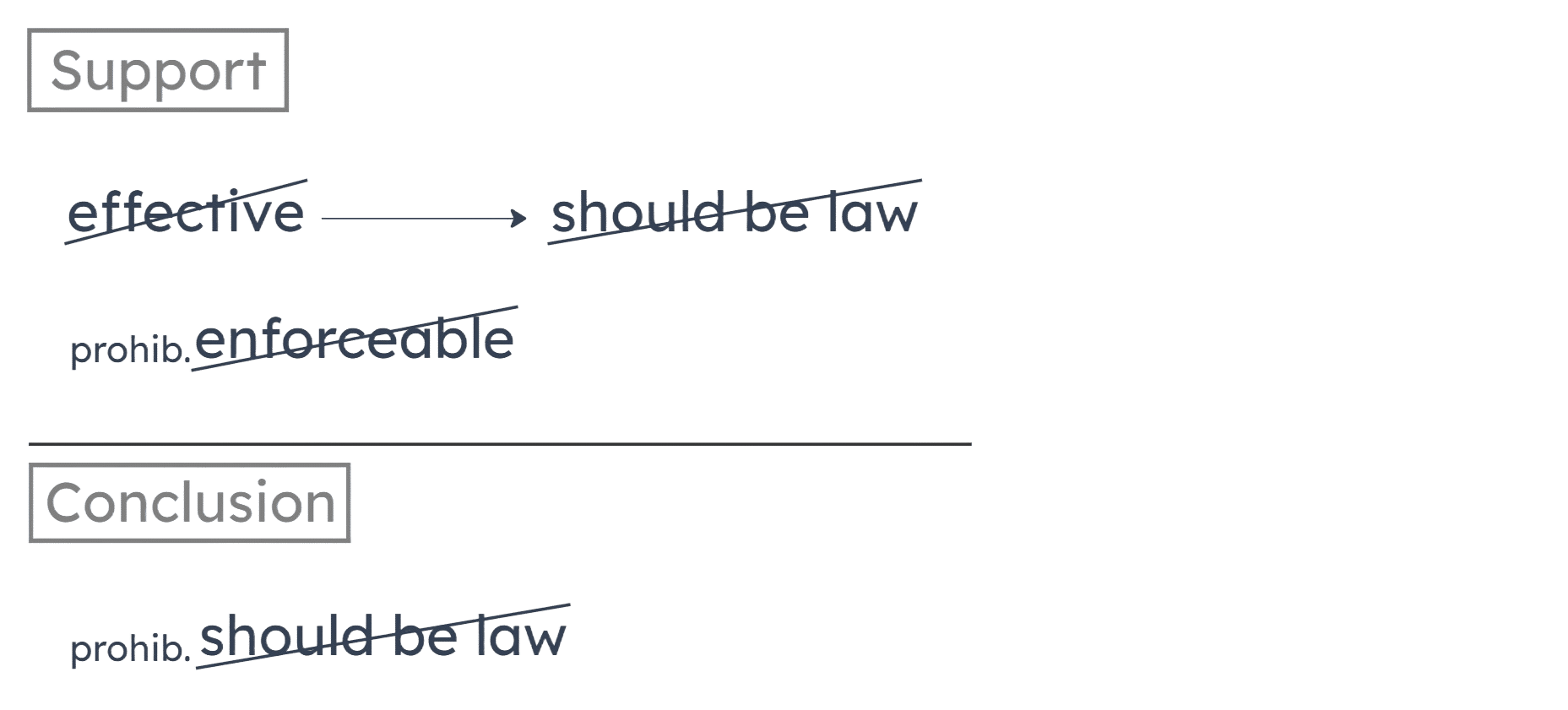
The second premise (if a law is not effective, it should not be a law) gives us a way to prove that something shouldn’t be a law. So if we can learn that gambling laws aren’t effective, we can prove that they shouldn’t be laws. The first premise establishes that gambling laws can’t be enforced. There’s a missing link between “can’t be enforced” and “not effective.” We should go to the answers looking for “If a law can’t be enforced, then it’s not effective.” Or, the contrapositive: “If a law is effective, it has to be enforceable.”
Which one of the following, ██ ████████ ██████ ███ ██████████ ██████████ ██ ██ ████████ ██████
No effective law ██ ██████████████
This establishes that if a law is effective, it must NOT be UNenforceable. Take away the double negative and this means, if a law is effective it must be enforceable. This establishes that since gambling laws aren’t enforceable, they cannot be effective. 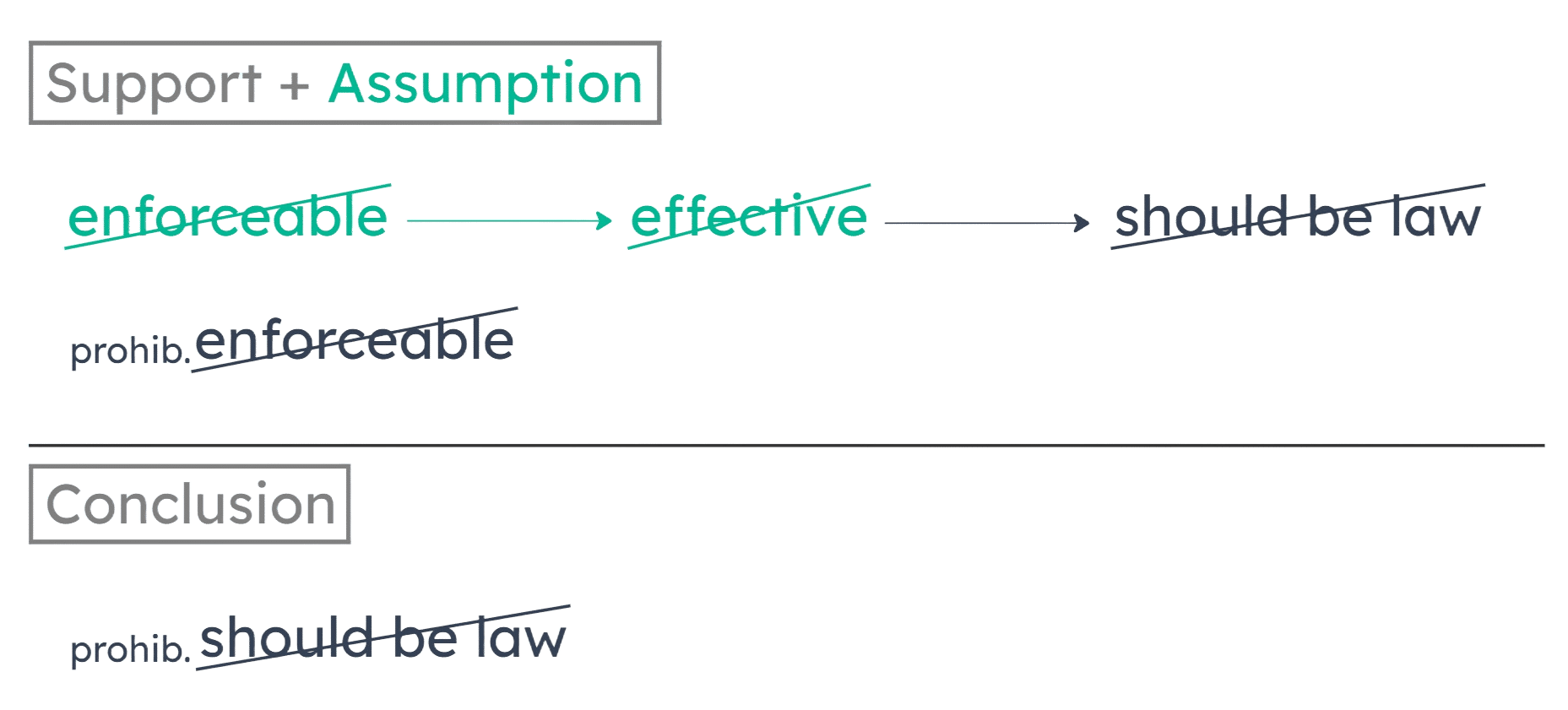
All enforceable laws ███ ██████████
This means that if a law is enforceable, it’s effective. This reverses what we’re looking for. (B) doesn’t prove that if a law isn’t enforceable, it can’t be effective. In other words, (B) still allows for gambling laws to be effective, even though they’re not enforceable.
No legal prohibitions ███████ ████████ ███ ████████████
A premise already establishes that gambling prohibitions are not enforceable. (C) doesn’t establish that the gambling prohibitions are not EFFECTIVE. There’s a difference between “not enforceable” and “not effective.”
Most citizens must █████ ████ █ ███ ███ ███ ███ ██ ██ ██████████
The premises don’t give us enough to establish that most citizens don’t agree with gambling laws; so (D) doesn’t establish that gambling laws aren’t effective. We know that most citizens recognize that they’re not enforceable, but this doesn’t imply that they don’t agree with the laws.
Most citizens must █████ ████ █ ███ ███ ███ ███ ██ ██ ████████████
The premises already establish that gambling laws are not enforceable. (E) doesn’t establish that the laws are not EFFECTIVE. There’s a difference between “not enforceable” and “not effective.”
Answer five questions and we'll estimate your score.
It takes about five minutes.
Take the free diagnosticWant to know why the right answer is right?
7Sage membership unlocks explanations of every question. Every answer choice. On every official PrepTest. Start with a free account.
By signing up you agree to our
terms of service.
This site is protected by reCAPTCHA and the Google
Privacy Policy
and
Terms of Service
apply.