


Going from the 150's-180 after a few months of self teaching on 7SAGE and working with a tutor in 2020, I have been tutoring the LSAT for about 5 years, worked with 100+ students! Feel free to send me an email at 180lsatteacher@gmail.com for a free consultation diagnostic session.
Discussions

180LSATTeacher
Independent TutorHow I went from the 150s to a 180 using Wrong Answer Journaling (5 years tutoring, $50-75/hr)
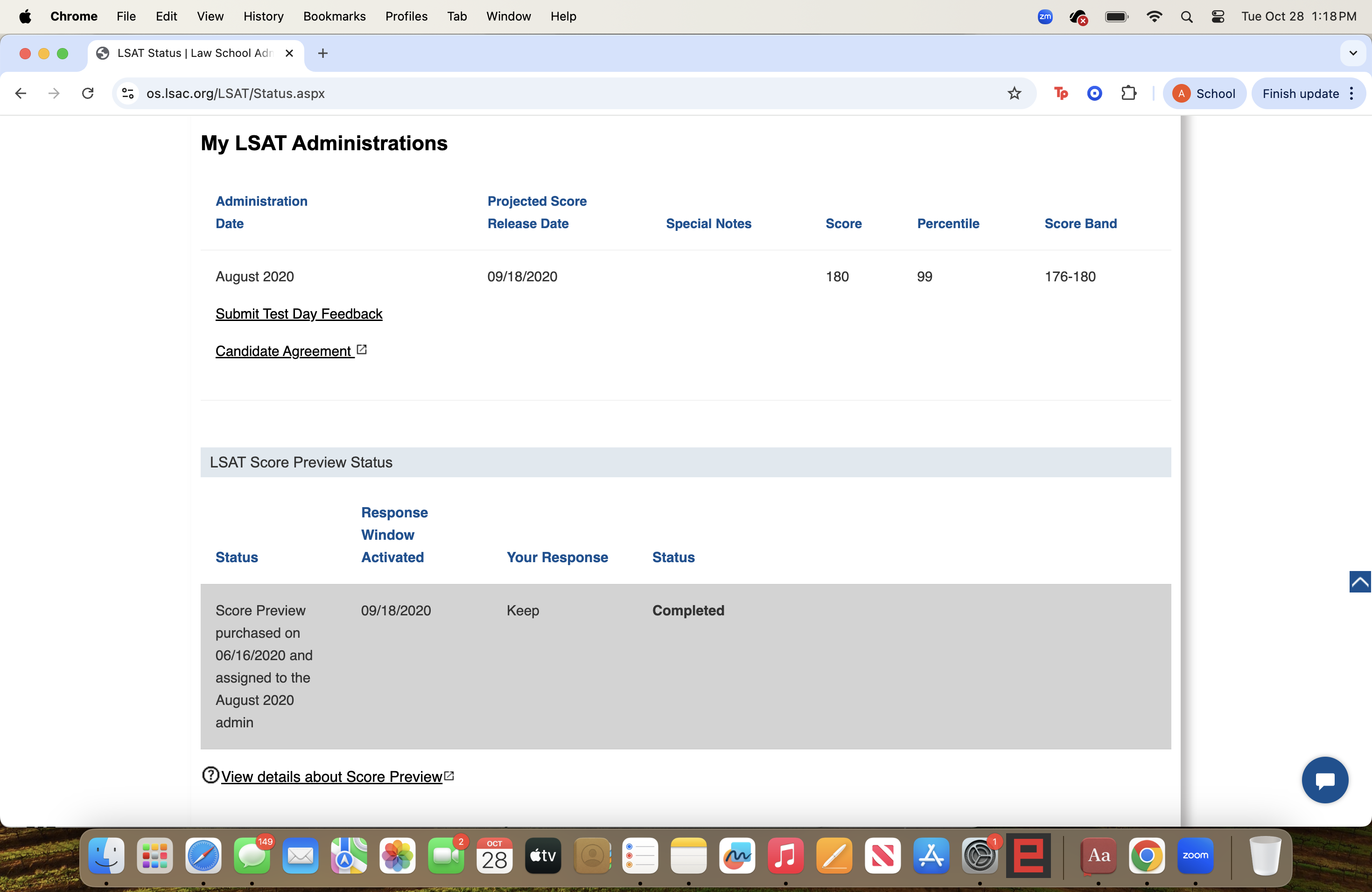
SCORE INCLUDED AT END
Hi everyone, if you find this post insightful, please upvote!
I’ve been tutoring the LSAT for about five years and have a few openings, so I’ll be taking on a few new students for the March-August test window. I am very passionate about teaching and learning the LSAT, I’ve worked with 100+ students across a wide range of starting scores, but I especially enjoy helping people who feel stuck in the 150s-160s finally break through with a structured and sustainable study approach.
I scored a 180 while balancing LSAT prep with a heavy course load and a 20+ hour work schedule, so I understand how difficult it is to study for this exam while managing real life. Because of that, I focus heavily on efficient studying, clear weekly structure, and consistent feedback outside of sessions rather than assigning busywork.
THE WAJ-
Before getting into tutoring, I want to share the single biggest study change that helped me improve and that I now teach every student I work with: structured wrong answer journaling.
Most people keep a wrong answer journal that’s basically just a list of questions they missed. That kind of journal feels productive, but it rarely leads to real score increases. What actually moves your score is reconstructing your thought process and understanding why a trap answer made sense to you in the moment.
This was the tool that took me from the 150s into the 170s and eventually to a 180, and I used the same process again while studying for and passing the bar exam last year.
What a wrong answer journal should actually do:
A good journal should answer three questions every time you miss a problem:
1. What did I think the argument/question was asking?
2. Why did the wrong answer look right to me?
3. What specific thinking habit caused that mistake?
If you’re not answering these three questions, then you’re logging mistakes instead of learning from them.
The Wrong Answer Journaling Structure I teach and used myself:
1. Handwrite it Writing by hand slows you down enough that you’re forced to actually process the reasoning rather than just copying explanations. It feels tedious at first, but that friction is what creates retention.
2. Rewrite the argument or passage in your own words Before even looking at the correct answer explanation, summarize the stimulus in plain language. If you can’t restate it simply, you didn’t fully understand it the first time and that’s often the real issue.
3. Watch the 7SAGE explanation videos or read a written explanation Watching the explanation videos or reading a written explanation is crucial so that you are able to see a different approach to a given question and learn something that you can try going forward.
4. Write why your answer looked attractive Most students only write why the correct answer is right. That misses the real lesson. You need to capture what the trap exploited, be it strong language, partial relevance, reversed logic, etc.
5. Diagnose the mistake type Every wrong answer usually falls into one of a few areas:
misreading a quantifier or conditional
assuming outside information
trusting an answer that “sounds reasonable”
rushing and not evaluating all choices
Over time, patterns emerge. That pattern recognition is where score gains come from.
6. Include near misses and guesses If you guessed correctly or were stuck between two answers, that is just as important to journal as a wrong answer. Those questions show where your understanding is unstable.
7. End with a forward looking rule Every entry should end with a sentence that you can apply on future questions, like:
“On Necessary Assumption questions, I will negate each contender before choosing.”
“If an answer introduces a new comparison, I will treat it as suspicious by default.”
This turns the journal from a diary into a training manual for your future self.
The step most students skip
Once a week, go back and reread your previous entries and look for repeated mistakes. If you keep missing questions because of quantifiers, conditional logic, or scope shifts, that’s not a one time error, but instead that’s a reasoning habit that needs to be fixed directly through targeted drilling. Many students never do this step, and while the purpose of the journal is not to reread it constantly or refer to it often, this step is very useful for most.
Why this works
Doing more questions doesn’t automatically make you better at the LSAT, instead what improves your score is changing how you think about arguments and answer choices. A wrong answer journal forces you to slow down and confront your reasoning patterns instead of repeating them.
When I was studying, I filled hundreds of handwritten pages with this process, it sounds excessive, but done gradually it becomes a daily habit that builds self awareness. Over time, your decisions on the test start to feel more automatic because you’ve already trained yourself to recognize the traps. That’s what helped me break out of a long plateau in the 160s and start scoring consistently in the 170s.
If people would find it useful, I’m happy to make a separate post on how I structure wrong answer journaling specifically for Reading Comprehension, since the approach there is a bit different than LR.
Tutoring with me:
In sessions, I teach students how to turn their wrong answer journal into an actual learning system rather than just a notebook. We review practice tests together, break down difficult questions step by step, and I check in between sessions so improvement continues throughout the week. The goal is to make review productive instead of repetitive.
I’m very hands on and stay responsive over email between sessions. I remember how frustrating it was to be stuck on a question with no one to ask, so I try to be available when students are actively studying rather than only during scheduled calls.
Spring 2025 rates (discounted)
Free 20 minute strategy call
• $75/hr single session
• 5 hours - $350 ($70/hr)
• 10 hours - $600 ($60/hr)
• 15 hours $825 ($55/hr)
• 20 hours - $1000 ($50/hr)
I keep my rates in the $50-75/hr range because I want tutoring to stay accessible for students who are serious about improving but can’t justify paying $150+ per hour.
If you’re aiming for more consistency, struggling with LR assumption/flaw questions, or feel like you’re doing a lot of practice without seeing meaningful score movement, feel free to reach out. I’m always happy to look at your PT history, talk through your current approach, or answer questions about study strategy even if you’re not sure about tutoring yet.
Email: 180lsatteacher@gmail.com
180LSATTeacher
Independent Tutor180 Scoring LSAT Tutor (5 Years) Holiday Discount Rates- $50-$75/Hour
I’ve been tutoring the LSAT for about 5 years and will have a few openings after the January exam. I’m looking to take on a small number of motivated students for the next few months who are seeking sustainable score gains. I am passionate about teaching this test and helping students achieve their goals.
I scored a 180 and studied while working 20+ hours a week and attending a competitive undergrad, so I’m very familiar with balancing LSAT prep with a busy schedule. Because of that, I keep my rates affordable and focus heavily on efficient, structured studying rather than busywork. I spend a lot of my personal time outside of sessions helping my students, answering questions. This test opened many doors for me so I value its importance and being able to push my students properly toward their goals and hold them accountable during the week with the work I assign.
Rates (new students):
Free 20-minute strategy session
• $75/hr single session
• 5 hours – $350 ($70/hr)
• 10 hours – $650 ($65/hr)
• 15 hours – $900 ($60/hr)
• 20 hours – $1000 ($50/hr)
My approach is hands-on: we review PTs together, break down hard question types, clean up bad habits, and I give feedback/check-ins during the week so progress continues between sessions.
If you’re aiming for more consistency, higher scores, or want structured guidance heading into spring tests, feel free to reach out, very happy to chat or help.
Email- 180lsatteacher@gmail.com
SCORE BELOW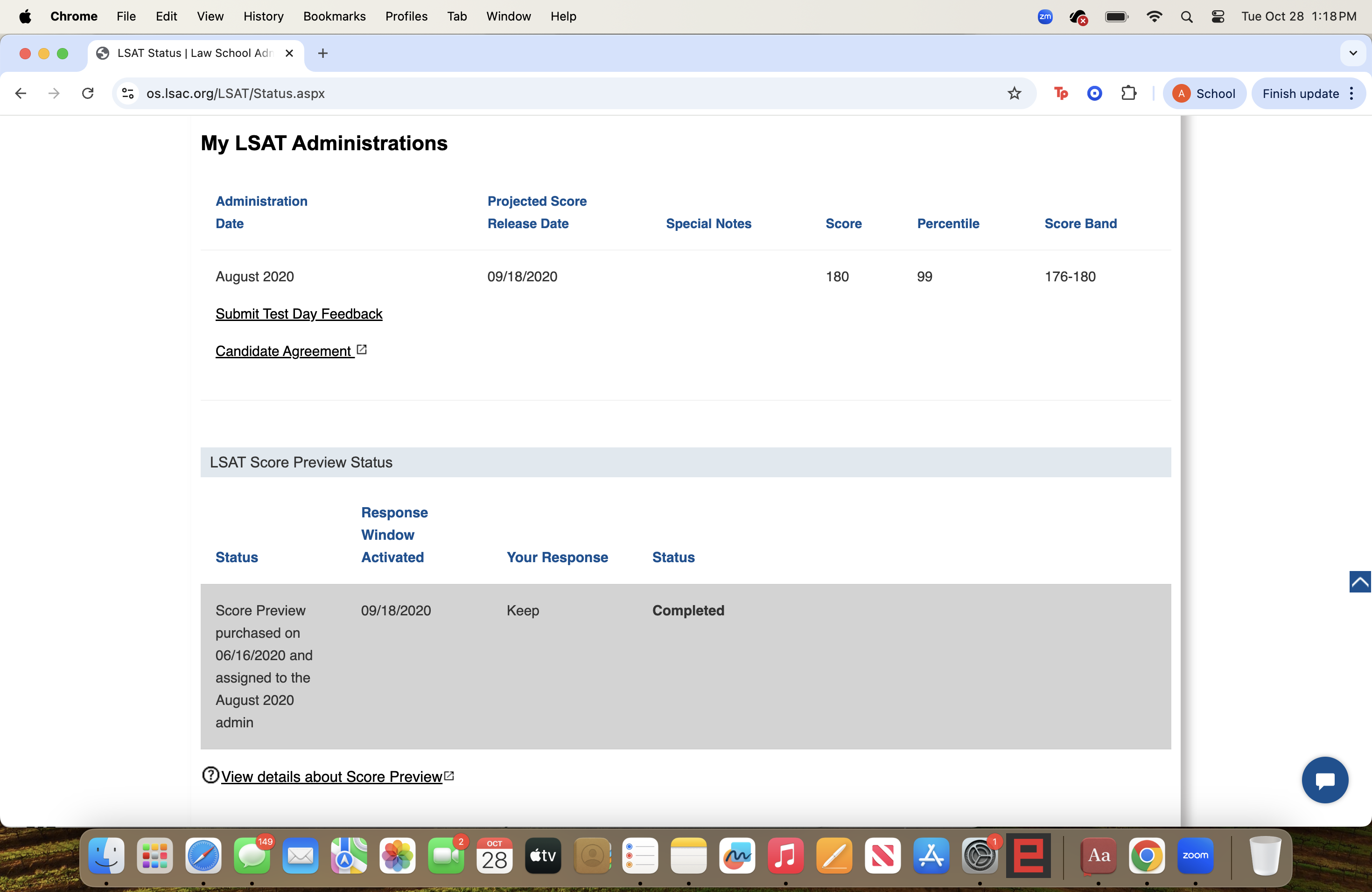
180LSATTeacher
Independent Tutor180 LSAT Score Tutor (4 Years) Discounted Rates - $60-$75/Hour
Hey all- excited about this new feature as I used 7SAGE to teach myself the LSAT and go from a low 150s diagnostic to a 180 on test day after a few months of studying.
I’ve been tutoring the LSAT for 4+ years, and now that October scores are out I have a few open slots, so I’m looking to take on a few motivated students for the next few months who want to achieve success on the LSAT. I received a 180 5 years ago and have been tutoring for about 4 years. This test opened a lot of doors for me, and I am very passionate about helping my students achieve their goals.
Discounted Rates for New Students:
• Free 30-minute strategy session
• $75/hr single session
• 5 hours - $350
• 10 hours - $600
• 15+ - Flexible rates
My focus is on building strong approaches and eliminating bad habits by reviewing PTs together, breaking down problem sets, and giving feedback/tips throughout the week so progress continues between sessions.
Recently, I passed the bar exam and am taking some time off before work, so I have a lot of availability for tutoring and recent experience and tips related to intense studying. Feel free to reach out for tutoring or advice.
If you’re aiming for more consistency and higher scores, or just want some tips feel free to reach out, I’d be happy to help!
Email- 180lsatteacher@gmail.com
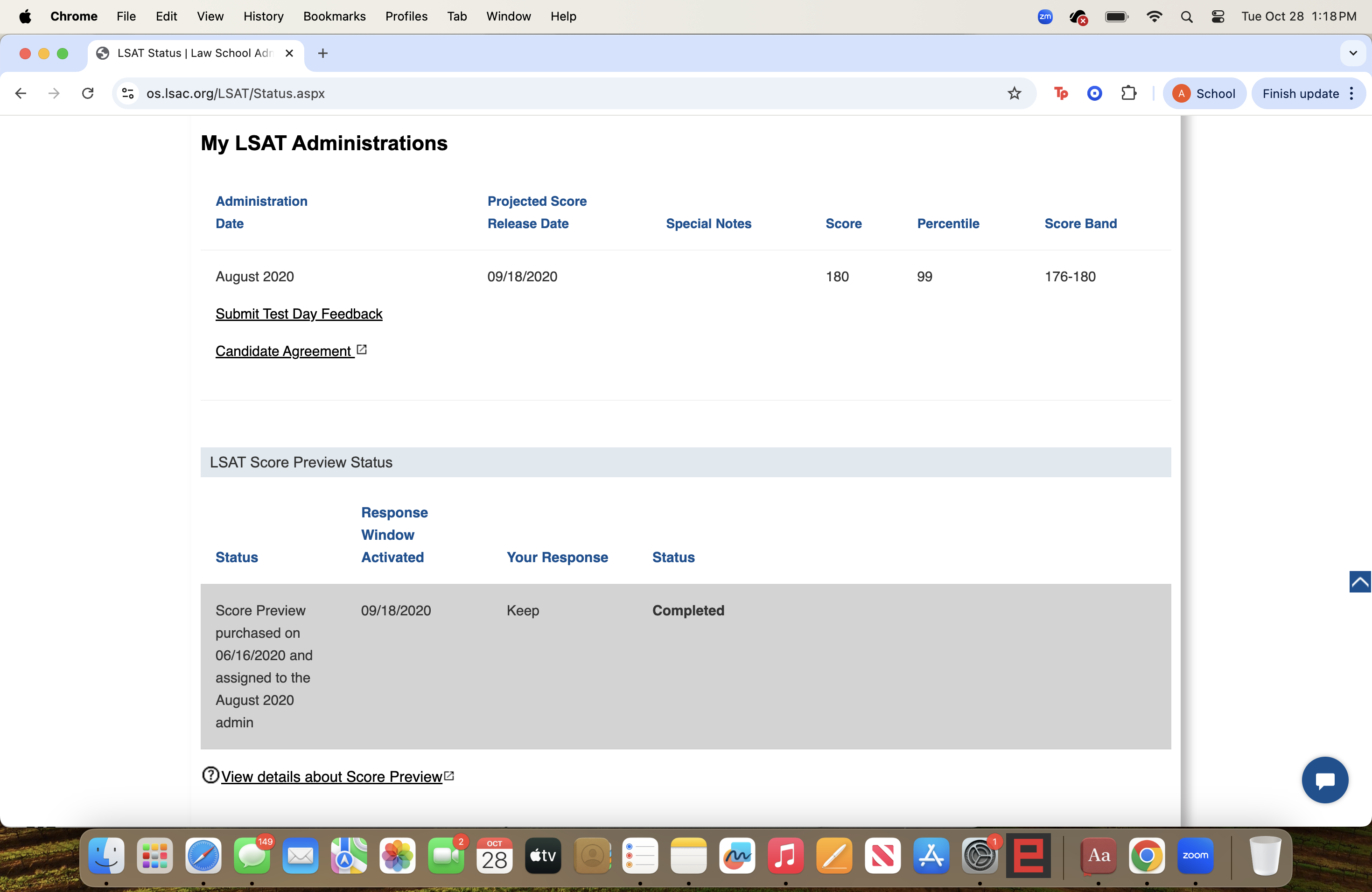
SCORE BELOW
Hi Amy! I waited until the next cycle, but I only took the LSAT once, if you are planning to retake in January, you should be able to apply this cycle still.