

- Joined
- Aug 2025
- Subscription
- Core
Admissions profile
Applications

Discussions
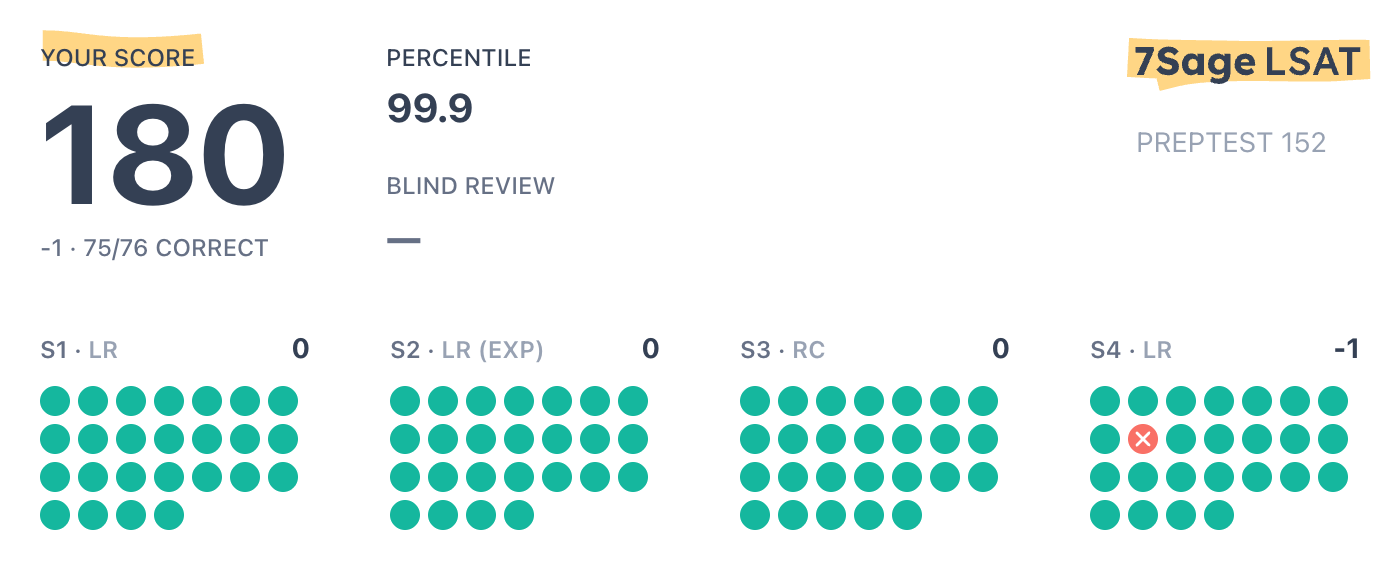
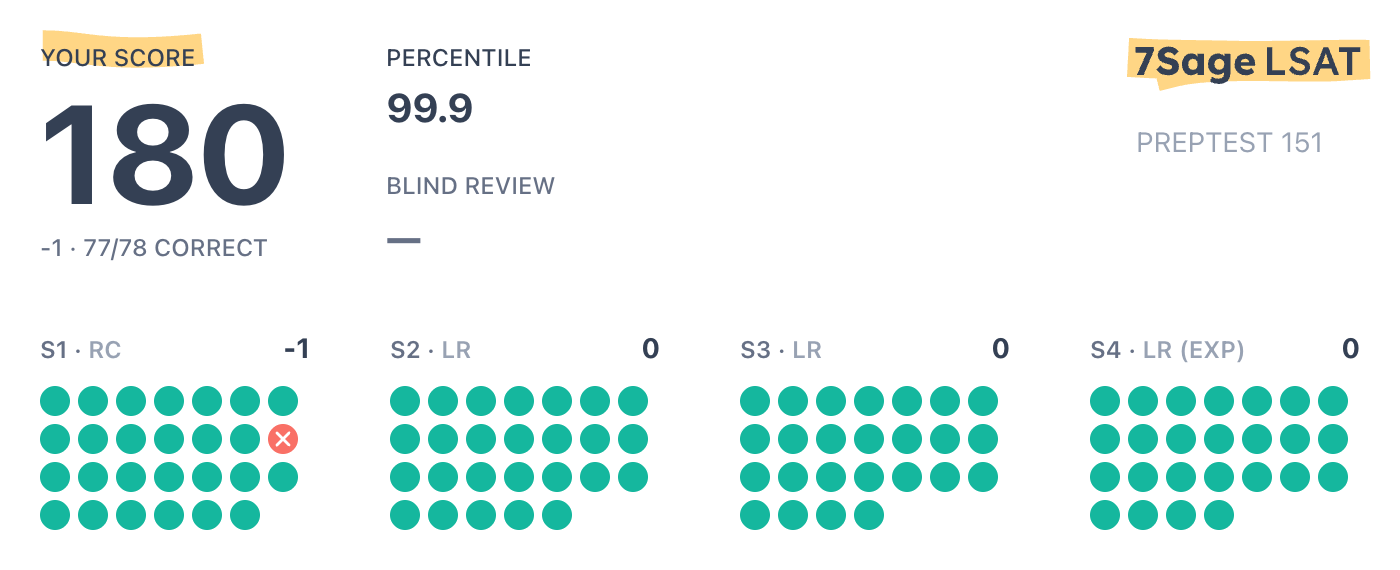
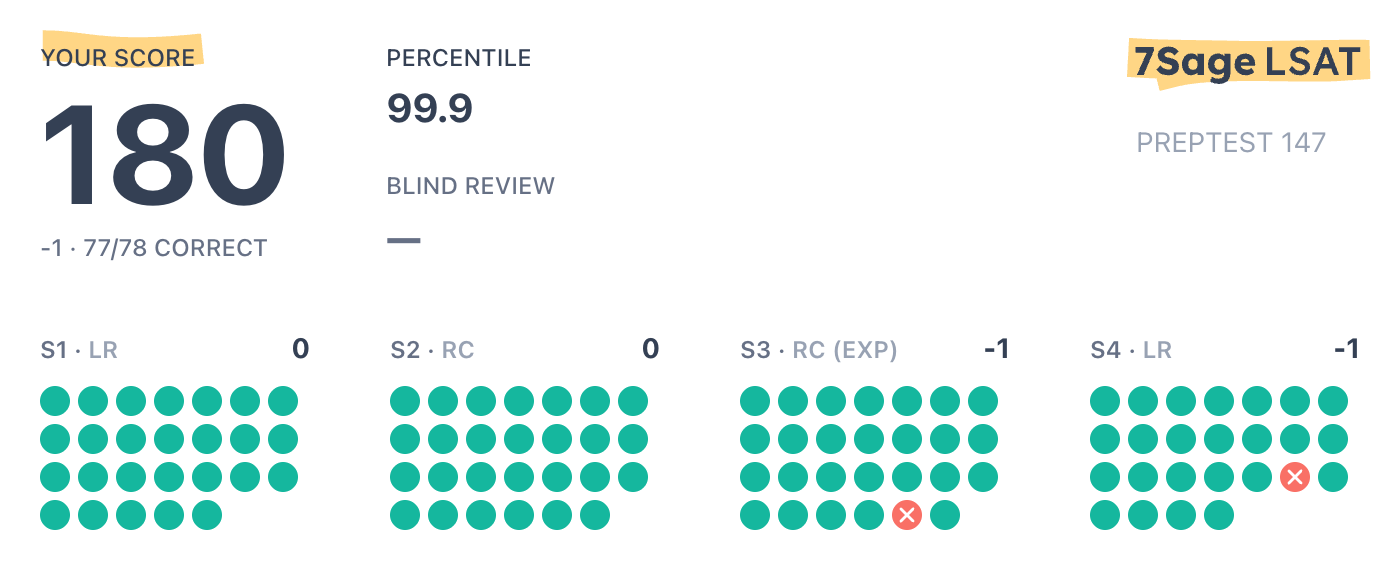

@EmmanuellaA Sure! What I mean is that after I review a question and understand why the right answer is right, I go back and change one fact in the stimulus (or flip what the stem is asking), then answer it again as if it's brand new. And I do this with every question, I keep tweaking facts and flipping the stem until I've basically exhausted every variation the question could throw at me. The point is to find out which facts were actually doing the work. If changing a detail flips the correct answer, that detail mattered. If nothing changes, it was just scenery. By the time I've run through every permutation, there's no version of that question that can surprise me.
Quick example with conditional logic. Take: "If a student studies hard, they'll pass. Maria passed. So Maria studied hard." That's the classic flaw, studying is sufficient for passing, not necessary, so her passing doesn't tell you she studied. Now change one word: "Only if a student studies hard will they pass." Suddenly studying is necessary, and "Maria passed, so she studied hard" becomes totally valid. One swap, sufficient to necessary, turns a broken argument into an airtight one. Feeling exactly why that flip works is the difference between understanding the conditional and just slapping a "flaw" label on it.
Same thing works on Strengthen/Weaken. Say a town added streetlights and nighttime accidents dropped 30%, so the lights caused it. A good weakener is "they also lowered the speed limit that year" because it gives you an alternative cause. Now add a sentence to the stimulus: "the town made no other changes to its roads or traffic laws." That kills the old answer, no alternative cause left, so you'd need a completely different type of weakener (like attacking whether a 30% swing is even outside normal variation). That shows you the original answer's entire power came from introducing an alternative explanation.
Then I flip the stem too, without touching the facts - take a Strengthen question and ask "what would weaken this instead?" Same stimulus, opposite direction. Do that across every question and you start seeing the full space of what each one can test, not just the single path the test-writer happened to pick.
@sm15 One thing I’ve found really helpful is changing the hypo a little after I review a question, whether I got it right or wrong. Then I answer it again and see how the answer changes. It really helps you figure out which facts actually matter instead of just memorizing why one answer was correct.
@reynita04 Thanks! Not really. I took the LSAT last November and got a 170, but I didn’t apply that cycle because I didn’t hit my target score. So now I’m retaking it.
I’ve just started going back through PrepTests, and I’m scoring around 170 consistently again. Right now I’m not really focused on the score though—I’m trying to actually understand every explanation.
One thing that’s helped me a lot is this: after reviewing a question—whether I got it right or wrong—I change the hypothetical a little and answer it again. Making small changes to the facts helps me identify which pieces of information were actually doing the work in the question and why the correct answer changes (or doesn’t). It really helps you figure out which facts actually matter instead of just memorizing why one answer was correct.
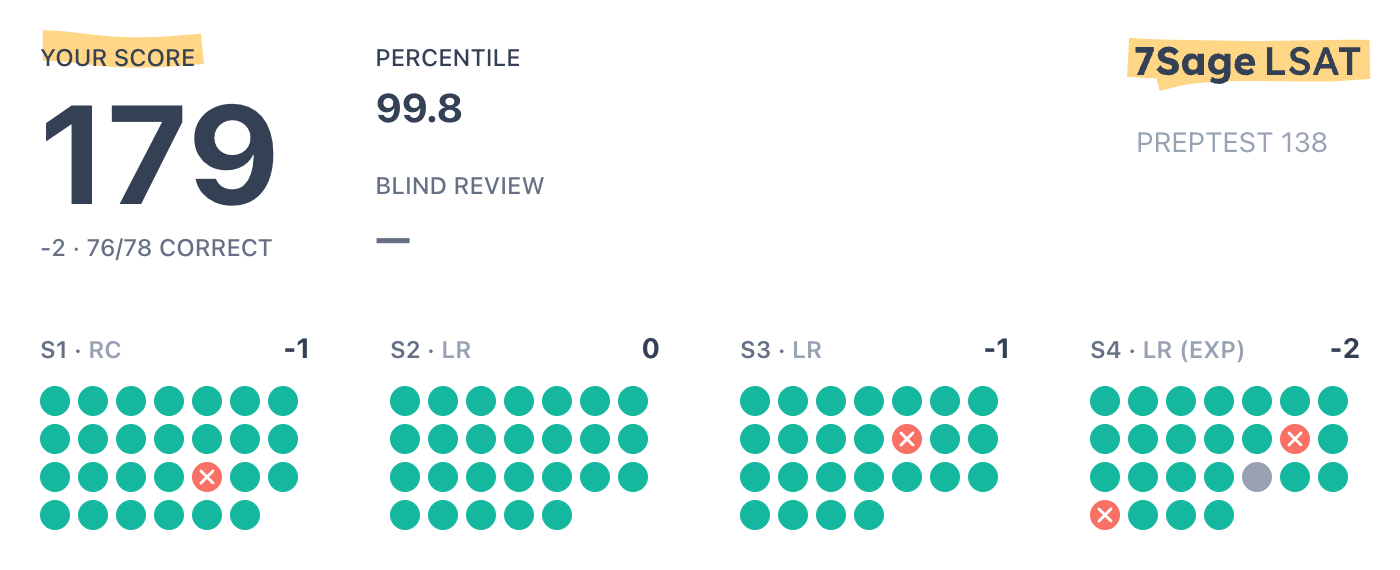
Hi everyone,
I submitted my LSAT Writing assignment on November 3rd, and on my LSAC portal it is marked as “Completed.” However, it still hasn’t been approved and is not showing as available for schools yet.
Today is already November 11th, so it’s been more than a week. I know LSAC sometimes takes longer to review the writing sample, but I’ve seen posts from people saying theirs got approved within 1–2 days. That’s making me a bit nervous.
If the status is “Completed,” do I still need to worry? Has anyone else had a long delay between “Completed” and “Approved”?
Thanks!
Don’t worry too much about it — you can’t change your GPA now, so just focus on what you can control: your LSAT score, personal statement, and strong recommendation letters. From my experience, there’s no single “default” approach; each school and committee weighs things differently. I’m also an international graduate.
By the way, when did LSAC complete your review? Was it right after they received all your transcripts?
Hey everyone,
I’m taking the LSAT in November, and I heard that during the online test it’s required to keep your hands visible in the camera frame at all times.
The issue is, I’m using a MacBook, and it’s basically impossible to do that comfortably. To make my hands visible, I’d have to tilt the screen so far down that I can barely see the screen to read the questions.
Has anyone else faced this problem? Any practical setup suggestions or ways to position the laptop or camera so it meets LSAC’s rules without making it impossible to take the test?
Thanks in advance for any tips!
Hi everyone,
I’m an international student with an LLB (equivalent to a JD) from another jurisdiction, and I also hold an LL.M. from a U.S. university. Despite that background, I’ve decided to pursue a JD, and I’m currently preparing for the LSAT with the goal of applying to T14 schools.
Although I studied law in English and use it fluently in both academic and professional settings (I’ve worked at U.S. law firms and I’m currently interning at an appellate court), I find the Reading Comprehension section to be the most difficult. The challenge is not understanding the text—I can follow the passages—but rather the time pressure, which is already extremely limited on the LSAT and feels even tighter for me.
My question is: How do admissions officers typically view LSAT scores from applicants whose first language is not English? Do they take this context into account, or are scores evaluated in the same way as those of native speakers?
Also, if anyone knows of statistics regarding international applicants and LSAT performance, or has other beneficial information for candidates in a similar position, I’d be very grateful if you could share.
Thanks in advance!
@Isabella! Thanks! Honestly, I don’t have any specific RC tricks or secret strategy. Right now I’m just trying to get through the entire passage in under 2 minutes. It’s more of a skim, but I’m reading actively so that when I get to the questions, I already remember roughly where the relevant part is in the passage.
At this point, I also have a pretty good intuition for the kinds of questions they’re likely to ask, so while I’m reading, I highlight or mentally note the parts I think I’ll need to come back to.
I also think reading has always been one of my strengths. I’ve spent my whole life reading articles and books on all kinds of topics, so processing unusual or unfamiliar information doesn’t feel that difficult to me. I think that background helps a lot with RC.