

- Joined
- Jan 2026
- Subscription
- Core
Admissions profile
Discussions

can somebody help me understand the bold part?
The explanation for why B is wrong states B is... "Not necessary, because the core of the author’s reasoning involves what physics and chemistry are unable to do. They can’t analyze the operational principles of a body’s healthy functioning, just as they can’t determine the material conditions that make a machine successful. The argument doesn’t depend on what physics/chemistry CAN do; the focus is on their limits."
my understanding of the passage was that P/C CAN determine the material cond. nec. for engineering to analyze the nature of a machine as a successful whole, but not the purpose - is purpose the same as the material conditions?
how does affirming the second assumption strengthen? wouldn't that just mean the population stays the same?
Could D be correct if it didn't say "of equal size"; if it just said no evidence of any other asteroid...? @ anyone
@GraceMartin653 darn I appreciate the offer but that is a little too far for me to consistently drive - if you ever want a virtual study session sometime during the week with someone else tho, I'd be down. I forget to check messages and threads on here, so if it's of interest to you, feel free to add me and message me on insta @sunnieqwoske. I check those more often (cause it's a primary means of text communication for one of my friends lol).
Hi! what part of SWFL? I would love to do IN-PERSON study sessions. For reference, I am Manatee-Sarasota area
Hi, I'm on the southwest coast of FL (Tampa Bay Area). I would love to do virtual study sessions. I love getting to feed off other people's process and explaining my process helps cement process and patterns. I'm basically studying full time so I'm pretty flexible about when I can study. Feel free to add me on insta @sunnieQwoske; I don't always check responses to comments here cause I forget lol. Hope to hear from you! :)
@Kevin_Lin Ok, in that perspective I understand now. Thank you very much!
@Kevin_Lin I'm confused by 7Sages written explanation for D "(D) leaves open the possibility that most people are not capable of convincing others of their qualifications" I would think D is wrong for the same reason B is, so im not sure why the explanation is dif. Also D says "every expert has convinced..." so how does it leave open the possibility that most people are not capable of convincing others
Hi, for the new version, will we be able to underline/highlight part of AC's? I wasn't able to do it during a drill today but I know the new preface is in beta on 7sage. Could someone clarify for me please? Thank you in advance.
What questions will admission officers have for me regarding time off between graduating undergrad and starting law school? Do I need to provide an addendum regarding time off or is that something that isn't until later stages of the admission process (i.e. interviews if applicable)
I'm a non-trad first-gen law student who took time after undergrad to save money for school and prep for LSAT since I need a scholarship to afford law school. I am not working in a firm at the moment as I needed time away from school and an office (did a 4 month internship the fall after graduating) but am now fully delved into studying.
Does anyone know when the schedule for live classes for next week 4/26-5/2 will be released?
For all the confusion over A, it really comes down to also that in an SA question we want something that 100% closes the gap - AC A contains "tends to" which implies that sometimes it does NOT tend do thus not closing the gap 100% - if it wasn't for the "tends to," A would be a very good bridge
so basically these phrases (since, tend to, and likely) do not indicate causality based on their presence alone, rather they MUST be paired with causal language that denotes cause and effect, correct?
for "is a factor" is there an implied "in" to show causality?
i.e A "is a factor" [in] B
Adequate sleep is a factor in positive child development
Also would A is a factor [of] B, be the same as B causes A, and thus a weak hypothesis?
since probably is synonymous with "tends to" and "likely" would that also be a case where there is no causal relationship?
I think this could also help address some of the other concerns mentioned in this thread.
I think it would be helpful to be able to change the number of hours you want to study day by day to adjust for work schedules that aren't set M-F 9-5 or in case something comes up where you need your plan to recalculate. It would help people get a better sense of what should get done on days they have less time because of changing work schedules or other obligations. With the settings now, I try to get as much done for the general day I have set using the less-flexible customizations now, but then I still didn't complete it all so every day feels like rushed catch-up rather than quality understanding. I understand that the study plan only works if you put in the effort, but life happens and not every day is the same for everyone.
A v. B: more sophisticated instruments v. currently available instruments
Quality - which is required for detecting planets outside our solar system?
Winner - more sophisticated instruments
Could this work?
Sunnieqw22
941 Area Code IN-PERSON Study Group (Bradenton/Sarasota/Palmetto/Parrish/LWR/AMI/ etc.)
Hi, looking for an in-person study group of 2-3 others to meet up with once a week (every 2?) depending on availability. I am taking the June LSAT and learn best when I have someone to bounce ideas and questions off of. I am not totally new to the LSAT but I am not advanced by any means ( currently in the 150s range rn). Ideally, we'd meet at a coffee shop or park (near WIFI ofc) to either do sections or drills together. I'd also love to do a time PT together once or twice before June!
@Karl! thank you, I wasn't sure how common it was for schools to not have A+ so I wasn't sure how important that would be. This clears a lot up
I highly reccomend going thru core curriculum and writing down notes from the lessons so you have all the info for certain fundamentals in one place and can use them as guides to wean off of as you learn how to break down questions more efficiently. I did that for conditional indicators, logic flaws, other flaws, quantifiers, negating quantifiers, etc. It's helping me understand the questions and answer choices I'm deciding between soooo much better. I personally had such a hard time with quantifiers and conditional statements so obviously try the above methods for whatever you're sturggling with, not just what I said I did lol, hope this helps! :)
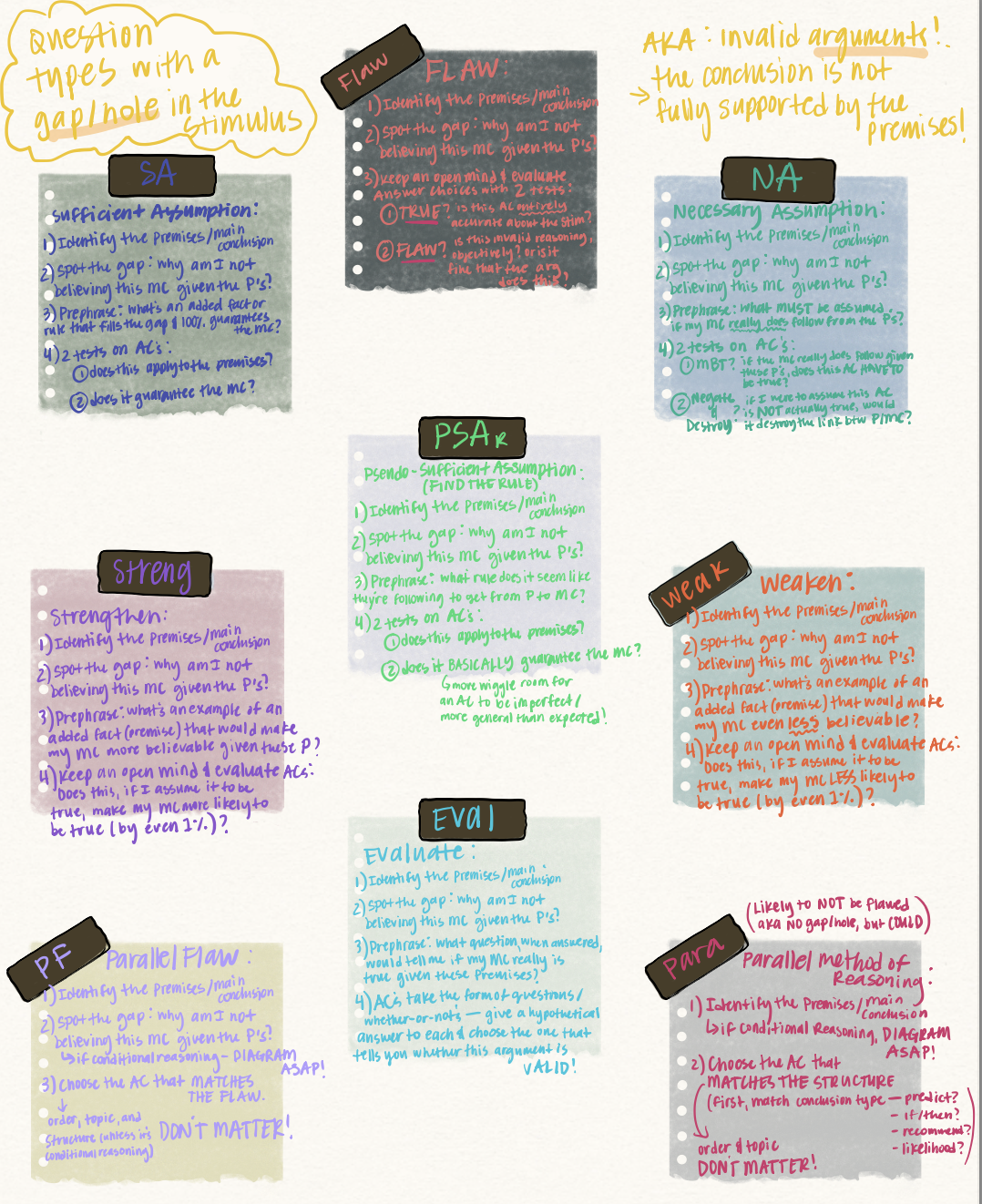
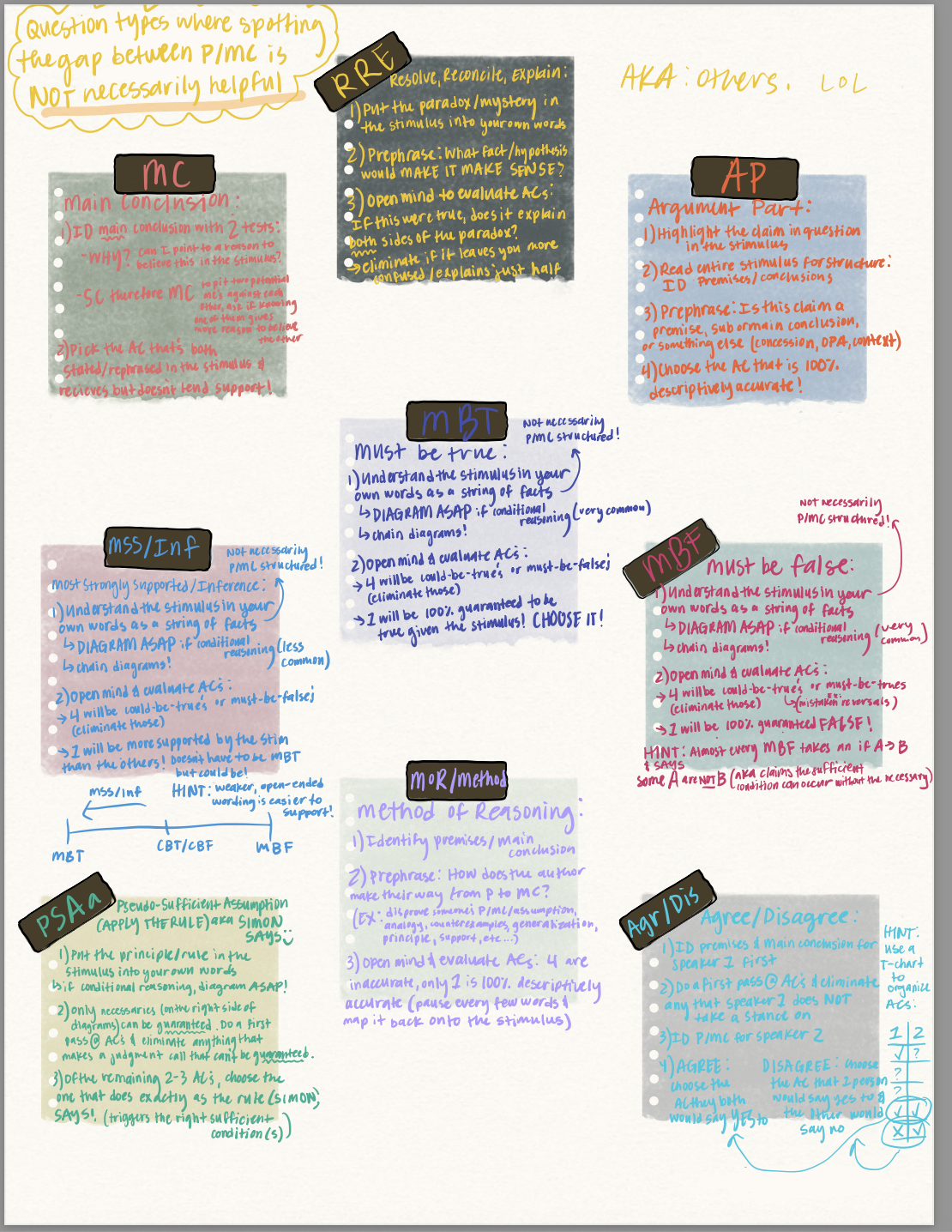
Hi all,
I received my. B.A. in Politics recently and graduated magna cum laude with a 3.804 GPA on my transcript. The school I attended did graded on a "F" to "A" grading scale; there were no "A+" meaning the highest GPA was 4.0 and you could not possibly obtain overa 4.0. During an internship at my local SAO, the DA told me a 3.8 was a low GPA for law school, considering many will have 4.0+. How do I explain that in my LSAT applications? I ONLY got Bs to As on my transcript, but still feel like this may not be good enough. I know it's not a bad GPA, but it's not exceptional. In order to afford law school w/o additonal loans (I have some from undergrad but am under a PAYE repayment plan), I am hoping to receive at least 75% of tutition covered, so I am working to get into the high 160s-low 170s. Will not having a exceptional GPA possibly hurt my chances? I looked at the CAS GPA calculator and there's no grade scale that fits the grading criteria of my undergraduate curriculum, as the letter grade scale goes up to A+. I'm not able to see what the exact percentage I ended a class with was. I appreciate any and all advice and thank you in advance.
From people's experiences who are going through the application process or already did, do law schools care more about low scores or cancelled scores? For example, say my first LSAT is 150s and I take again and score high 160s, would law schools rather see growth or just the best outcome possible? I don't think my score will be bad for admission purposes, but for scholarship oppurtunities I want to get into the high 160s. I have not taken the LSAT yet so this is a hypotheticals based on gut-feeling and final goal. I'm deciding whether I should cancel my score if it's not in my scholarship range or be prepared to defend a lower score with a higher score. I feel the latter is best, but wanted other's opinions. Thank you
This is what helped me during BR because like many others I also thought C was too strong compared to what Dostoyevsky says about reality being crucial
C is the only one that doesn't mention anything about what the first view (art stood high above the present and the everyday) requires or entails
We DO NOT know anything about the first view and C is the ONLY answer that doesn't go beyond the scope of what we are told about the first view - it simply relies on Dostoyevsky's opinions