


Editorialist: Despite the importance it seems to have in our lives, Conclusion money does not really exist. ████ ██ ███████ ████ ███ ████ ████ ███ ████ █████ ██ ██████ ██ ████ █████ █████████ █████ ██ █ █████████ ████ ██ ██████ ██ ███ ██ ███████ ████ ██████████ ██ █ █████ █████ █████ ██ ███ █████ ███ █████ ██ █████████ ████████ █████ ████████████ ███ █████ ████████ ███████████ ██ ████████ ██████ ███ ███ ███ ███████ ██ ████ ███████ ██ ██████████
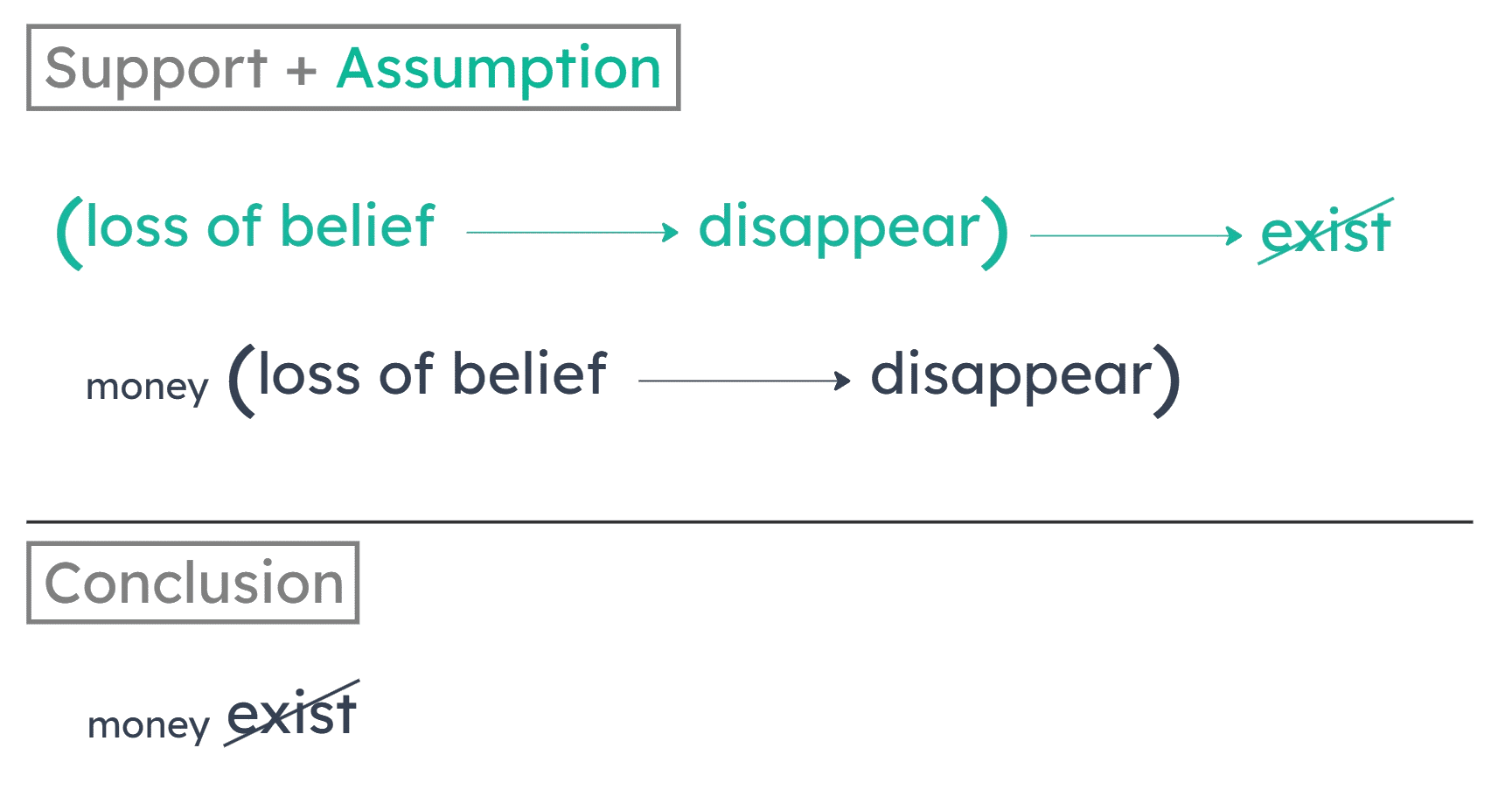
The author concludes that money doesn’t really exist. This is based on the following:
Money disappears if there’s a universal loss of belief in it. (The author follows up with an illustration of this occurring in financial markets.)
The conclusion brings up the new concept of “does not really exist.” The premises don’t tell us how we can know that something does not really exist. To make the argument valid, we want to know that if universal loss of belief in something would make that thing disappear, then that thing does not really exist. Or, in other words, in order for something to exist, universal loss of belief in something would NOT make that thing disappear.
The conclusion of the editorialist's ████████ ███ ██ ████████ █████ ██ █████ ███ ██ ███ █████████ ██ ████████
Anything that exists █████ ████████ ██ █████ ████ ██ ████████ ████ ██ ████ █████████ ██ ███
(A) establishes that in order for something to exist, it must be the case that the thing would not disappear from a universal loss of belief. But since we know money does disappear from a universal loss of belief, we can conclude that money does not exist.
Only if one ███ ████ ████████ ███████ █████ █ █████ ████ ████ █████ ██████ ████████ █████████
The premises don’t establish that it’s impossible to have mistaken beliefs about money. So (B) doesn’t interact with the premises and does not establish the conclusion.
In order to ██████ ██ ██████ ████ ████ █████████ ████████████ ███ █████ ███ ███████ ██ ███
The premises don’t establish that there are no practical consequences for those who believe in money. There could be many practical consequences for people who believe in money. So (C) doesn’t interact with the premises and does not establish the conclusion.
If everyone believes ██ ██████████ ████ ████ █████ ███████
(D) allows us to prove that something DOES exist. But we’re trying to prove that money does NOT exist.
Whatever is true ██ █████ ██ ████ ██ █████████ ███████ ██████████
(E) establishes that what’s true of money is true of financial markets. But we’re not trying to conclude that something is true of financial markets. The contrapositive of (E) also would not help; we’re not trying to prove that, because something isn’t true of financial markets, it’s also not true of money.
Answer five questions and we'll estimate your score.
It takes about five minutes.
Take the free diagnosticWant to know why the right answer is right?
7Sage membership unlocks explanations of every question. Every answer choice. On every official PrepTest. Start with a free account.