
Self-study
Support The arousal of anger is sometimes a legitimate artistic aim, and Support every legitimate artwork that has this aim calls intentionally for concrete intervention in the world. ████ ████████ ████ ████ ███ ██ █████████ ████ ██████ ██ ████ ████ ██ ███████ ████ █████ ███████ ███ ████████ ████ █ ███████ ███ ██████ ██ █ ██████████████ ██ ███ ██████████ ███ ███ █████████
Summary
The author concludes that some legitimate art is not concerned with beauty. Why? Because of the following:
Some legitimate art aims to arouse anger.
All legitimate art with the aim of arousing anger intentionally calls for concrete intervention. 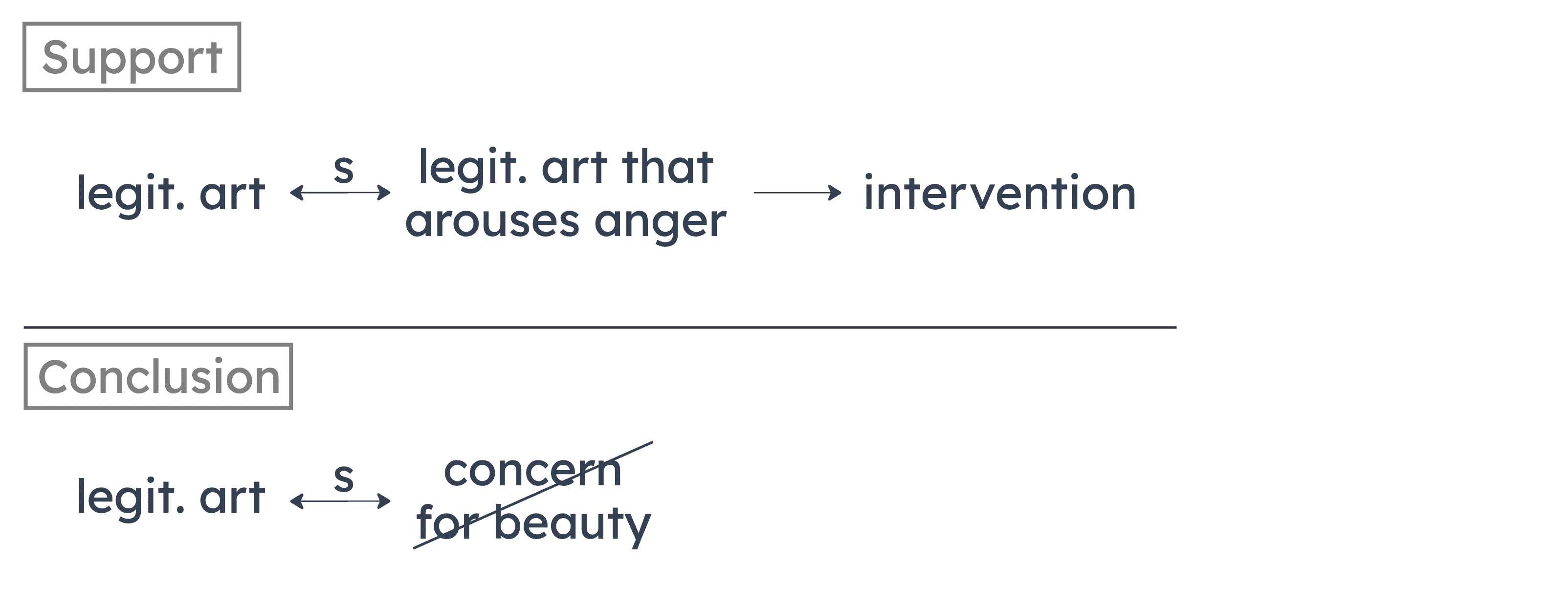
Missing Connection
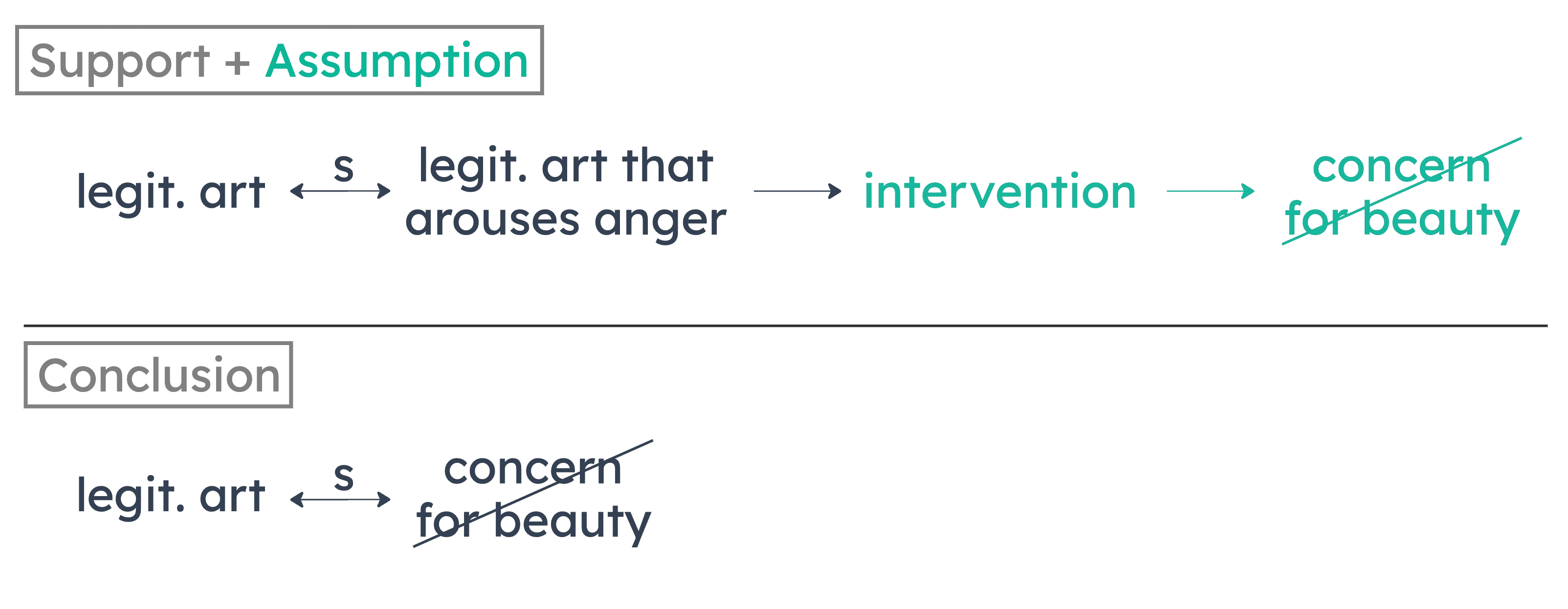
The conclusion asserts that some legitimate art isn’t concerned with beauty. But the premises don’t tell us anything about what’s not concerned with beauty. So, at a minimum, we know that the correct answer should allow us to establish that something is not concerned with beauty.
To go further, we can anticipate some specific relationships that could get us from the premise to the concept “not concerned with beauty.” We know from the premises that some legitimate art aims to arouse anger. We also know that some legitimate art calls for concrete intervention. Either of these could make the argument valid:
Any art that aims to arouse anger is not concerned with beauty.
Any art that calls for concrete intervention is not concerned with beauty.
 Analysis by KevinLin
14.
The conclusion of the argument ███████ █████████ ██ █████ ███ ██ ███ █████████ ██ ████████
a
There are works ████ ███ █████████ ████ ██████ ███ ████ ███ ███ ██████████ █████ ██ ████
b
Only those works ████ ███ ███████████ █████████ ████ ██████ ███ ██████████ █████ ██ ████
c
Works of art ████ ████ ███ ████████████ ████ █ ██████ █████████ ███████ ████ ███████
d
No works of ███ ████ ████ ███ ████████████ ███ █████████ ████ ███████
e
Only works that ████ ███ ████████████ ███ ██████████ █████ ██ ████