


Support The arousal of anger is sometimes a legitimate artistic aim, and Support every legitimate artwork that has this aim calls intentionally for concrete intervention in the world. ████ ████████ ████ ████ ███ ██ █████████ ████ ██████ ██ ████ ████ ██ ███████ ████ █████ ███████ ███ ████████ ████ █ ███████ ███ ██████ ██ █ ██████████████ ██ ███ ██████████ ███ ███ █████████
The critics say that all legitimate art is concerned with beauty. The author wants to prove them wrong. To disprove a universal claim like "all X are Y," you just need one counterexample: a single X that isn't Y. So the author needs to show that at least some legitimate art is not concerned with beauty.
Here's the author's attempt. She starts with the fact that some legitimate art aims to arouse anger. Then she adds that every legitimate artwork with that aim calls for concrete intervention. So we've established a chain: some legitimate art aims to arouse anger, and that art calls for concrete intervention.
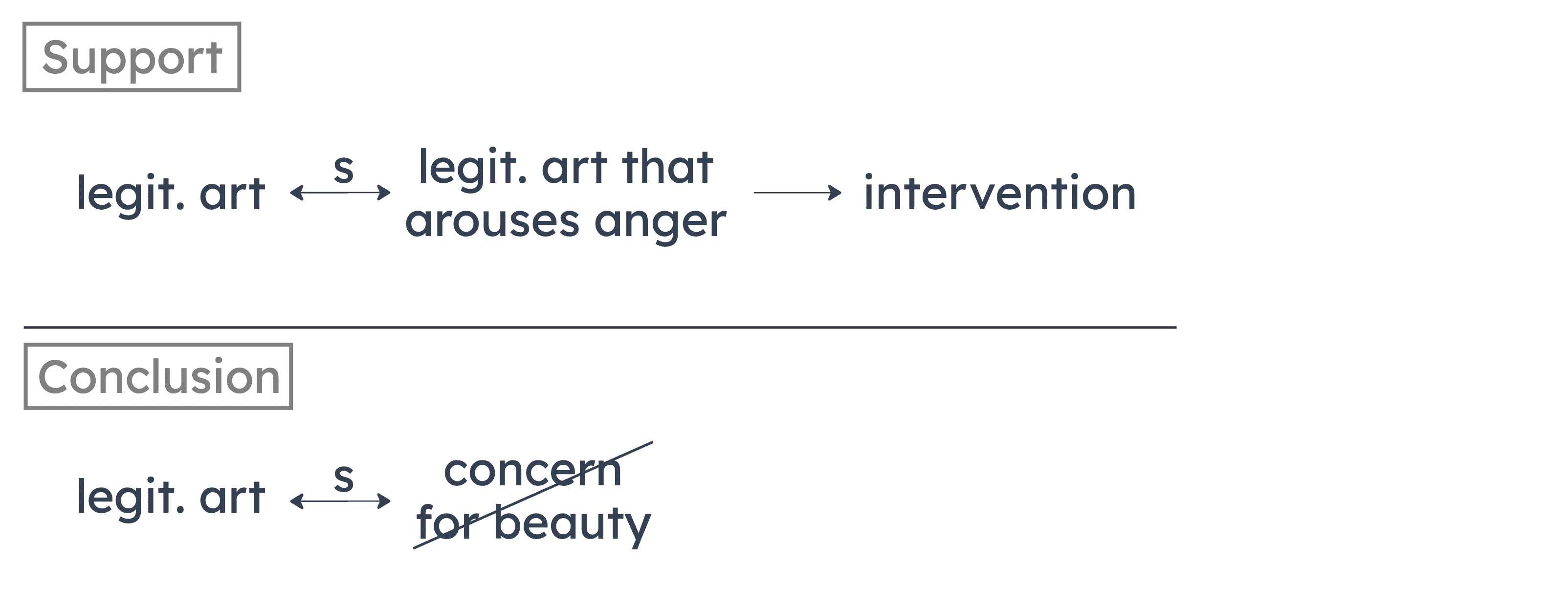
The conclusion asserts that some legitimate art isn’t concerned with beauty. But the premises don’t tell us anything about what’s not concerned with beauty. So, at a minimum, we know that the correct answer should allow us to establish that something is not concerned with beauty.
To go further, we can anticipate some specific relationships that could get us from the premise to the concept “not concerned with beauty.” We know from the premises that some legitimate art aims to arouse anger. We also know that some legitimate art calls for concrete intervention. Either of these could make the argument valid:
Any art that aims to arouse anger is not concerned with beauty.
Any art that calls for concrete intervention is not concerned with beauty.
The conclusion of the argument ███████ █████████ ██ █████ ███ ██ ███ █████████ ██ ████████
There are works ████ ███ █████████ ████ ██████ ███ ████ ███ ███ ██████████ █████ ██ ████
(A) tells us that there are some works concerned with beauty that aren’t legitimate art. But we’re trying to prove that there are some legitimate artworks that are NOT concerned with beauty. Learning about works that ARE concerned with beauty doesn’t help us prove that certain works are NOT concerned with beauty.
Only those works ████ ███ ███████████ █████████ ████ ██████ ███ ██████████ █████ ██ ████
(B) asserts that in order to be legitimate, a work must be exclusively concerned with beauty. But we’re trying to prove that there are legitimate works that are NOT concerned with beauty. (B) contradicts our conclusion.
Works of art ████ ████ ███ ████████████ ████ █ ██████ █████████ ███████ ████ ███████
(C) establishes that art that calls for intervention has a “secondary” concern with beauty. But we want to establish that some of these works are NOT concerned with beauty. Having a secondary concern with beauty does not imply NO concern with beauty.
No works of ███ ████ ████ ███ ████████████ ███ █████████ ████ ███████
(D) asserts that if a work of art calls for intervention, then it’s not concerned with beauty. Since we know some legitimate art calls for intervention, (D) allows us to conclude that some legitimate art is not concerned with beauty.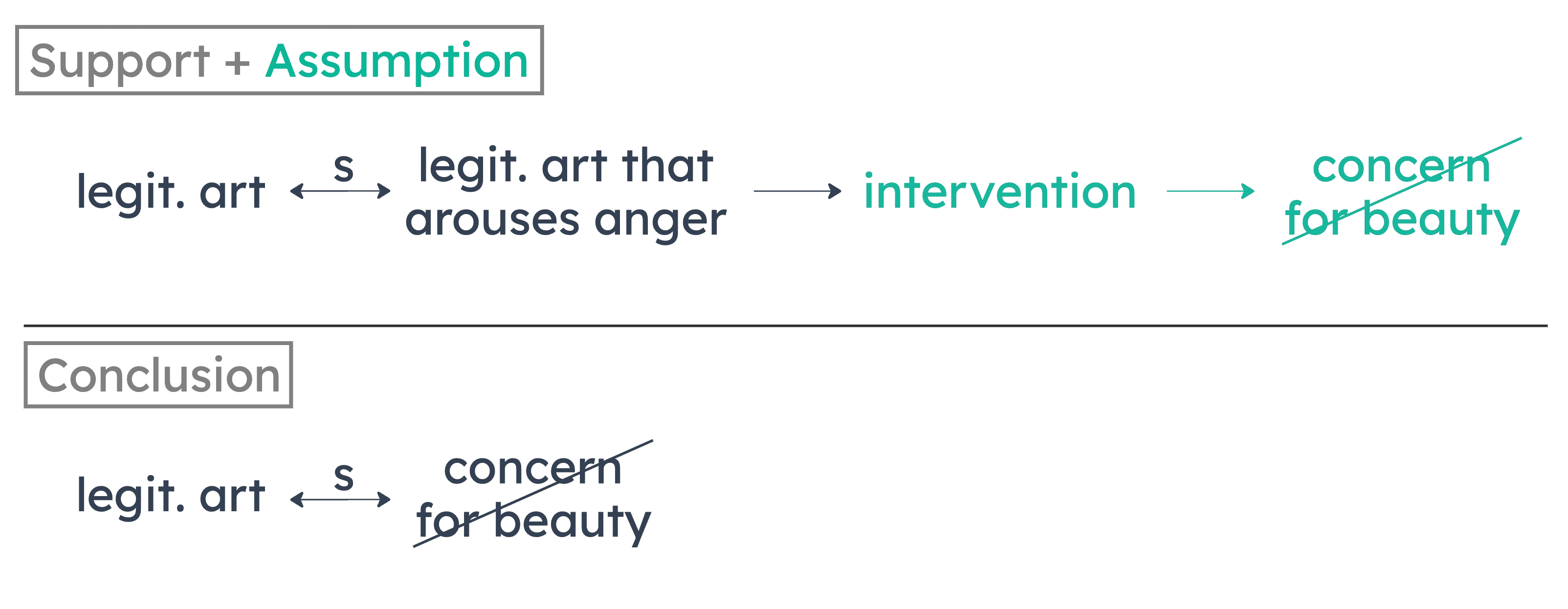
Only works that ████ ███ ████████████ ███ ██████████ █████ ██ ████
(E) doesn’t establish what kind of art is not concerned with beauty. Since neither this answer nor the premises tell us what kind of art is not concerned with beauty, there’s no way (E) can make the argument valid.
Answer five questions and we'll estimate your score.
It takes about five minutes.
Take the free diagnosticWant to know why the right answer is right?
7Sage membership unlocks explanations of every question. Every answer choice. On every official PrepTest. Start with a free account.
By signing up you agree to our
terms of service.
This site is protected by reCAPTCHA and the Google
Privacy Policy
and
Terms of Service
apply.