


Support If rational-choice theory is correct, then people act only in ways that they expect will benefit themselves. ███ ████ █████ ████ ███████████████ ██████ ██████ ██ ████████ ███████ ██████ ██ ████████ █████ ██ ██████ ██████ ██ ████ ████ ██████ ██ ██ ████████ ███████ ███████████
The author argues that rational-choice theory is not correct. She supports this by saying that if it were correct, then people would only act in ways that they expect will benefit them, but there are many examples of people acting in ways that do not benefit them.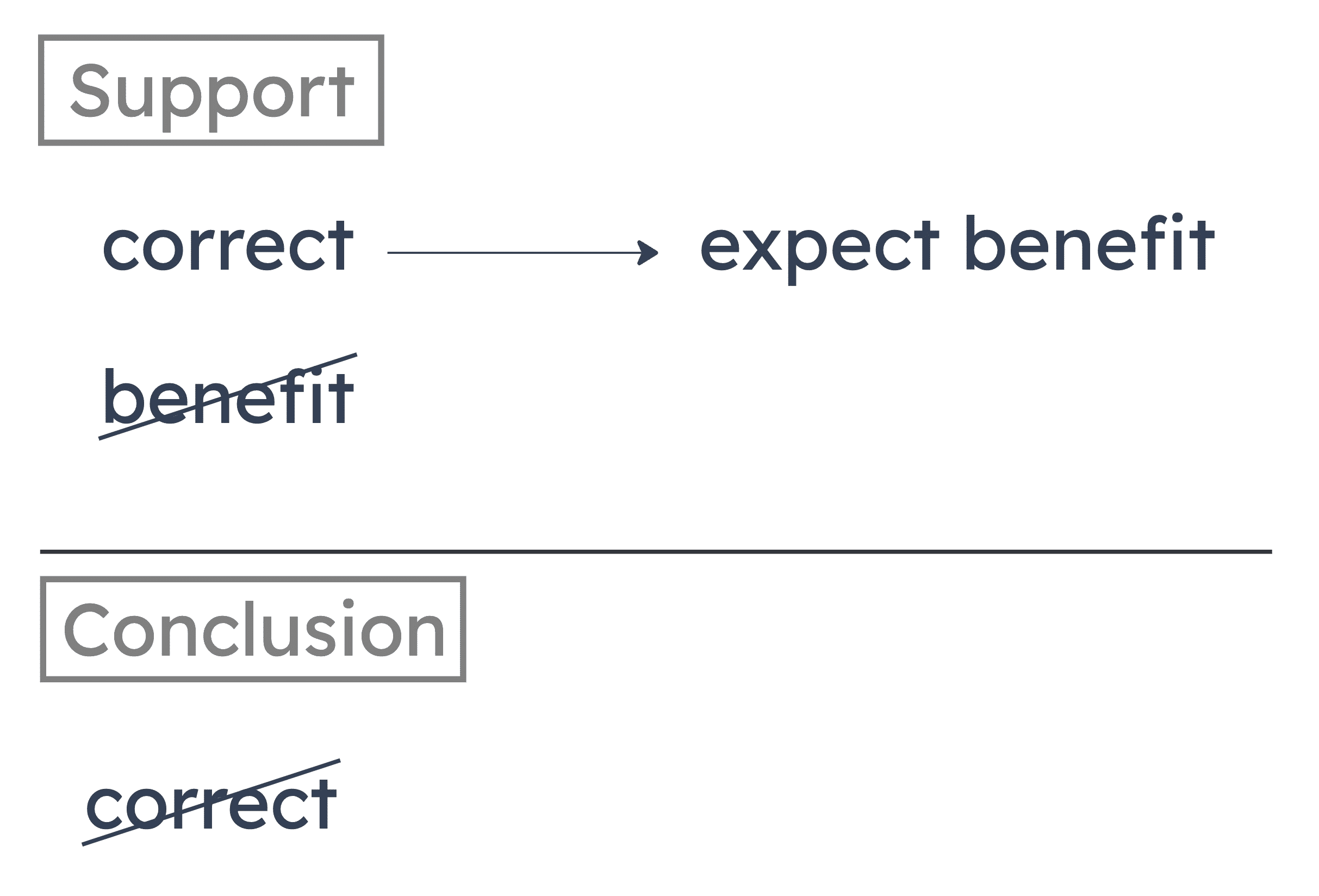
By showing that many people act in ways that don’t benefit them, the author assumes that she’s negating the necessary condition for rational-choice theory being correct. But in reality, the necessary condition is that people will always act in ways that they expect will benefit them.
It’s possible that people expected to benefit from their actions, even though they didn’t benefit. In this case, the author can’t conclude that rational-choice theory is incorrect.
The argument above is most ██████████ ██ █████████ ██ ███ ███████ ████ ██
assumes as a ███████ ███ ██████████ ███ ████████ ████████ ██ █████████
This is the cookie-cutter flaw of circular reasoning, where the argument’s conclusion simply restates one of its premises. The author doesn’t make this mistake; her premises may not support her conclusion well, but they are distinct from her conclusion.
concludes that a ██████ ██ █████ ██████ ██ ███ ███████ ████ ███ ████████ ███ ██ ██ ████████████
The author does conclude that rational-choice theory is false, but not on the grounds that the evidence for it is hypothetical. Instead, she concludes it’s false based on examples that she believes prove it to be false.
takes for granted ████ ██████ ███ ███ ██████ ██ ████ ████ ███ ██████████ ██████████ ████████ ████ █████ ███████ █████ ██ ██████████ ██████████
Actually, the author assumes that people who are acting in ways that are not personally beneficial did not expect that their actions would be personally beneficial. (C) has this backwards.
presumes, without justification, ████ ████████ ██ ██████ ██████ ██ ████ ████ ███ ███ ██████████ ██████████ ███████ █████████ ████████ ██ ██████ ██████ ██ ████ ████ ███ ██████████ ██████████
The author never assumes there are more examples of people acting in ways that are not personally beneficial than people acting in ways that are. She just says there are “plenty” of examples of people acting in ways that don’t benefit them, which she thinks disproves the theory.
fails to consider ████ ██████ ██████ ██ ████ ████ ██████ ██ ██ ████████ ███████ ███ ███████████ ████ ████████ ████ ██████ ██ █████ ████ █████ ███████ ████████ ███████
Just because people sometimes act in ways that don’t benefit them doesn’t mean that those people weren’t expecting to benefit from their actions. If they were, the author can’t conclude that rational-choice theory is incorrect.
Answer five questions and we'll estimate your score.
It takes about five minutes.
Take the free diagnosticWant to know why the right answer is right?
7Sage membership unlocks explanations of every question. Every answer choice. On every official PrepTest. Start with a free account.
By signing up you agree to our
terms of service.
This site is protected by reCAPTCHA and the Google
Privacy Policy
and
Terms of Service
apply.