


My Blind reviews are consistently always in the 170s, with my actual PT's being in the 161-164 range (I got a 162 on the June LSAT). I want to retest in September for a 165+ but don't know how to adjust my studying to reflect my Blind Reviews. Any tips would be appreciated!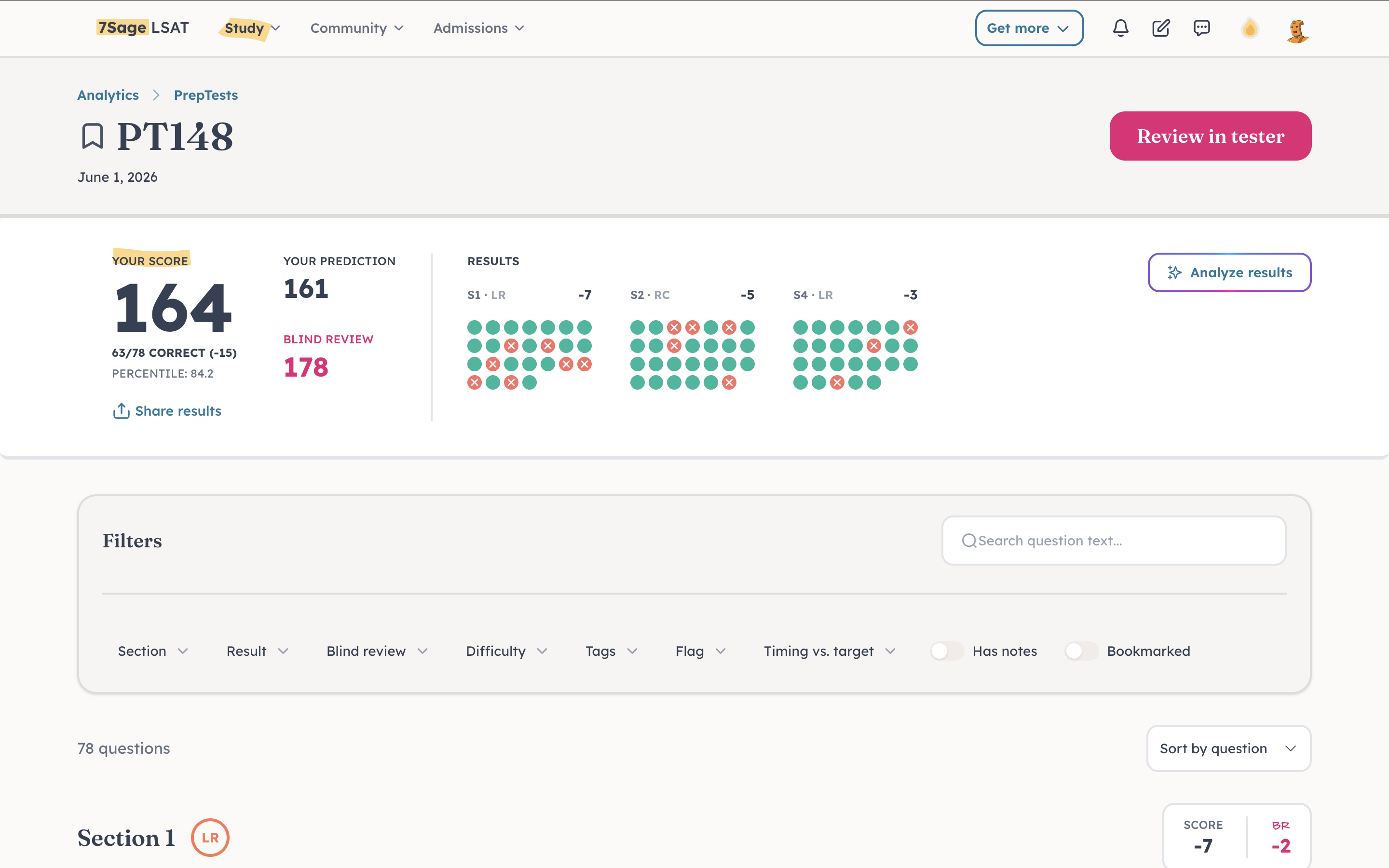
8
10 comments
I got the exact same PT score and blind review score and its so frustrating, so I totally understand where you are coming from! Im coming back to this thread to see if anyone has any advice
@SophieChasen It's definitely so frustrating! With only a few months left I don't want to waste time practicing in ways that won't help and I feel like it can be hard to figure out where to go from here because I understand the material but have trouble executing it on actual tests lol
Hello! Adding onto what Altan said, I would highly recommend finding out the reason why you miss questions on your first pass. Are you simply running out of time? If so, doing timed drills with 10-ish questions might help you build your pace. If you aren't sure about if timing is the problem, try a timed PT with a few extra minutes (like 40-45 minutes per section) to see if that relieves the pressure.
If timing is not the issue and you actually have some time left over the end of the section, make sure you're using those final minutes to go back and double-check your flagged questions. Since you're scoring high on BR, I assume simply allowing yourself to see a question a second time will help you spot any mistakes you made at the first instance.
Lastly, try to pinpoint what you do differently during BR. Which question types do you consistently fix? Which specific flaws? For instance, do you usually miss a Part-to-Whole or False Dichotomy flaw initially, but easily spot it during BR? Build a 'checklist' of your most common blind spots. Next time you are having a hard time locating a flaw in a stimulus, run through that checklist.
I hope this helps, and best of luck!
@SerinJ Thank you so much! I will definitely try a PT with some extra time and see if that helps. I've seen some people recommend untimed drills to gain speed, would you say there's any merit to that?
@GraceKelly Hello! Seeing that you already get such a high score during your Blind Review, it shows that your foundational accuracy is already excellent. Because of that, frankly speaking, I don't think untimed drills will benefit you more than timed ones at this stage.
While untimed drills are great for learning the mechanics, they don't force you to make the quick, instinctual decisions required for the real exam. In order to actually gain speed, you need to train your brain to work under pressure, and you can only build that kind of pacing when you practice with a timer. Hope this helps!
@SerinJ Thank you!
Wrong answer journaling is super important! With your blind reviews being as high as they are, you clearly understand the concepts and how to approach the questions. It's just a matter of timing and accuracy under pressure. Since you can identify the questions you get wrong, it's important to note what mistakes you make and how to avoid making them again. You can tailor your WAJ to what helps you most, but capturing the mistake and what you can do to avoid it is key!
@AltanM Thank you! I've tried wrong answer journaling in the past and could never quite figure out how to leverage it properly because most of the time I look back at the question I have a "duh" moment and spot the right answer. Any advice for what exactly I should try to identify in my wrong answer journal?
@GraceKelly The main things you want to capture are a) why the right answer is right, b) why the wrong answer is wrong, and c) what mistake you made/ how to not make it again. I always try to have an actionable sentence or something short to remember moving forward instead of focusing on what not to do! Creating rules of what not to do may be helpful for you, but I found it more helpful to focus on what you should do the next time. Everyone is different, but something that helps you avoid a mistake is important to include!
In the exact same boat! I posted a similar thread a week or two ago. Most of the time I realized it was a 50/50 split between two answers. I was sinking time rereading and going back and forth just to get it wrong. In BR with fresh eyes I could totally see where I went wrong. Most of the time, it just needs a fresh look and to slow down. For 50/50 ACs during timed sections, looking for what “kills” the wrong answer vs finding the right one, seems to help. “What makes either of these wrong?” Look at the ACs very critically. Also, rereading later in the section seems to help. If I just can’t seem to understand after reading the stimulus, I will choose a placeholder AC and flag. Coming back at the end and looking at it again. I am taking another PT today after practicing the last week on this so we will see! Current timed avg 165, avg BR 178