
Self-study
Support All material bodies are divisible into parts, and Support everything divisible is imperfect. ██ ███████ ████ ███ ████████ ██████ ███ ██████████ ██ ████████ ███████ ████ ███ ██████ ██ ███ █ ████████ █████
Summary
The author concludes that the spirit is not a material body. His reasoning is that all material bodies are divisible into parts, and therefore are imperfect. The contrapositive of this chain is that, if something is perfect, it isn’t divisible into parts, and therefore isn’t a material body. 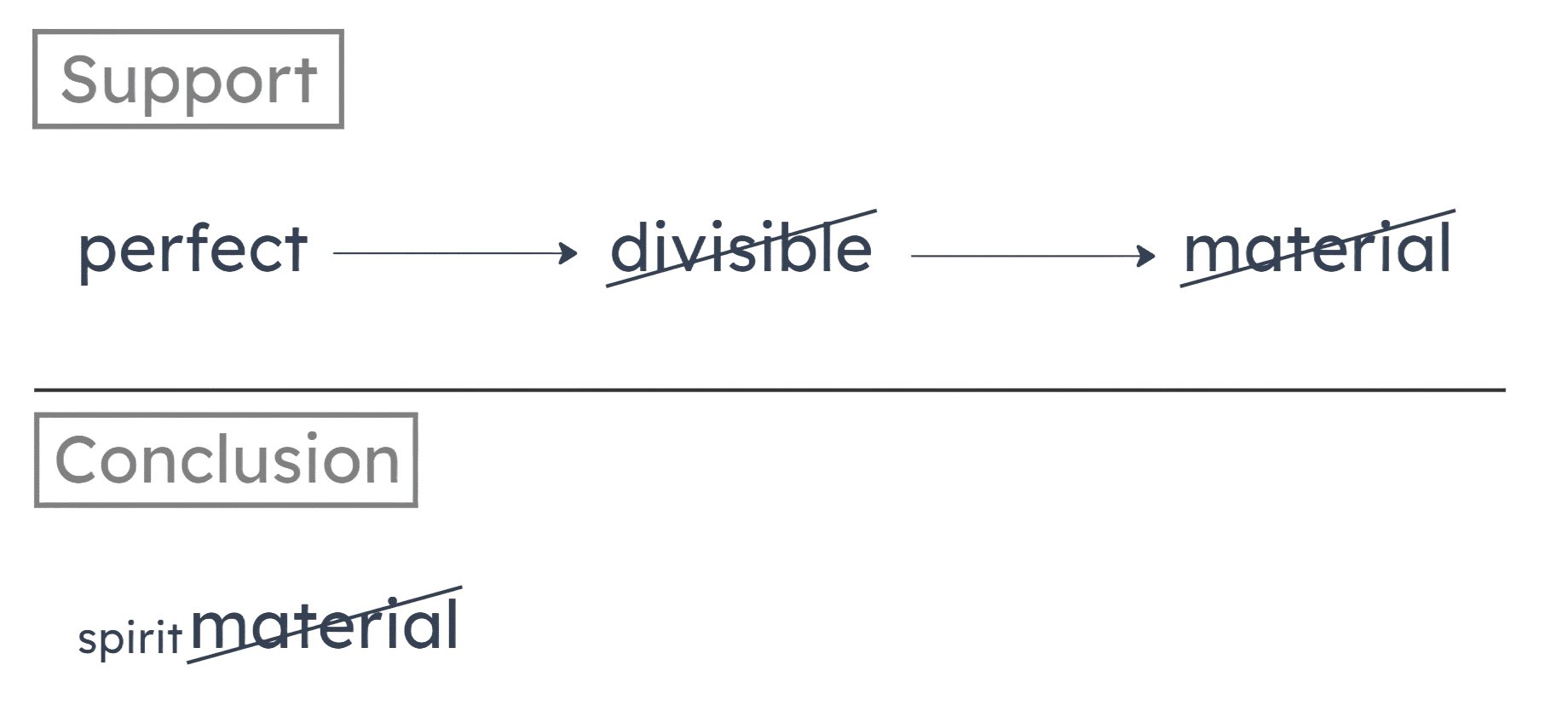
Missing Connection
The conclusion is that the spirit is not a material body, but the spirit is never mentioned in the premises. We want to look for a common denominator between the conclusion and the premises. Both mention material bodies, so we’ll start there. Because the signs are different (material bodies vs. not a material body), we’ll need to negate one by taking its contrapositive.
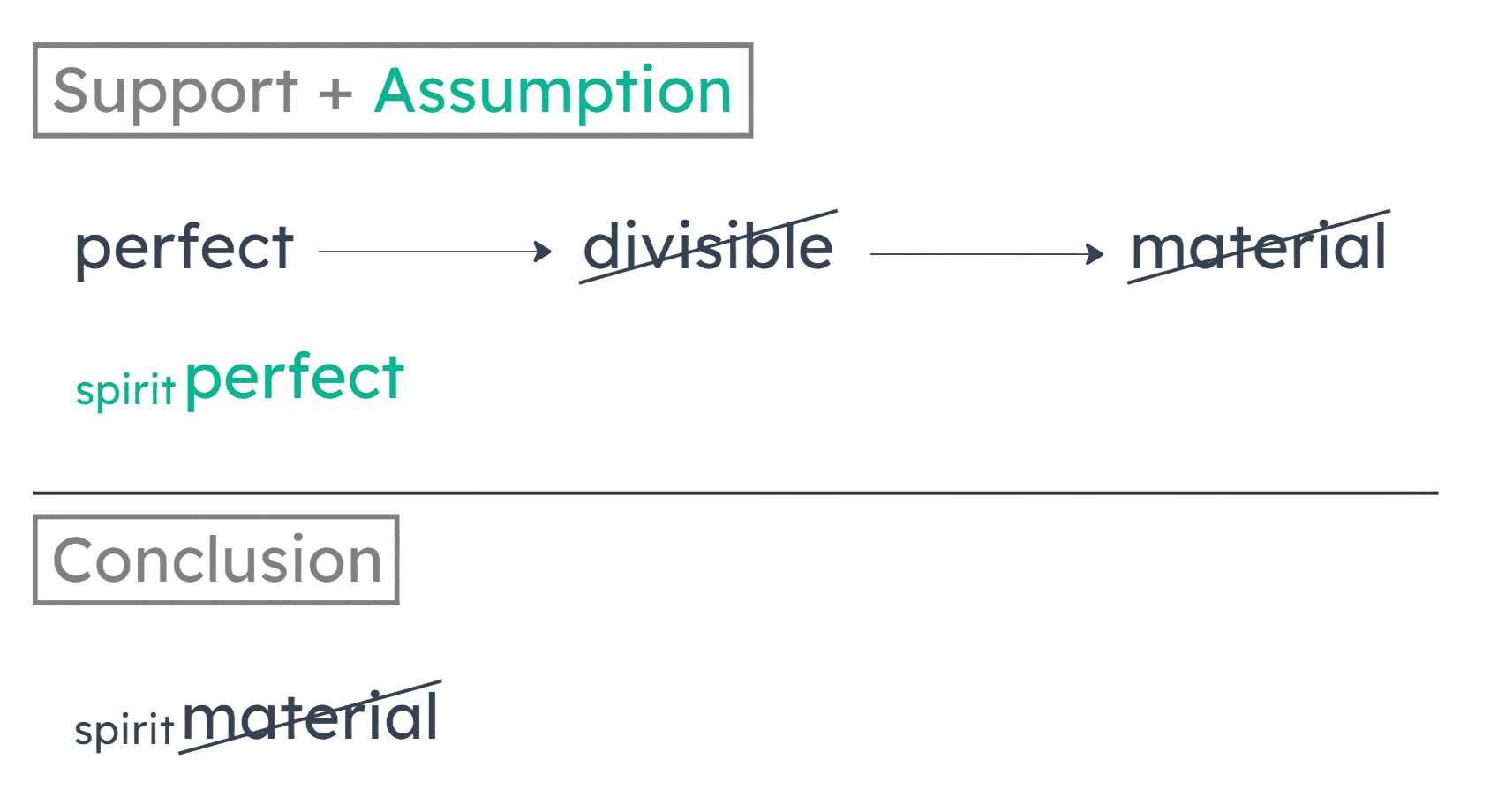
Taking the contrapositive of the premises, we get that, if something is perfect, then it’s not divisible, and therefore it’s not a material body. We want to prove that the spirit is not a material body. So, if we make the assumption that the spirit is perfect, we can reach the conclusion that it is not a material body. The assumption that the spirit is not divisible would also work.
 Analysis by TheodoreMalter
10.
The final conclusion above follows █████████ ██ █████ ███ ██ ███ █████████ ██ ████████
a
Everything divisible is █ ████████ █████
b
Nothing imperfect is ████████████
c
The spirit is ██████████
d
The spirit is ████████
e
The spirit is ██████ ███████████ ██ ██████████