


Support All material bodies are divisible into parts, and Support everything divisible is imperfect. ██ ███████ ████ ███ ████████ ██████ ███ ██████████ ██ ████████ ███████ ████ ███ ██████ ██ ███ █ ████████ █████
The author concludes that the spirit is not a material body. His reasoning is that all material bodies are divisible into parts, and therefore are imperfect. The contrapositive of this chain is that, if something is perfect, it isn’t divisible into parts, and therefore isn’t a material body. 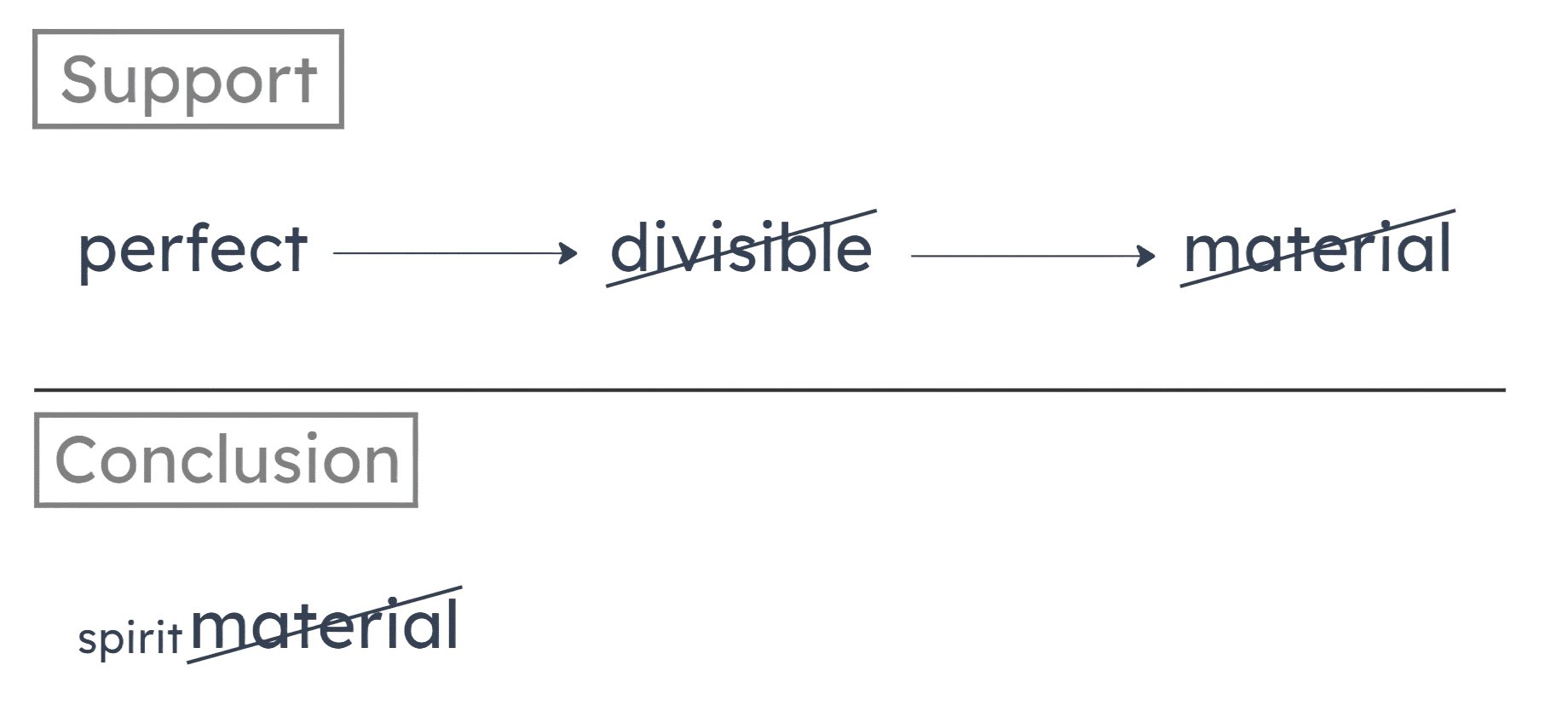
The conclusion is that the spirit is not a material body, but the spirit is never mentioned in the premises. We want to look for a common denominator between the conclusion and the premises. Both mention material bodies, so we’ll start there. Because the signs are different (material bodies vs. not a material body), we’ll need to negate one by taking its contrapositive.
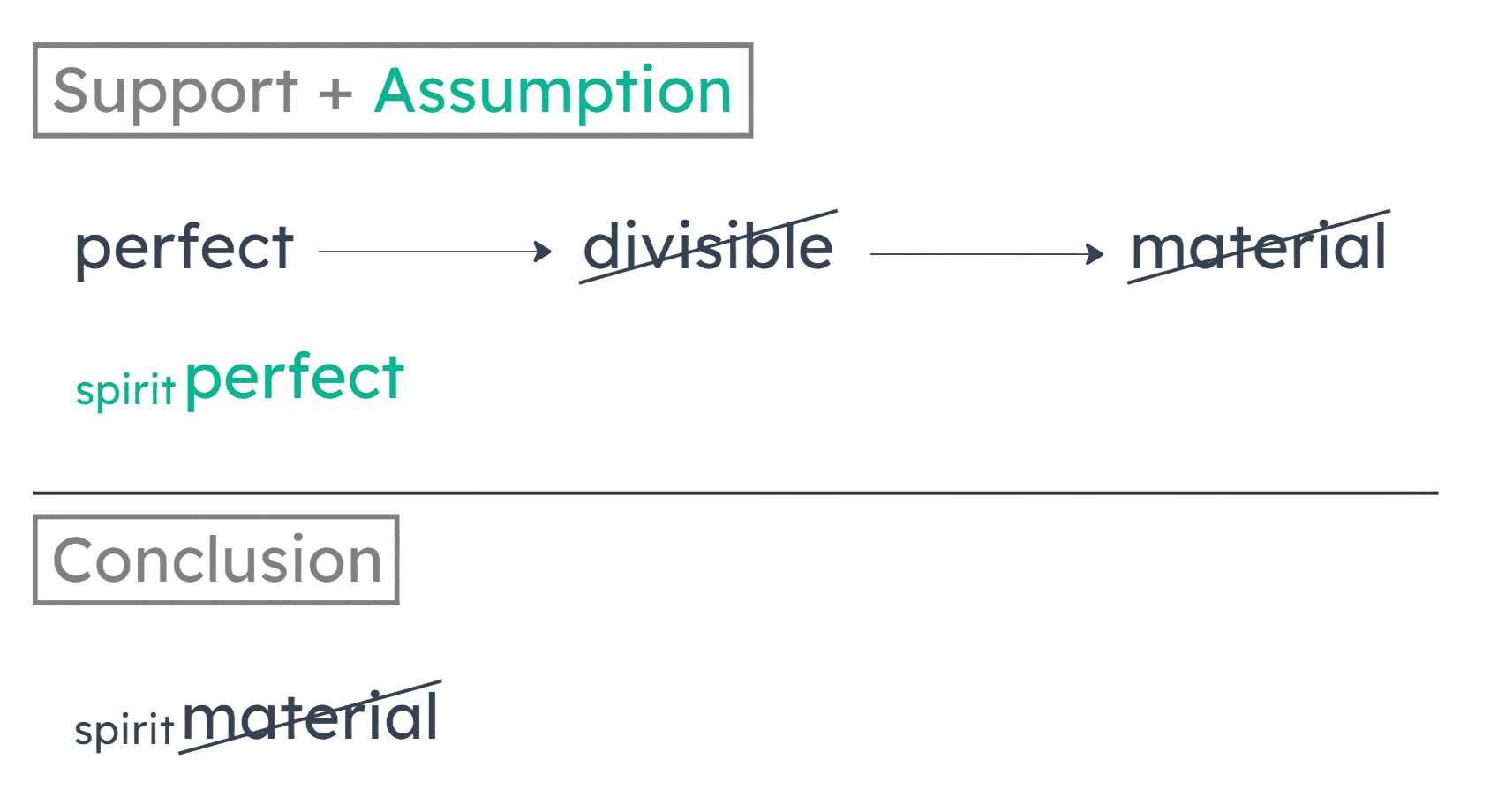
Taking the contrapositive of the premises, we get that, if something is perfect, then it’s not divisible, and therefore it’s not a material body. We want to prove that the spirit is not a material body. So, if we make the assumption that the spirit is perfect, we can reach the conclusion that it is not a material body. The assumption that the spirit is not divisible would also work.
The final conclusion above follows █████████ ██ █████ ███ ██ ███ █████████ ██ ████████
Everything divisible is █ ████████ █████
This doesn’t mention the spirit, so it can’t be right. We need an answer that bridges the gap between the premises and the conclusion.
Nothing imperfect is ████████████
This doesn’t mention the spirit, so it can’t be right. We need an answer that bridges the gap between the premises and the conclusion.
The spirit is ██████████
This doesn’t help us conclude that the spirit is not a material body. If the spirit is divisible, the only inference we can draw is that it must be imperfect.
The spirit is ████████
If we assume that the spirit is perfect, the contrapositive of the premises tells us that it’s not divisible, and therefore is not a material body. There was no mention of the spirit in the premises; this bridges that gap to reach the conclusion.
The spirit is ██████ ███████████ ██ ██████████
If the spirit were imperfect, we wouldn’t be able to conclude anything, so this can’t be it. If it only said that the spirit were indivisible, we could conclude that it’s not a material body, and this answer would be correct. But the ambiguity undercuts it.
Answer five questions and we'll estimate your score.
It takes about five minutes.
Take the free diagnosticWant to know why the right answer is right?
7Sage membership unlocks explanations of every question. Every answer choice. On every official PrepTest. Start with a free account.
By signing up you agree to our
terms of service.
This site is protected by reCAPTCHA and the Google
Privacy Policy
and
Terms of Service
apply.