


- Joined
- Jul 2025
- Subscription
- Free
Admissions profile
Discussions
January Test Taker Here. Without revealing anything about the content of the test, the advice I will give is make sure your conditionals are VERY good. Some of the hardest conditional problems I've seen on the Jan test, make sure your conditionals are sharp.
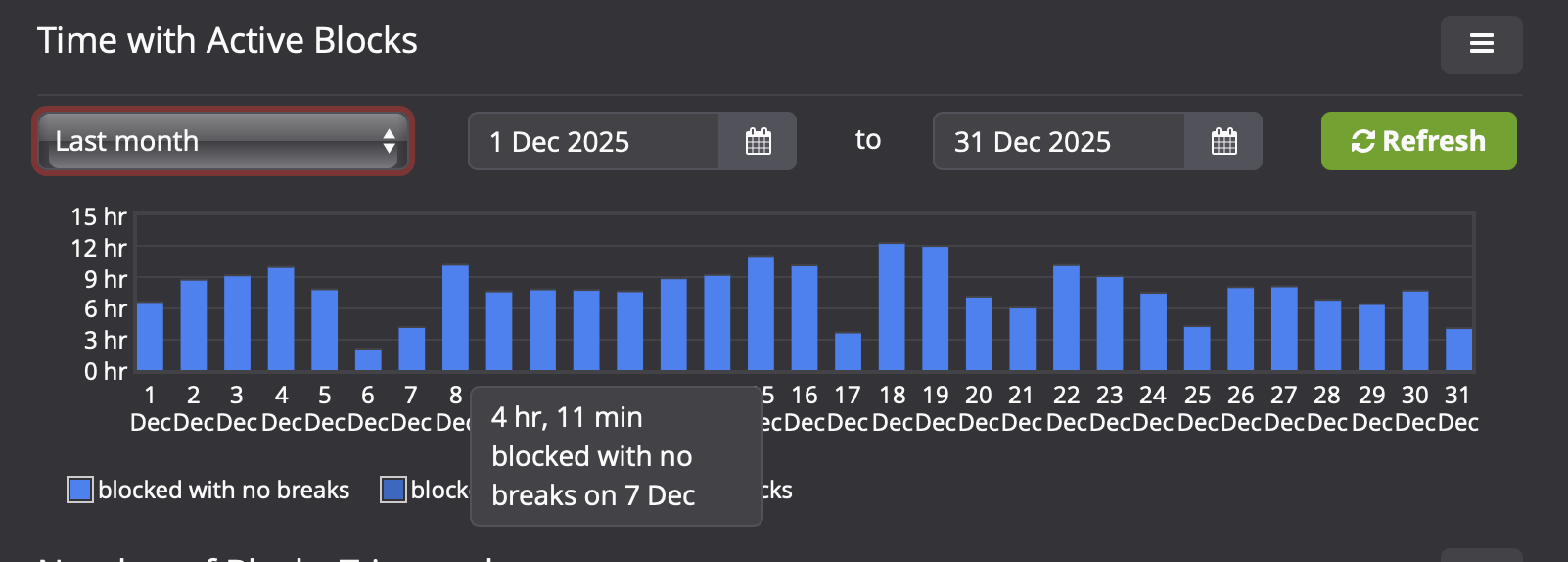

Massive shoutout. I use a programme called COLD TURKEY https://getcoldturkey.com/.
Its amazing. Its an appblocker I used to block all websites on my laptop when I was studying except 7SAGE. It helped me consistently study 10 hours a day; but just be warned its not for the feint of heart. Good luck.
Why are you trying to reach it for Saturday? If you are planning on taking your first OFFICIAL test with a diagnostic under 150, you can improve your score a bit by just cramming recorded lessons, but imo if you are taking the OFFICIAL Lsat with a score under 150, your probably not ready to take it and should consider reviewing lessons first.
@Kevin_Lin That sounds great. I've learned a bunch from the recorded classes and make no mistake, I normally love an in depth approach to reviewing problems, I just found these explanations to be too long. Thanks, and looking forward to seeing the changes implemented
@Kevin_Lin While I do really appreciate the help, I would prefer the longer explanation to be in the video format rather than the written. Some of the answer explanations even had emojis with them. While it may be to some people's preferences, I really loved the concise style explanations given on previous PTS, as this style just makes it really hard to follow whats going on in my opinion.
@Kevin_Lin The written explanations. See for example this explanation from PT 159 Section 1 Q20
Objective: Pseudo Sufficient Assumption / Find The Rule Questions
A common misconception on the LSAT is that “principle questions” are a thing. In fact, the word “principle” appears in multiple question types which you should treat very differently. The most important thing to look for when you see the word “principle” is whether the principle points up or down. Some questions (PSAa or Rule Application questions) give us a principle in the stimulus and ask us to apply it down to the answer choices. These are akin to Most Strongly Supported questions, where we must be cautious of overstrong language and stick only to inferences supported by the stimulus.
This question (a PSAr or Find The Rule question) does the opposite: it presents a bunch of principles in the answer choices and asks us to apply them up to the stimulus in an effort to justify the argument. These are akin to Strengthen questions, where overstrong language is completely fine and we’re hoping to bridge any gaps in the argument we can find.
PSAr questions tend to follow routine patterns, and our approach can therefore be similarly routine. First, it’s critical to identify the argument’s conclusion and the premise(s) that seek to support it. In a shockingly high proportion of PSAr questions, the correct answer will take the form: Premise → Conclusion.
Like in normal strengthen questions, though, it’s also important to note any common flaws you see, or (especially) subtle jumps from one concept to another (e.g. from talking about athletes to talking about professional athletes). Correct answers that address weaknesses like these are common as well.
Argument Summary And Rule Anticipation
Right off the bat, the argument’s normative conclusion should make us suspect that our answer might bridge the is-ought gap. But it’s immediately followed up by a normative premise, so in this question the is-ought gap doesn’t apply – going from normative premises to a normative conclusion is fine.
Here’s the overall structure:
Premise 1: Discovered shouldn’t mean invented. Premise 2: Exploiting genes for profit is selfish. Conclusion: Patenting genes should be illegal.
There are tons of gaps between concepts here, and closing any of them would help the argument. For example, a correct answer could say…
Selfish stuff should be illegal Patenting genes counts as exploiting genes It should be illegal to patent stuff you haven’t invented.
Or, spoiler alert: if you merely discovered something, it should be illegal to patent it.
Note here that while there’s a world in which any of the above anticipations could be correct, in this question our correct answer follows the very common pattern of Premise → Conclusion
I am slightly unhappy with the explanations provided in PT 159. While I do appreciate the detail, some of them are so long that I end up struggling to actually figure out why something is right or wrong. Would appreciate them being cut down like the acs on other pts.
Ultimately, the biggest goal for RC and the entire test for that matter, is getting stuff right. So, I usually split the section into four sections of equal time, and then try to be faster on the earlier (normally easier) passages, to save me some at the end. However, if you've really understood a passage, the questions will almost always take very little time, so if you get to questions and feel stuck, its probably a sign you need to improve your ability to comprehend the passage before you finish it.
It gets so much easier. The LSAT is unlike anything you have done before. Conditional statements, parallel questions, main point; these are all brand new skills that you have to learn. As somebody who scored 145 on there first diagnostic and now got a 161 on my first sitting, my biggest advice is respect the test. Treat it as a brand new subject, follow the core curriculum, take prep tests once a week to see where you are consistently weak, and FORGET ABOUT YOUR SCORE. The time to worry about your score is when you feel you are fully prepared, then you can worry. But it would be like trying to score 100 three pointers in a row before even learning how to shoot a basic jumpshot. Over time, it becomes much easier if you study properly
Hi everyone, just wanted to share a review tip that has been really helpful for me. I have found it really helpful during some of my review to talk through sections outloud in real time, recording my entire process on a voice memo app (Macs have a really good one built in). This process allows me to get a real picture of my thinking and process for every question. I found that way to often I was reviewing questions and the only feedback I had for myself was "oh man this was so obvious, what a stupid mistake" but this didn't help me understand why I actaully made that mistake, or why I preffered one answer choice over another.
By doing this for sections and pts, I have been able to allocate review time much better, and to accurately diagnose my wrong answers without the hinderance of hindsight clouding my process.
Good luck, and hope this helps someone.
I had the same issue. The long story short is, if your quiet enough, you can mumble to your hearts content. But if you say anything loud enough for the proctor to hear, be prepared to get a warning