


Tutoring Marketplace
New postThis is a place for students to connect with LSAT tutors who are not affiliated with 7Sage. Do your own research before hiring! For vetted 7Sage tutors, check out our official tutoring page .
See all independent tutors45 posts in the last 30 days

Hi everyone! I’m planning to take the LSAT again in February— I took it in September after months of self studying but was really disappointed with my score. I’m looking for a tutor, but I really can’t afford the ones that charge $100+ an hour. If you offer tutoring that is somewhat more affordable or know of anyone reliable that does, I would be so grateful if you could reach out to me!! As you all know, the LSAT is incredibly important and I want to put out a score that I’m proud of in February. Any and all info is appreciated :))

Hello, I’m taking the January 2027 LSAT. I am scoring way too low and I feel I understand question types and flaws but my scores aren’t reflecting that. I really need an affordable tutor please. I’m still in the 130s. My budget is $20-$50 an hour please.

I've been teaching and tutoring the LSAT since 2002, and have extensive experience in designing, building, and revising LSAT courses - I know the test inside and out, and have worked with students at all levels and target scores.
My approach is based on working smarter, not harder. For RC, this means remembering it's an open book test, not a pop quiz. Instead of trying to memorize every detail, focus on the big picture overview, then use this to then correlate the language in the questions to where the answers will come from. For LR, this means having a consistent approach for each question type - what do we look for in the stimulus? Do we predict? What kind of language do we want in the answer choice? Can we go outside the scope? How do we "double check" an answer to make sure it fits?
I have some openings for the rest of the fall and winter, and am currently offering a half price first session - two hours for the one hour rate. I generally schedule between noon and 6 pm Eastern Tues-Sat but do sometimes make later times available if needed. If you're interested in getting more information or scheduling a meeting (I also offer a free phone consultation of up to 30 minutes for any questions you might have) please message me!

Hi! I'm applying to law school for the upcoming cycle and am looking for someone to review my personal statement and share feedback on what I can improve. This could also grow into reviewing some of my other optional essays. If anyone can help, please DM me your rates, and we can arrange it!

Hello! I’m looking for a tutor with flexible availability. My price range is $40-$60 a hour. I have a full time job which I have open availability for so I have 2 random days off every week. I struggle with test anxiety and ADHD. I’ve taken the LSAT 2 times and my scores were 137 and 142. I’ve been self studying for about a year now but it seems like nothing that I do is working. I really want to take the January LSAT and I want to increase my skill level before then. Please message me if you’re interested!

LiaWang
Independent Tutor180-Scorer: Small Group Tutoring (3 to 4 Students) for $40/hour
Hello! My name is Lia, and I am offering small group tutoring (3 to 4 students) for $40/hour.
How it works:
1) First, I will wait until I have 3 to 4 interested students (first-come first-served).
2) Next, I will create a group chat with the confirmed students.
3) Finally, we will schedule lessons through Lettuce Meet.
I keep a strict cut-off for the number of students because I want to ensure that each student will be able to get personalized assistance and have all of their questions answered.
Some background info:
My diagnostic score was 163, and I scored a 180 on my first LSAT after studying for 6 months on 7Sage. I did not have a tutor and relied on teaching each question to myself (using the written and video explanations for support). I have tutored the LSAT to many students, and my clients have seen consistent progress. I have been a tutor for college students since 2022, mainly tutoring math and computer programming. An example of group tutoring I've done was statistics for a group of 4 nursing students. Even though it was not the LSAT, it means I have years of experience conveying and teaching complicated subjects to others.
If you're interested in joining this cohort, comment or send me a DM! Let's do this together!

Hi! I'm a non-traditional applicant applying this cycle, taking the test in November. My score is stuck around 166-168 consistently. Looking for 1:1 tutoring, budget is about $50/hour - 2-3 sessions per week. Thanks. Would prefer to work with a female, I am female.

StevanBlauert
Independent TutorFrom 137 → 180 to Law School Applications: Admissions Myths and Must-Dos
Application season is upon us, and there is an overwhelming amount of law school admissions advice floating around online right now. I wanted to put together some of the biggest myths and most important things I think applicants should understand as they move into the part of the process that comes after the LSAT.
To be clear, this post is specifically about law school admissions rather than LSAT preparation. I went from a 137 diagnostic to a 180 official LSAT score, and I now tutor students one-on-one for the LSAT, so if you are still studying and want advice on that side of the process, I have two other posts on 7Sage that go much deeper into my approach and what I learned along the way:
From 137 Diagnostic to 180 Official – LSAT Tutor: https://7sage.com/discussion/56374/from-137-diagnostic-to-180-official-lsat-tutor
137 Diagnostic to 180 Official: What You Should Know: https://7sage.com/discussion/59808/137-diagnostic-to-180-official-what-you-should-know
I have gone through the law school admissions process myself, helped 100+ people directly through the process, attended countless different admissions forums, and listened to every admissions podcast featuring current and former admissions directors I could find because I wanted to hear directly from them what they are actually looking for and what they are not looking for.
If one thing has become abundantly clear to me, it is that these schools do not all handle admissions the same way. There are general principles that apply across admissions, but schools have different internal systems, priorities, timelines, and ways of building a class.
With so much information online and so many people trying to interpret individual admissions results, I wanted to put together some of the biggest myths and most important must-dos that I think applicants should understand going into this cycle.
Myth 1: Someone with worse stats got admitted before me, so something must be wrong with my application.
This is probably one of the easiest traps to fall into because Reddit and LSD.law give us more admissions data than applicants have probably ever had before. You see somebody with a lower LSAT and GPA get admitted to your dream school while you have been sitting under review for two months, and naturally you start wondering what went wrong.
Your LSAT and GPA are extremely important, but schools are not simply sorting a spreadsheet from highest numbers to lowest numbers and admitting people in that order. Someone with lower numbers may have better work experience, stronger essays, better recommendations, military experience, a background the school values, stronger geographic ties, or something else in the application that you cannot see from two numbers online.
There is also a business side to building a class that applicants sometimes forget. Schools giving every particularly strong applicant a full scholarship or enormous scholarship package is not what keeps the lights on, and they are constantly balancing medians, scholarship budgets, enrollment targets, and how likely individual applicants are to actually enroll.
If you are an unusually strong applicant for a particular school, that school may reasonably assume it is going to take a substantial scholarship to get you there. Another applicant with slightly lower numbers may look like somebody the school has a much better chance of enrolling at a price that makes sense for its class.
Early Decision can complicate comparisons even further because those applicants may be reviewed on different timelines and, depending on the program, have already demonstrated that the school is their first choice. Comparing your Regular Decision application to somebody else’s Early Decision result can therefore be particularly misleading.
The timing itself also does not necessarily tell you much. Schools can hold one application while admitting another applicant who applied weeks later because they are making different decisions about different files.
There will be people with worse numbers than you who get into schools that reject or waitlist you. There will also be schools where you outperform applicants with better numbers, so trying to explain every individual result through Reddit or LSD will eventually drive you insane.
Myth 2: Rolling admissions means applying as early as possible is always more important than improving your application.
Applying earlier generally has advantages, and you should not delay an application for no reason. However, people sometimes take rolling admissions to mean that every week you wait is catastrophic, and that is not how every school actually operates.
I recently listened to a Spivey Consulting podcast with former Vanderbilt and Harvard admissions directors, and even they described different approaches to when applications were reviewed. That is a good example of why you should be careful about turning one school’s process into a universal admissions rule.
More importantly, your actual application still matters considerably more than racing to submit an inferior version of it. If your realistic choice is applying today with a 167 or taking another month and applying with a 170, I would take the 170 in almost every normal situation.
The same applies to your written materials. Submitting three weeks earlier is not worth sending a personal statement that you know needs major work or an application full of rushed optional essays.
There are obviously exceptions involving deadlines, Early Decision programs, or specific school policies. The broader point is that “earlier is better” should never become “earlier is more important than better.”
Myth 3: Networking with admissions officers can overcome weak statistics.
This one is especially relevant right now with LSAC Forum season in full swing around the country. Going to LSAC Forums, information sessions, school events, and other admissions programs is absolutely worthwhile because you can learn a tremendous amount and talk directly with the people involved in this process.
You can ask questions that help you determine whether you actually like a school, learn what individual admissions offices care about, and sometimes develop a much better understanding of how to approach your application. Showing genuine interest can also be useful when it happens naturally.
However, meeting an admissions officer is not going to magically erase an LSAT or GPA that makes you extremely uncompetitive. Attend these events to learn, ask good questions, and understand schools better rather than treating every conversation like an audition that needs to result in admission.
Myth 4: Optional essays are actually optional, so there is no real reason to do them.
Technically, many of them are optional. Strategically, I think applicants sometimes take that word too literally.
Schools know applicants are applying broadly, particularly now that applying to a large number of schools has become so common. They know applicants are comparing scholarship packages, employment outcomes, geography, rankings, and multiple offers before deciding where to attend.
That makes it more important than ever to give schools you genuinely like some reason to believe you would actually consider attending if they offered you a spot and a financial package that made sense. If a school gives you an opportunity to explain why you want to attend, I would strongly consider using it when you have something substantive to say.
That does not mean writing every optional essay simply because one exists. If you have nothing meaningful to contribute, forcing another generic page onto the application does not automatically help you.
Use optional essays to add something new, demonstrate genuine interest, explain an important part of your background, or give the admissions office another reason to see you as a fit. They should add information rather than repeat your personal statement using slightly different words.
Myth 5: Your personal statement needs an extraordinary story, or a great enough story can make everything else irrelevant.
These are basically opposite versions of the same misunderstanding. You do not need some unbelievable tragedy, dramatic life event, or movie-worthy story to write a strong personal statement, and even an incredible personal statement does not make your LSAT and GPA disappear.
Your goal should be to construct a coherent narrative that helps the reader understand who you are, what has shaped you, why law makes sense for you, and why you seem like somebody they would want in their class. A relatively ordinary experience can accomplish that extremely well if you write about it thoughtfully.
Trying to manufacture importance out of something because you think admissions officers expect a dramatic story can actually hurt the essay. I would much rather read a genuine, mature essay about somebody’s work, family, interests, or development than an obviously exaggerated attempt to turn a normal afternoon into the moment someone discovered their life’s purpose.
I have some more specific personal statement thoughts below because I think this is one of the easiest parts of the application to overcomplicate.
Must-Do 1: Apply broadly, but only apply to schools you would actually attend.
I think most applicants should be able to find somewhere around 10–20 schools that they would genuinely consider under the right circumstances. Your list should include schools with different admissions probabilities, scholarship possibilities, locations, and employment outcomes.
The important part is that every application represents an actual possibility. If a school could admit you with a reasonable scholarship and you already know you would never attend, I do not understand why you are spending money applying there.
Applying broadly gives you more chances at admission and more chances at substantial scholarship money. It also gives you more options when you eventually have to make the decision that actually matters, which is where you are going to spend three years and potentially a massive amount of money.
Must-Do 2: Turn on CRS and actively look for fee waivers.
Make sure your LSAC Candidate Referral Service profile is turned on so schools can find you. Schools use CRS to identify applicants based on things like LSAT scores, GPA, geography, and other information, and this can lead to recruitment outreach and fee waivers.
Do not assume every email means the school is dying to admit you. The much more tangible benefit is that it can save you a lot of money.
You should also feel completely comfortable emailing schools and asking whether they can provide an application fee waiver. Many schools will give them out, particularly if your numbers make you a plausible applicant.
Something a lot of people still do not know is that schools can also cover the $45 CAS report fee. Schools do not advertise this nearly as much, and that does not mean every school will give you one, but it is another possible expense that can be waived.
When you multiply application fees and CAS report fees across fifteen or twenty schools, the numbers add up extremely quickly. Spending a little time finding waivers can save you hundreds of dollars.
Must-Do 3: Read every individual school’s instructions.
Every school does things a little differently, which goes back to my original point. Personal statement limits, resume requirements, optional essays, addenda, formatting rules, disclosures, and other application questions can all vary.
Do not assume Harvard wants exactly what Vanderbilt wants, or that something one admissions director said on a podcast applies to every law school in the country. Follow the instructions sitting in front of you on the actual application.
Must-Do 4: Take your personal statement seriously without overthinking what it needs to be.
My general recommendation is to build your main version around two pages, double-spaced, unless a school specifically gives you different instructions. Always follow the school’s actual requirements, but two pages gives you enough room to develop a narrative without turning your personal statement into a memoir.
One of your biggest goals should simply be making yourself likable. Somebody is reading this essay, and you want that person to finish it thinking you seem mature, self-aware, interesting, employable, and like somebody they would want around their law school.
Your reason for law school should also come through clearly. You do not need to write a paragraph that literally begins with “I want to become a lawyer because,” but the person reading your application should understand why law makes sense as the next step in your life.
You want the narrative to connect who you are, what you have done, and where you are trying to go. Someone should finish reading it believing you have actually thought about why you are committing three years of your life and potentially a huge amount of money to becoming a lawyer.
You also do not need to trauma dump. If something difficult genuinely shaped you and belongs in your story, include it, but adversity is not a requirement for a successful personal statement.
The same goes for oversharing. Being vulnerable can make an essay much more compelling, but there is still an admissions and professional audience on the other side of the page.
Remember that these admissions offices receive thousands of applications and generally do not have enormous teams reading them. Even if somebody reads every word you write, assume that person is moving relatively quickly rather than spending twenty minutes analyzing every sentence.
Make your opening accomplish something, make the narrative easy to follow, and do not bury the reason you are telling the story underneath a page of unnecessary setup. You want the important things about you to be difficult to miss.
I would also strongly discourage having AI write the personal statement for you. AI can be incredibly useful for brainstorming, organizing ideas, catching grammatical problems, or helping you identify sections that are unclear, but your actual essay should still sound like you.
That distinction is becoming harder in today’s world, but I think it is worth the extra effort. Admissions officers are going to read thousands of essays, and you do not want yours to sound like the exact same polished AI voice they have already seen repeatedly.
Must-Do 5: Look at actual employment outcomes before choosing a school.
Please look at ABA disclosures and employment reports before deciding where you want to attend. Rankings matter, but they are one piece of information rather than the entire decision.
Look at where graduates actually work, how many obtain full-time bar-passage-required jobs, what geographic markets the school feeds into, and whether graduates are consistently getting the jobs you want.
If your goal is BigLaw, federal clerkships, government, public interest, or practicing in a particular city, look at whether the school actually produces those outcomes. Do not assume the ranking alone answers that question for you.
Must-Do 6: Take scholarship money and debt extremely seriously.
Your goal should not simply be getting into the best-ranked school possible. Your goal should be getting into the right school at the right price for what you are trying to accomplish.
Tuition is only part of the cost. You also need to consider living expenses, interest, lost income, scholarship conditions, and the realistic employment outcomes you will have when you graduate.
You do not want to financially pigeonhole yourself for years because you became emotionally attached to one acceptance. The difference between two schools may look relatively small on a ranking, while the difference in debt could completely change the amount of freedom you have after graduation.
Must-Do 7: Stay organized and stay busy once everything is submitted.
Keep track of application portals, interview invitations, scholarship information, financial aid requirements, deposit deadlines, and communications from schools. There can be a surprising amount to manage even after the actual applications are finished.
More importantly, keep living your life while you wait. Continue working, studying, exercising, seeing friends, building your career, or doing whatever else keeps you moving rather than refreshing status checkers all day.
There are going to be frustrating moments. Somebody with worse numbers may get admitted before you, a school may leave you waiting for months, or a result may make absolutely no sense based on everything you thought you knew about your chances.
That does not mean your cycle is falling apart. There are internal systems, enrollment considerations, scholarship budgets, and other information on the school’s side that applicants simply cannot see.
One final thing about this cycle.
I would prepare for this admissions cycle to be very long. Last cycle stretched extremely late for some applicants, and I would not be surprised if some schools are still making meaningful decisions well into next summer again.
I also would not be shocked if this cycle becomes even stranger because of how much movement we saw around seat deposits and class sizes toward the end of the last cycle.
That could mean more holding, more waitlisting, slower decisions, and admissions patterns that look completely irrational from the outside. Different schools will handle those pressures differently, which is exactly why I would avoid trying to apply one universal timeline to the entire process.
This is a heck of a process for everyone involved, and staying positive and busy matters more than people realize. Your goal is not to win every individual admissions decision or understand why every stranger on LSD got the result they did.
Your goal is to finish the cycle with at least one school you genuinely want to attend, at a price that makes financial sense, with employment outcomes that give you a realistic path toward the career you actually want.
If you are interested in working with me directly for law school admissions consulting, feel free to reply below or send me a DM. I can help with personal statements, supplemental essays, school selection, overall application strategy, interviews, scholarship negotiations, waitlists, and eventually choosing between acceptances.
If not, no worries at all. Hopefully something in this post was useful, and if it was, please upvote it so more people in the 7Sage community can see it.
One final recommendation that I assume probably 95% of the people reading this already follow: if you are still studying for the LSAT and have not signed up for a paid 7Sage plan, I definitely recommend doing so. I went through essentially every major LSAT study platform during my own journey from 137 to 180, and in my opinion, 7Sage is the best overall LSAT platform available.

Ezra
Independent Tutor180 Tutor | Closing the Timed vs. Blind Review Gap | Free 30-min Consult
Hi everyone! I'm Ezra, and I scored a 180 on the September LSAT, so the grind of PTs, blind review, and wrong-answer journaling is still very fresh for me. I tutored economics in college, and have been tutoring the LSAT since I took the exam. I love teaching the exam and I think the LSAT can be a fun and engaging challenge with the right approach. I firmly believe that with a strong foundation, good study habits, and proper dedication, most people can reach their goal scores.
My specialty is closing gap between blind review and timed scores, and building personalized and highly effective study plans. These were key to how I scored a 180 and I have put a lot of hours into developing tactics for them. Reaching a high score on the LSAT requires a holistic approach that goes beyond making sure you understand the questions. Success is also largely about tactics for performing under timed pressure. If you're regularly getting questions right in blind review that you are missing under time, or your PT scores are plateauing short of where you know they should be, I am here to help!
How I work:
We start by assessing your performance and how you are studying, to pin down where you could improve. This is a process of targeting gaps and strengths in your understanding, study methods, and execution.
We will work on tailoring our sessions so that they work best for you. Everyone learns best differently, and we will spend time making sure that your study time is spent optimally and efficiently.
I am offering 1-on-1 sessions. I prefer 90-minute sessions, but can do 60-minutes as well if you have less time.
Rates:
I am currently pricing my 60-minute sessions at $60 and 90-minute sessions at $85.
If you are interested, book a free 30-minute consult: cal.com/glasmanlsat
Feel free to dm me here or comment below with any questions! 😁

I am looking for a Black American tutor to help me get to my 165 goal score

Nick-MagicLampLSAT
Independent TutorLearn from a Perfect 180 Scorer, Experienced Tutor – Rate ($40-60/hr) + Free Consultation!
Hi everyone!
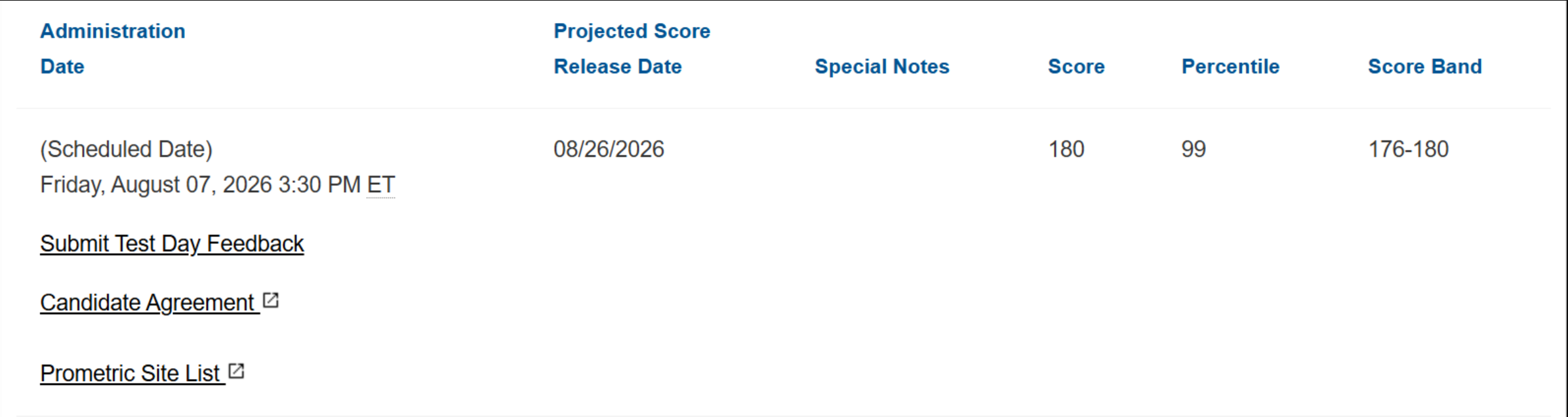
My name is Nicolas and I'm here to help you reach your LSAT goals. I scored a perfect 180 on the August 2026 LSAT (screenshot below), and my initial diagnostic score was a 158. I take on students at a rate of $40-$60/hour with bundle discounts. I have been tutoring since my test and have 100+ hours experience tutoring students for the LSAT.
What I bring to the table:
Perfect 180 Mastery: I want to help you reproduce the skills and study strategies that helped me get to a 180.
Tailored Strategy: Whether you are struggling with test-taking strategy or need help working out specific questions, I can help you. I help students build a wrong answer journal and a customized study plan that actually helps them improve. During sessions I teach students how to analyze questions in a piecemeal fashion and fix their approach to different question types, improving accuracy and overcoming plateaus.
Affordable Coaching: I also work for a major test prep company, but you receive the same service at a fraction of the cost.
Who this is for:
Students currently stuck in the 140s, 150s, or 160s looking for the right path to score in the 170s.
Beginners who want to build a flawless approach to the LSAT.
About me: I am a Cornell senior, veteran debater, and coffee fiend with passions for Middle Eastern history and literature.
If you are interested, please comment below or DM me for a free consultation! I look forward to working together.

I am looking for a tutor that can take me from the 160s to 170s.

RJlsattutor
Independent Tutor180 While Working Full-Time | Opening 1:1 & Group Tutoring Availability | Free Consult
Hi everyone!
Quick tip for anyone struggling to apply what they've learned under timed conditions: don't try to consciously remember every strategy or lesson while working through a question. Instead, focus on developing a consistent reasoning process and identifying the specific mistakes that keep recurring. After reviewing a missed question, ask yourself what you should have recognized or done differently before choosing an answer. The goal is to make those habits increasingly automatic so you can rely on them under time pressure.
As more of my current students finish their testing cycles, I'm opening additional availability for others preparing for the November, January, and later LSAT administrations.
About me: I scored an official 180 on the LSAT while working full-time, so I understand the challenge of preparing seriously for this test around a demanding work schedule. Since then, I have tutored the LSAT full-time and worked with students across a wide range of scores, from students still building their foundations to those trying to break into the high 160s and 170s or make 170+ performance more consistent.
How I approach tutoring:
I don't think tutoring should just consist of someone explaining questions after you miss them. Most students can understand an explanation once they hear it. The harder part is learning how to recognize the issue yourself before choosing an answer.
During sessions, I want to hear how you reason through the question first: what you noticed, what you predicted, where you hesitated, and why certain answers remained attractive. From there, I'll walk you through my own reasoning so we can compare the two and identify exactly where your process is breaking down.
For Logical Reasoning, I focus heavily on argument structure, prediction, flaw recognition, and understanding why tempting wrong answers fail. The goal is not just to understand why the credited answer works after seeing an explanation, but to become increasingly capable of recognizing the reasoning yourself.
For Reading Comprehension, I focus on passage structure, viewpoints, author attitude, and knowing where information lives in the passage. Memorizing every detail is unnecessary. It's far more important to understand how the passage is organized so that you know what matters and where to return for textual support.
Personalized study plans
For private students, I also use your recent PTs, drilling analytics, Blind Review, review habits, wrong-answer journal, and what I observe during our sessions to build a study plan around the patterns actually costing you points.
The study plan is not something I give you once and expect you to follow unchanged until test day.
As your performance changes, the plan changes with it.
If something that was previously a weakness becomes reliable, we can reduce the time you spend there. If your next few PTs reveal a different recurring issue, that can become the next priority. What you're studying several weeks from now shouldn't necessarily still be determined by what your analytics showed today.
Tutoring may be particularly useful if you:
understand explanations afterward but keep making similar mistakes
frequently get stuck between two answer choices
have a meaningful timed vs. Blind Review gap
struggle with timing, second-guessing, or confidence
feel inconsistent across practice tests and aren't sure why
aren't sure what you should actually be prioritizing each week
Ways to work with me:
Private Tutoring (1:1)
Individual sessions built around your reasoning process, recent PTs, analytics, and current areas for improvement. What happens between sessions helps guide what we work on next, rather than treating each tutoring session as an isolated lesson.
Study Buddy Prep
A two-person tutoring option for students who already have a friend or fellow LSAT studier with similar goals and would like an alternative to private tutoring.
You each work through questions independently before we compare reasoning, which gives you the benefit of individualized feedback while also hearing how another student approached the same problem.
Weekly Group Classes
Small, interactive classes capped at 10 students. Each week focuses on a specific LSAT concept, question type, or strategy, with the topic announced in advance so you can choose the classes most relevant to you.
For each question, everyone first answers through an anonymous poll, so you're able to participate without publicly sharing your answer. Speaking is never required.
Students who want to can then explain their reasoning before I break down the question, share my own approach, and go through the structure, prediction, credited answer, and most tempting wrong-answer choices.
Classes currently meet:
Thursdays at 6:00 p.m. ET
Sundays at 3:00 p.m. ET
Thursday and Sunday generally cover the same weekly topic, so students can attend whichever works better or come to both for additional practice.
Law School Application Support:
I also work with students once they transition from the LSAT into the application process. This can include personal statements, supplemental essays, résumé review, school-list and application strategy, LOCIs, and reviewing application materials as a whole.
Application support is offered à la carte, so you can get help with a particular part of your application or continue working with me throughout the process as needed.
Not sure whether tutoring makes sense for you?
I also offer a free 15-minute consultation.
We can talk through your current score range, goal score, testing timeline, recent PT performance, study history, and what has been giving you trouble. I'll also explain how I would approach your preparation and what I would likely prioritize if we worked together.
You can book a free consultation, comment here, or message me with any questions.

sheffermancoaching
Independent TutorOfficial 147 → 173 Scorer | 2025 WashULaw Commencement Speaker | Free Consultation | $100/hr | Visual Learner
Hey everyone! I’m Jason and I’m offering private LSAT tutoring! www.sheffermancoaching.com
My Approach: My tutoring is very visual, hands on, and personalized because that was the style of tutoring I needed but never got. I realized most LSAT tutors are the natural test takers not needing to have studied much. The LSAT did not come naturally to me…I took the LSAT 6 times starting from an official 147 to eventually a 173. I needed someone to understand things at my level (the very bottom) and to walk me through the process. I also needed a more visual and repeatable approach that works for any question type or passage.
Limited Availability: I keep my roster small on purpose because I get genuinely involved with everyone I work with. My tutoring works best when it feels like a friend who’s had similar experiences rather than you feeling like I’m counting the minutes until the session is over.
A bit about me: I studied the intersection of philosophy and cognitive psychology and TA’d in formal logic, was the commencement speaker and graduated from Washington University in St. Louis School of Law in 2025 and worked as a startup corporate lawyer for Cooley LLP. Check out my website for more info!

Hey everyone! I'm Andrea. I've been teaching the LSAT for eight years. Have done several thousand sessions and worked with hundreds of students. I've taught big classes and webinars, small groups, and infinite one-on-ones. I've also written LSAT curriculum for a major prep company, where I'm their RC specialist, and dive deep on advanced LR work.
I also do a lot of law school admissions consulting/personal statement help, I worked with the admissions team as an admissions fellow at Harvard Law.
My biggest strength is diagnosis. After thousands of sessions with all different kinds of students, I've seen it all ten times over, so I quickly find the specific knowledge gaps, habits, and weaknesses holding back individual test-takers. I can see what problems you're likely to get wrong/right and why, can see how far you are from where you want to get, so I mix up a custom framework for getting you there and give you the fixes that work for the kind of test taker that you specifically are
I also specialize in strategies for test-taking anxiety. This is such a blocker for people! Lots to offer here.
Message me if you'd like to chat!

Hi everyone! I’m looking for recommendations for affordable LSAT tutoring (maximum $60 an hour, preferably lower). I took the August LSAT and scored a 140. My timed practice scores are currently in the 140–150s range, but I’m scoring in the 160s on blind review. My target is realistically a 165–169, though I’d love to score even higher. I am registered for the November exam but may push it to January.
I’ve been self-studying since January 2026 and started with a 128, so I know I’ve made progress, but I feel like something still isn’t clicking for many areas in LR. I also struggle with anxiety, difficulty maintaining focus, and dissociation during exams which are big factors contributing to my score. I’m working full-time now, which has made it harder to find the energy and motivation to study consistently. I would like help identifying what’s holding me back from translating my blind review performance into my timed score.
I’m especially looking for a tutor who has experience working with students with disabilities and takes an understanding, patient, and supportive approach. I previously tried working with a tutor but left the experience feeling degraded for not understanding the questions they asked. I want to work with someone who can meet me where I’m at, explain concepts in different ways when needed, and help me build confidence without feeling embarrassed to ask questions.
I’m also open to hearing about tutoring approaches or study strategies that worked for people in a similar situation. :)

If you keep rereading RC passages, or flipping back to them on every question, this class is for you.
I'm running a free live class every Saturday, 9 to 10am Mountain (11am ET / 10am CT / 8am PT). It starts October 17 with a two-week RC series, then a new skill each week after that. Only 10 spots for now, so it stays small enough for real discussion.
Register here: https://us06web.zoom.us/meeting/register/soq1FwpWTQaHV-zwg2eb6A
Can't make it? Register anyway and I'll send you the recording.
Week 1 (Oct 17): Reading RC for reasoning structure. Most people read passages for the details, then get lost when the questions ask about the argument. I'll teach you to read for structure instead: whose view is whose, where the author lands, and what each paragraph is doing. Then we'll work a real passage together and break down the misses live.
Week 2 (Oct 24): Attacking the RC question stem. Once you can see the structure, the next place points leak is the stem. You read it, decide what it's asking, and go hunting for the wrong thing before you've looked at a single answer choice. A stem pointing at the whole passage means the answer won't hinge on a small detail, so you shouldn't need to go back. A stem pointing at one sentence means the opposite. I'll teach my routine for reading stems, then we'll run real questions together.
Free RC Handouts
I've put together RC handouts that cover everything in this two-week series. Comment below and I'll send them over, whether or not you can make it. And tell me which RC question type reliably costs you the most. I pick future topics from the replies.
About Me
My name is Tanner. I studied harder for the LSAT than anything in my life, reviewed every question, put in the hours, and my score stayed flat. The problem was blind spots I couldn't see on my own. I eventually went from a 151 to a 177, and I've spent the four years since coaching over 1,000 hours one-on-one. I also went through most of college not knowing I had ADHD, so I spent years assuming I was lazy when I just learned differently than I was being taught. That's why I now specialize in coaching students with ADHD, and it shapes how I coach everyone. Most students don't need to grind harder. They need to find the one thing holding them back.
It's usually narrower than they think. One student understood RC passages fine but kept missing the questions about the whole passage. Every time, she'd go searching for the one sentence that proved her answer, and on those questions there usually isn't one. That habit was keeping her at a 172. Fixing it got her to a 176, and it's exactly what we'll work on in Week 2.
One-on-One Tutoring
If you find the class helpful and want one-on-one tutoring, I offer a free 20 to 30 minute consultation. After that, coaching is $180/hour, and if you decide not to continue after your first session, I'll refund it 100%. Text 801-645-3233 or email tanner.call@law.byu.edu.
Register for Saturday's class: https://us06web.zoom.us/meeting/register/soq1FwpWTQaHV-zwg2eb6A

Hi! So I took the October LSAT and am signed up for November. My average score at the moment is around a 167 (175 average BR) and I’m looking to push that into the 170s range by my November test date. I’m looking for someone who is going to charge at or less than $100/ hour (after a consultation) and has experience tutoring the LSAT. I’ve self studied until this point and after being in the 160s slump, I’m really looking for someone who can clearly point out what my weaknesses are and how to target them specifically (one of which is very often second guessing)- how to clearly differentiate which answer is correct when down to those last 2 options. If this might be something you could work with, please let me know! Thank you!

I recently took the September LSAT and scored a 161. However, I started with a 158 diagnostic and have been studying since April. I am currently signed up for the November exam and I understand it's ambitious, but I really am trying to push myself into the 170s. I have done almost 2500+ practice questions so I think there is still some fundamental gap in my knowledge, and really need help changing my approach per question. I feel frustrated knowing that I have burned so much material and have "wasted" many practice exams/questions. I am hoping to find a tutor that can work consistently with me over this next month because I do believe myself to be capable to get into the 170s. Looking for tutors that are less than a 100 a session ideally.

180LSATTeacher
Independent TutorHow I went from 150s to a 180 in 4 months w/ Wrong Answer Journaling (rc edition) 5 years tutor, $55–85/hr
SCORE INCLUDED AT END
Hi everyone, if you find this useful, an upvote helps it reach more people!
A few people have asked for an RC specific version after an earlier post I made on general wrong-answer journaling. RC was the section that gave me the most trouble, but eventually became the most comfortable. I could usually work out decent LR scores, and loved logic games (RIP) but RC kept me stuck in the high 160s for a long part of my studying. I reviewed countless missed questions, reread passages, watched explanations, and still felt like I was hitting a plateau so i figured the journaling system that worked for LR needed a adjustment for RC, and that adjustment is what finally moved me.
I’ve been tutoring for about five years and have worked with 100+ students. I was primarily self taught through 7SAGE and I worked with a tutor as well on a weekly basis. I especially like helping people who feel stuck in the 150s–160s finally break through with something structured. I scored a 180 while balancing a heavy undergrad course load and 20+ hour work weeks, so I focused on efficient review processes and practical drilling pt cycles and I emphasize this for my students.
Why most RC review lacks
Wrong answer journaling RC is very tricky and requires a different, more specific approach when compared to LR. For LR, a weak journal is usually just a list of missed questions and copied explanations. For RC, often Ive seen that people reread the passage and the explanation and think something shallow like "yeah that makes sense now", but simply rereading isn’t proper reviewing, the passage makes sense the second time because you’re not under time pressure and you already know where the trap is, whats more important is focusing on growth and learning through that review.
When I was plateaued I went back through some old RC sections I had reviewed, before looking at the passage again I made myself write from memory one sentence per paragraph describing what job that paragraph was doing, and struggled on most of them. I could name the topic- some art criticism, a legal issue or a scientific debate, but I couldn’t reliably say where the author agreed with the scholar they were describing, where they shifted away, or what role each paragraph actually played which revealed to me that a lack of depth was the problem/
The journaling process that fixed it
Before you look at your missed questions, rewrite the passage from memory as one sentence per paragraph. Not simply what it’s about, focus on what job the paragraph is performing, whats the purpose: Is this background? Is the author finally stating their own view? Is it a counterargument they’re about to refute? If you're unable to answer these questions, thats where you need to focus your rc practice in the near future.
Next, mark whose voice is whose, an incredibly important step thats often overlooked. RC passages usually describe or quote a scholar, a theory, a group, or a historical figure, and then the author agrees, disagrees, or complicates it. The most common trap answer tends to be an answer that’s true of the cited viewpoint but gets attributed to the author, or vice versa instead of some subtle logical trick like on lr. If you can’t immediately say whose opinion a given sentence belongs to, you'll fall for this and it will feel like a hard inference when it’s more of a summarization and recall error.
When you watch or read the explanation, don’t only confirm you understand why the right answer is right, look for the exact phrase in the passage it’s paraphrasing, and note where you should focus your reading, next time you encounter such a passage. RC answers are often not pure inferences you have to build as much as they’re restatements of important info in the passage. If the explanation shows a connection you missed, write down the actual sentence you skimmed past.
Next write down why the wrong answer got you and be specific, not just “it was tempting", focus on this type of reflection:
Restated real info from the passage but subtly shifted or intensified the scope
Accurate info about the passage but didn’t answer the question that was actually asked
Accurate about one side of a debate or issue and wrong about the other
Accurate about your interpretation of the passage as opposed to a proper understanding of it
Name these patterns and identify key takeaways going forward. A few weeks of this can make a big difference. I often struggled with inferences and authors tone, but for you it might be rushing the last paragraph, missing indicator words, or something else that you need to identify.
Also journal guesses and near misses, if you narrowed it to two and picked wrong, journal that as carefully as an actual miss. Finish these entries with an actual takeaway you’ll use next time, dont be vague, instead write something specific like: “Before answering an inference/tone question, find the sentence where the author’s own voice appears".
Weekly review of the journal
Once a week, spend some time with some of your last several entries and look only at the skeleton summaries and takeaways. If you keep losing track of the authors tone or argument on the same type of paragraph, focus on specific and fixable reading habits like losing the thread, and drill similar passages that replicate these difficult topics.
Tutoring with me
In sessions I work through this skeleton, summarization and voice tracking process live with students while they read, and we break down some of the hardest passages in depth. I’m hands on and stay reachable by email and phone between sessions, communication with each other is one of the big parts of success!
A few spots open for the fall and winter.
Fall 2026 rates (discounted)
Free 20-minute strategy call
• $85/hr single session
Prepaid packages
• 5 hours – $400 ($80/hr)
• 10 hours – $750 ($75/hr)
• 15 hours – $1050 ($70/hr)
• 20 hours – $1200 ($60/hr)
• 25 hours – $1375 ($55/hr)
ADDITIONAL OFFERS FOR NEW/PROSPECTIVE 7SAGE SUBSCRIBERS
I have some additional offers for students who have not yet purchased a 7sage subscription, so if you are considering switching to 7sage, pm or email me, I'm happy to discuss 7sage with you as it was so instrumental in my success as a student 5 years ago, and I utilize it in basically all of my teaching.
I keep rates as low as I can so the work stays accessible for serious, motivated students.
If RC is the section where your accuracy just won’t improve no matter how many passages you do, feel free to reach out, I love teaching RC. I’m also happy to look at your PT history or talk through what you’re currently doing even if you’re not ready to commit to tutoring, love teaching this test!
Email: 180lsatteacher@gmail.com
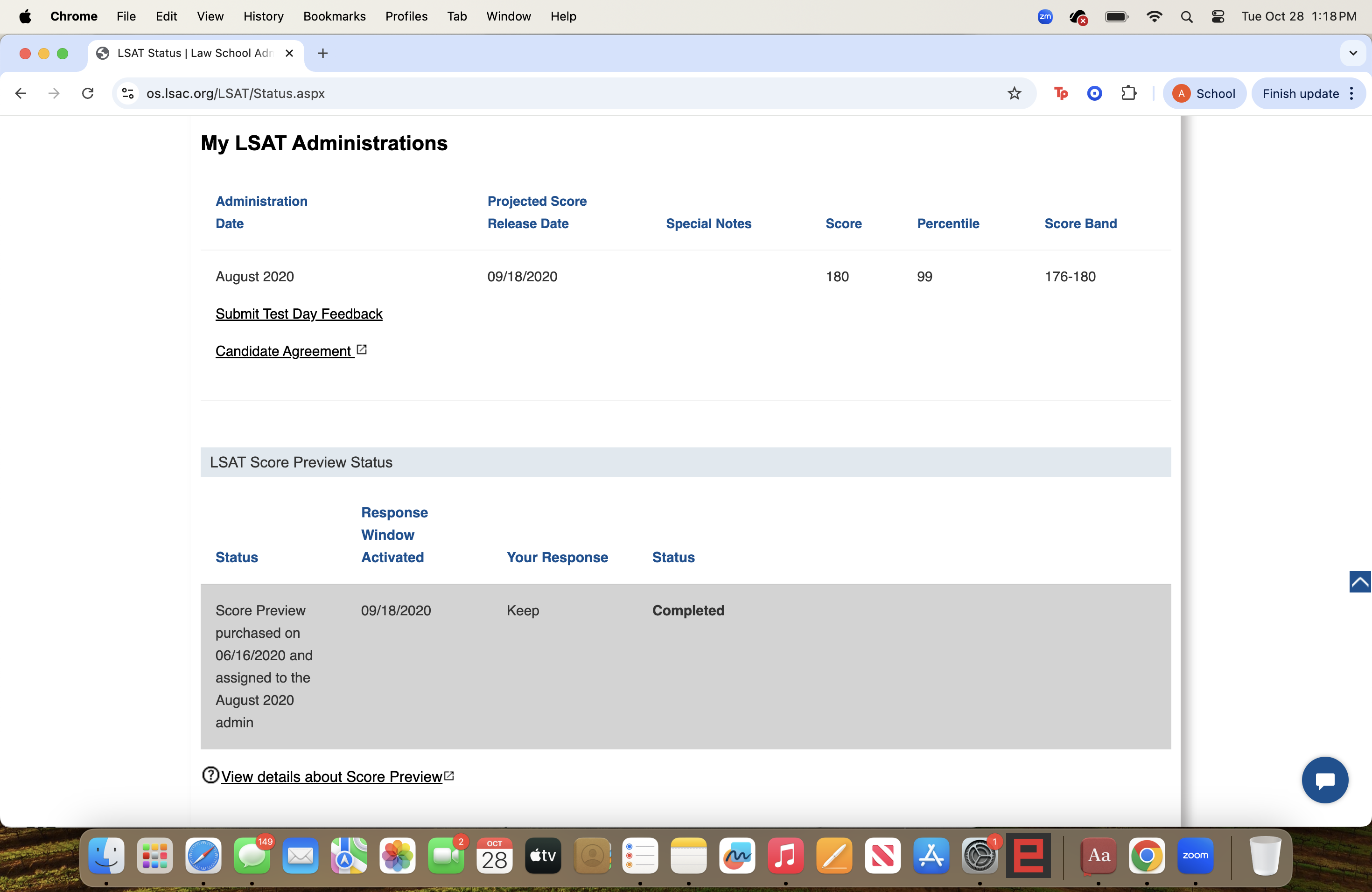
LSAT SCORE-
LiaWang
Independent TutorTutoring Available: I scored a 180 on the LSAT and tutored college students since 2022
Hello! My name is Lia, and I am offering tutoring services for $100/hour.
My diagnostic score was 163, and I scored a 180 on my first LSAT this September after studying for 6 months on 7Sage. I did not have a tutor and relied mainly on teaching each question to myself, using the written and video explanations for support.
I knew that receiving tutoring would not have benefited me to the degree that teaching a question to myself and fully understanding it through this process benefitted me, but I also recognize that not everyone learns the same way, and having a tutor can make the process more efficient for some people.
With some time on my hands, I have decided to tutor the LSAT. I have been a tutor for college students since 2022, mainly tutoring math and computer programming. Even though it was not the LSAT, it means I have years of experience conveying and teaching complicated subjects to others. In terms of direct LSAT tutoring experience, I have also begun tutoring the LSAT over the past few months, and my clients have seen progress and requested continued support.
If you're interested in my services, feel free to comment or send me a DM! Or even if you just want some general advice or to chat, I love connecting with dedicated law school applicants!

Hi everyone - I'm looking for a tutor for the Nov. LSAT. I got a 165 on the September test and a 170 on my most recent PT and am really hoping for at least a 172 in November, so I'd like to work with someone who can help me iron out those final questions that I'm getting wrong.
I'd really like to work with someone who is actively engaged in my questions and can help me spot the common errors I'm making, especially with LR. My time zone is EST.
Thank you so much!

Please only comment if you're not charging more than $50 per session as that's all I can afford. Thank you!

I work a full-time government job, so I find it a bit difficult sometimes to make sure I’m studying efficiently, focusing on the right things, and actually targeting my weaknesses. I also have ADHD, so I find that overthinking and anxiety can sometimes make things more difficult for me.
I think it would be really helpful to work with someone who can identify my weaknesses and help me figure out how to improve them. I’ve been able to make progress with LR, but I still really struggle with RC. I’ve gotten to the point where I feel pretty comfortable doing LR under timed conditions, but when I do RC with a timer, I feel like I suddenly don’t know what I’m reading or what I’m doing.
If you think you could help, please DM me with your rates and availability. Thank you so much!

Hi! I'm looking for a tutor who can meet as needed to go over specific questions. When I get questions wrong, I usually vacillate between two answer choices and ended up selecting the incorrect one because of a "problem" I see with the right one. Or, I will select the correct answer only to change it to the wrong one during blind review because I have time to obsess over details. When I go to put certain questions in my wrong answer journal, I realize I still can't fully articulate why the wrong answer was wrong or why the right answer was right, even after reviewing the explanation videos. I'm looking for someone who is able to explain why answer choices are wrong/right in a few ways (differently from the 7Sage tutors) and then answer my follow up questions until it's crystal clear for me. Ideally, I'd pay hourly for sessions as needed rather than having a consistent schedule. Let me know if this sounds like your specialty and something you're open to! :)