


Ethicist: A society is just when, and only when, first, each person has an equal right to basic liberties, and second, inequalities in the distribution of income and wealth are not tolerated unless these inequalities are to everyone's advantage and are attached to jobs open to everyone.
The stimulus sets out two conditions that are both sufficient and necessary for a just society. Note that the second condition is itself an entire conditional relationship with two of its own necessary conditions! The stimulus can be diagrammed as follows: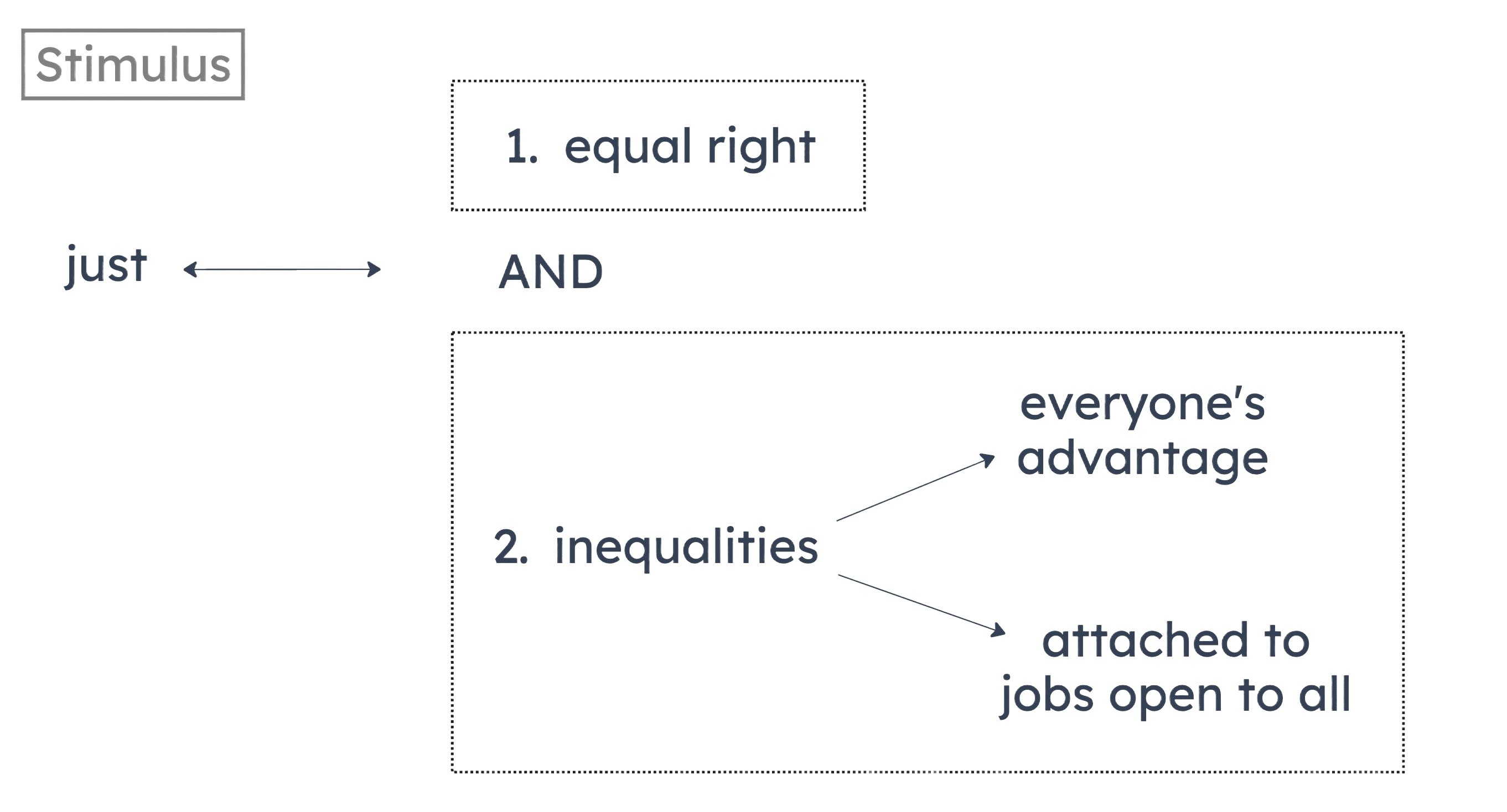
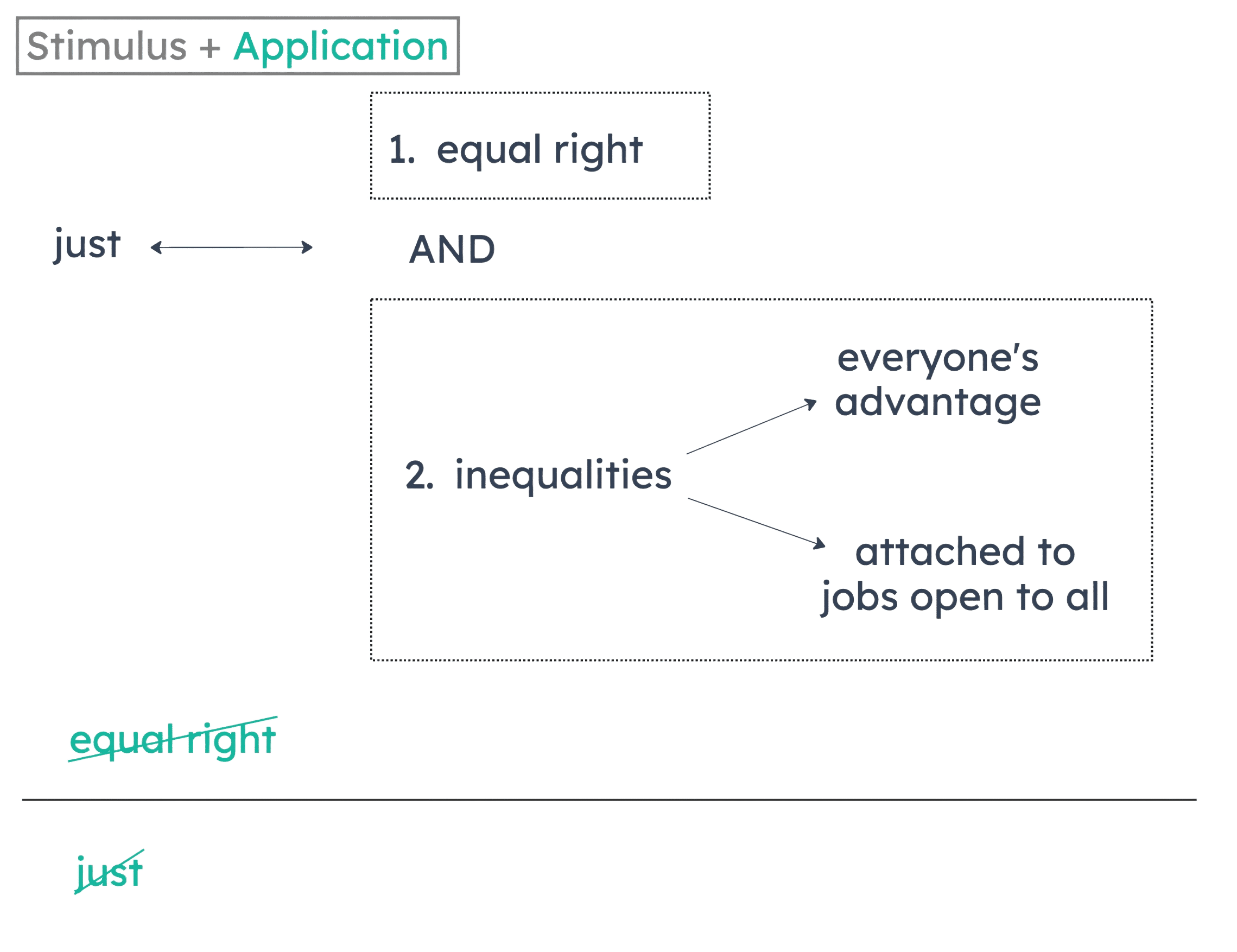
We need to find the right application. We can conclude a society is just if it meets both conditions listed in the stimulus:
1. Everyone has an equal right to basic liberties.
2. If income and wealth inequalities are tolerated, then those inequalities must be to everyone’s benefit and must also stem from jobs that are open to everyone.
Otherwise, if a society fails any of those conditions, we can conclude that it is not just.
Which one of the following █████████ ████ ███████ ████████ ██ ███ █████████ █████████ ██████
Society S guarantees ████████ ██ █████ █████ ██ █████ ██████████ █████ ████████ ████████████ ██ ███ ████████████ ██ ██████ ███ ██████ ████ ███ ██ ███ █████████ ██ █████████ ████████ ███ ████ ██ █████ █████ ████████████ ███ ████████ ███ ████ ██ ████ ███████ █████ ███████ █ ██ █████
Doesn't trigger the rule. If inequalities in income and wealth are tolerated, as they are here, then they must be attached to jobs that are open to everyone, not just most people. So we can't conclude that society S is just.
Society S gives ████████ ██ █████ █████ ██ █████ ██████████ ███ ██ ███ ███████ ██ ████████ ████████████ ██ ███ ████████████ ██ ██████ ███ ███████ █████ ███████ █ ██ ███ █████
Doesn’t trigger the rule. The second condition for a just society states that wealth and income inequalities can be acceptable—they just need to be to everyone’s advantage and attached to jobs open to all. (B) still allows for that possibility, so we can’t say for sure that society S is not just.
Society S allows ████████████ ██ ███ ████████████ ██ ██████ ███ ███████ ████████ ████████ █████████ ███ █████ ████████████ ███ ████████ ██ ████ ████ ███ ████ ██ █████████ █████ ███████ █ ██ █████
Doesn’t trigger the rule. This ignores the first necessary condition for a just society: everyone must have an equal right to basic liberties. Without knowing this, we can’t conclude that society S is just.
Society S distributes ██████ ███ ██████ ██ ████████ ████████ ███ ██ ███ ███████ ██ ████████ ████████████ ██ ███ █████ ██ █████ ██████████ █████ ███████ █ ██ ███ █████
Society S fails one of the necessary conditions for a just society: everyone must have an equal right to basic liberties. Therefore, (D) correctly concludes that society S is not just.
Society S gives ████████ ██ █████ █████ ██ █████ ██████████ ███ ████████ █████ ██ ██ ██████████ ██ ███ ████████████ ██ ██████ ███ ███████ ███ ████ ██ █████ █████ ████████████ ███ ████████ ███ ████ ██ ████ █████ ███████ █ ██ █████
Doesn’t trigger the rule. This satisfies the first condition for a just society but not the second. When there is an inequality in income and wealth, those inequalities must be to everyone’s advantage. (E) is silent on this, so we can’t conclude that society S is just.
Answer five questions and we'll estimate your score.
It takes about five minutes.
Take the free diagnosticWant to know why the right answer is right?
7Sage membership unlocks explanations of every question. Every answer choice. On every official PrepTest. Start with a free account.
By signing up you agree to our
terms of service.
This site is protected by reCAPTCHA and the Google
Privacy Policy
and
Terms of Service
apply.