
Subscription pricing
Obviously, Conclusion we cannot in any real sense mistreat plants. ██████ ██ ███ ████ ███████ ████████ ███ ██████ █ ███████ ██████ ██ █████████ ██ ██████████ █████
Summary
It’s impossible to mistreat plants. Why? To feel pain, you need a nervous system. (Contrapositive: no nervous system, no pain.) And plants don’t have a nervous system.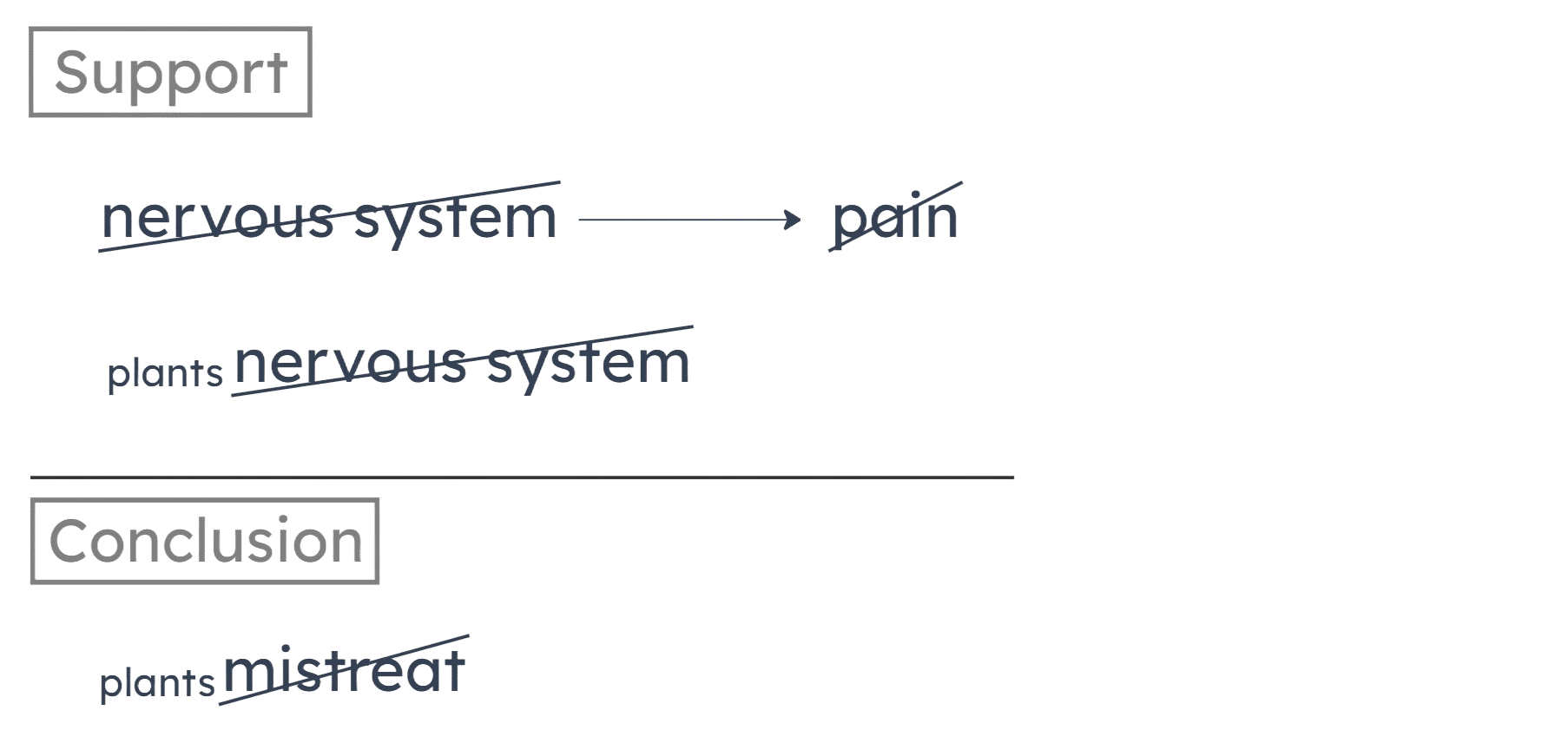
Missing Connection
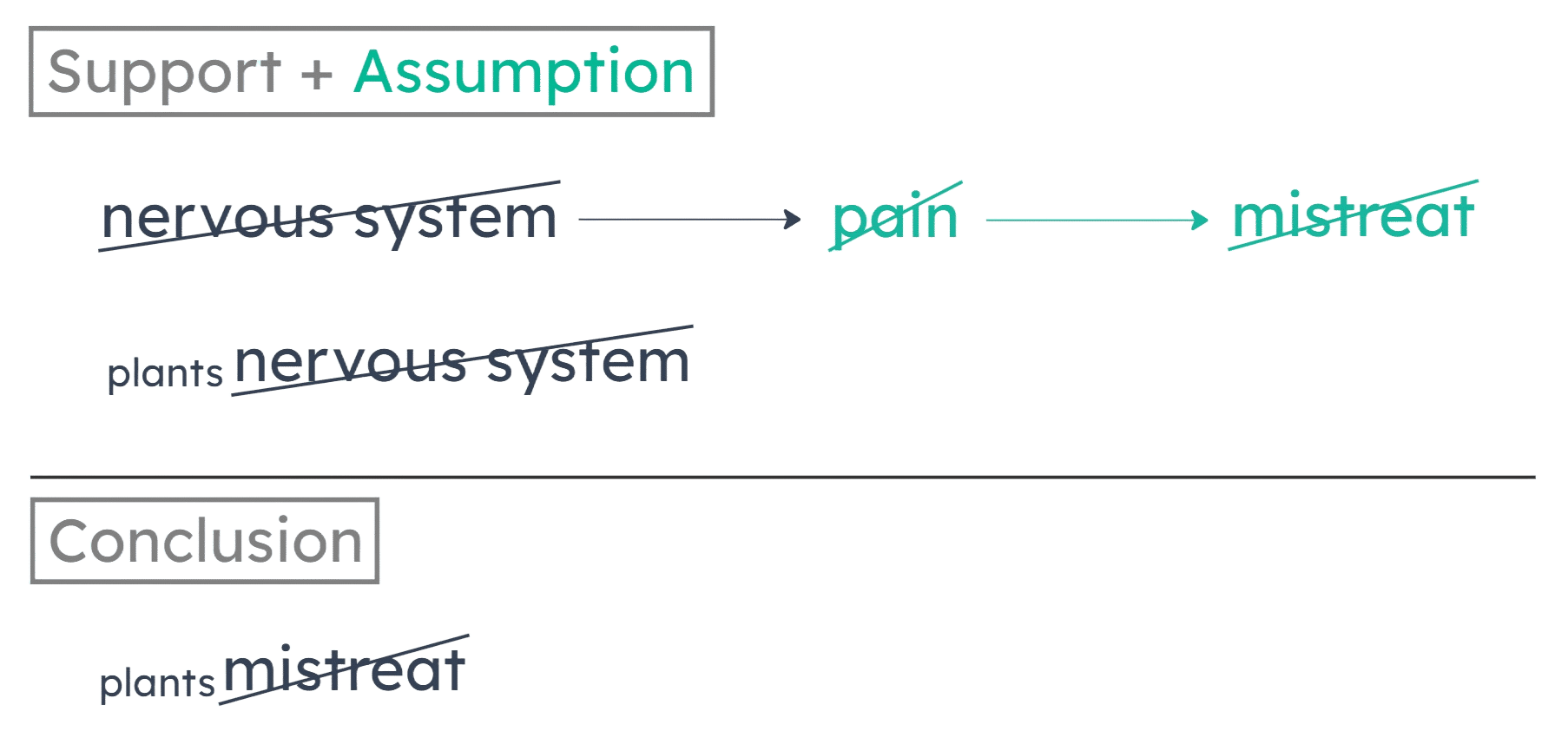
The conclusion is about mistreatment, but the premises say nothing about mistreatment.
How to get from the premises to the conclusion? The first premise (plants have no nervous system) triggers the contrapositive of the second premise (to feel pain, you need a nervous system). So we can infer that plants can’t feel pain. That’s as far as the premises get us.
We can make the argument valid if we then assume that when something can’t feel pain, it can’t be mistreated. (Contrapositive: for something to be mistreated, it must be able to feel pain.)
18.
The conclusion above follows logically ██ █████ ███ ██ ███ █████████ ██ ████████
a
Any organism that ███ ██████████ ████ ███ ██ ███████████
b
Only organisms that ████ ███████ ███████ ███ ██████████ █████
c
Any organism that ███ █ ███████ ██████ ███ ██████████ █████
d
Only organisms that ███ ██████████ ████ ███ ██ ███████████
e
Any organism that ███ █ ███████ ██████ ███ ██ ███████████