


Support Every new play that runs for more than three months is either a commercial or a critical success. ████ █████ ███ ███ █████ ████ ████ ████████ █████████ ████ ████ ██████████ ██████████ ██████████ █████ ███ ████ ████ ███ ███ ████ ████ █████ ██████ ████ ████ ███ █ ██████████ ████████
The stimulus can be diagrammed as follows: 
The pattern of reasoning in █████ ███ ██ ███ █████████ █████████ ██ ████ ███████ ██ ████ ██ ███ ████████ ██████
Most new restaurants ███████ ██████ ████ █████████ ██ █ ████ ████████ ██ █████ ██ ████████ ███ ████ ███████████ ████ █ ████ ████████ ████ ███████ ████ ██████████ ██████ █ ██████████ ████ ███ █ ████ ████████ ██ ██████████ ██ ████████
Mismatched premises. The stimulus operates using conditional relationships; the premises in (A) make claims about “most” members of a set.
Every best-selling cookbook █████████ ████ ████ ██ ████ ████ ███████ ███ ████████ █████████ ████████████ ███ ████████ ███████ █████████ █████████ ████ ████ ██ ████ ███████ ███ ████████ █████████ ████████████ ██████████ ███████████ ████████ ██ █ ████ ███████
Mismatched premises and conclusion. The stimulus operates with an “or” claim (either a commercial or a critical success) while (B) makes an “and” claim (well written and beautiful photographs).
The conclusion of (B) assumes that the sufficient condition is met based on the fact that the two necessary conditions are met. The stimulus does not confuse sufficient and necessary conditions.
All students at ███ ███████ ██████ ██ ███████ █████ ██████ ████████ ██ █████ ██ █████ ██████ █████ ████ █████ ███ ███████ ████████ ████████ █████ ███ ████ ████████ █████████ ██████████ █████ ███████████ ███████ ██ ███████ ██ ████████ ████████ ████ █████
The diagram for (C) parallels the diagram of the stimulus:
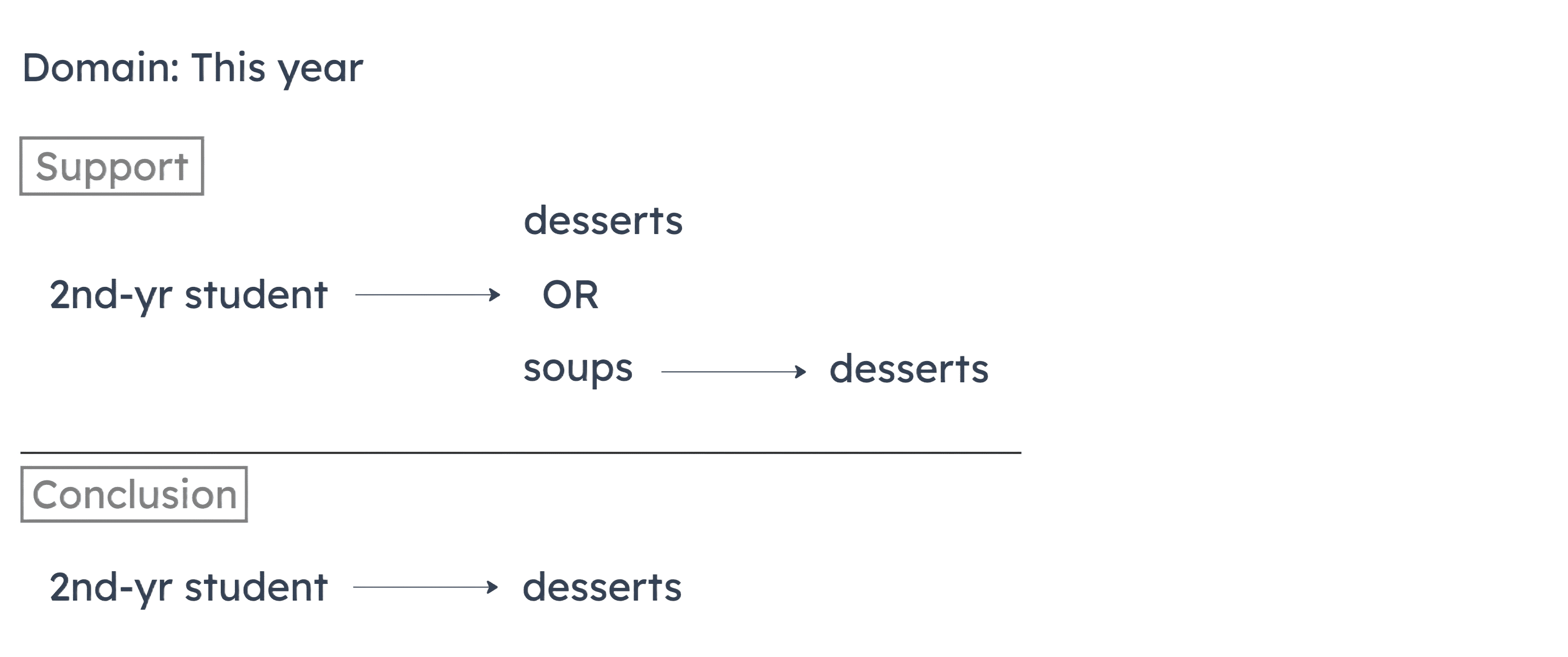
Chefs who become ███████████ ██████ ████ █████ ███ ███████████ ██ █████ █████ █████ █████ ██████ ███ ███ █████ ████ ████████ ██ █ ██████████ ████ ███ ██████ ███ ███ ███████████ ██████████ ████████ ████ ███ █████ █████ █████ ███ ██████
Mismatched premises. The stimulus operates with an “inclusive or” statement, while (D) operates with an “exclusive or” when it says “not both.”
The argument of the stimulus makes an “or” claim where it is possible for both conditions to be met (commercial and critical success); (D) says “or” but “not both,” so in (D) it is impossible for both conditions (opening own restaurant and writing book) to be met.
Every catering service ██ ████████ ████████ ████ ██████ ████ ███████████ ███ ████████ ████████ ████████████ ███████ ████ █████ ██ █ ████████ ███████ ████ ████ ███ ██████ ████████ ████████ ████████████ ██████ ███████ ████ █████ ██ ███ ██ ████████ █████████
Mismatched premises and conclusion. The stimulus operates with an “or” claim (either a commercial or a critical success) while (E) makes an “and” claim (accept both residential and business assignments).
(E) concludes that the sufficient condition (in Woodside Township) is not met because one of the two necessary conditions is not met (accepting business assignments). Taking the contrapositive like this does not match the argument structure of the stimulus.
Answer five questions and we'll estimate your score.
It takes about five minutes.
Take the free diagnosticWant to know why the right answer is right?
7Sage membership unlocks explanations of every question. Every answer choice. On every official PrepTest. Start with a free account.
By signing up you agree to our
terms of service.
This site is protected by reCAPTCHA and the Google
Privacy Policy
and
Terms of Service
apply.