
Subscription pricing
Support If something would have been justifiably regretted if it had occurred, then it is something that one should not have desired in the first place. ██ ███████ ████ ████ ███████ █████████ ██████ ███ ████ ████ ███████ ██ ███ █████ ██████
Summary
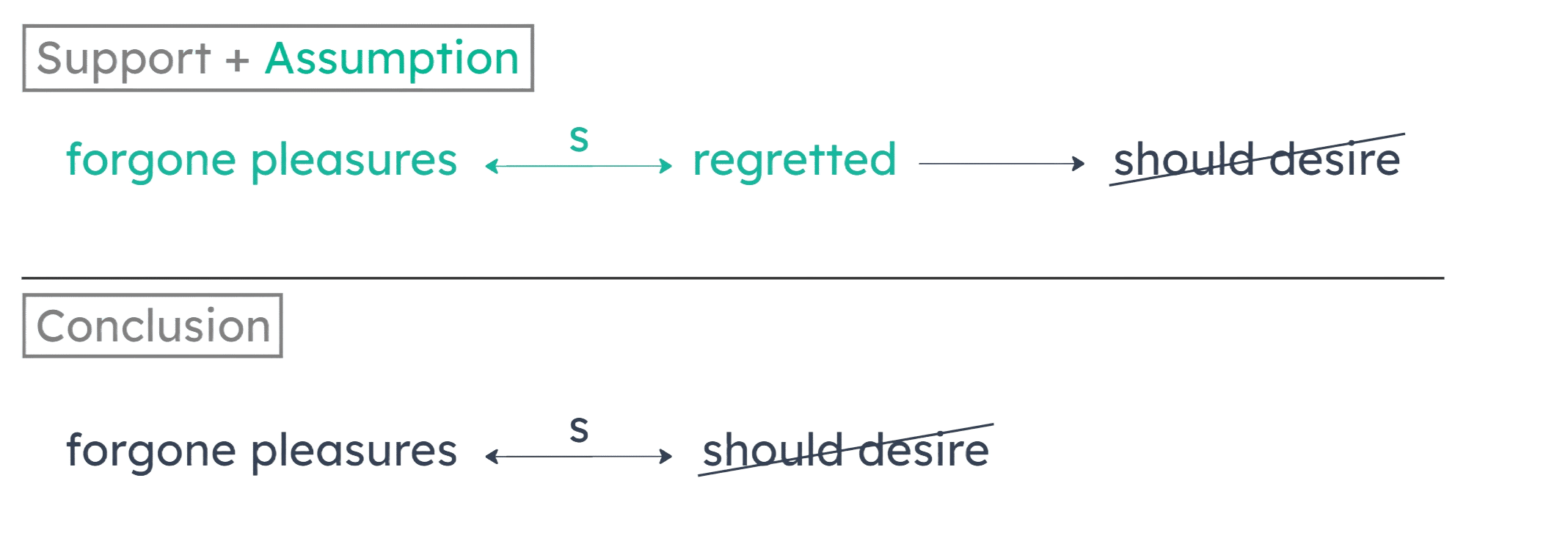
Many forgone pleasures shouldn’t have been desired in the first place. Why? Something that someone would have justifiably regretted if it had occurred is something that someone shouldn’t have desired in the first place.
Missing Connection
The conclusion is that some forgone pleasures shouldn’t have been desired in the first place, but the premises say nothing about forgone pleasures. How do we get from the premises to the conclusion? Based on the premises, we know that if something would’ve been justifiably regretted had it occurred, it’s something that shouldn’t have been desired in the first place. We can make the argument valid if we assume that some forgone pleasures would’ve been justifiably regretted had they occurred.
10.
The conclusion above follows logically ██ █████ ███ ██ ███ █████████ ██ ████████
a
One should never ██████ █████ ██████████
b
Forgone pleasures that ████ ███ ███████ █████ ███ ████ ████ ███████████ ██████████
c
Everything that one ███████ ███ ████ ███████ ███ ██████ ██ █ ███████ █████████
d
Many forgone pleasures █████ ████ ████ ███████████ ██████████
e
Nothing that one ██████ ███ ████ ███████ ██ ███ █████ █████ █████ ██ ██ █ █████████