


Cultural historian: Conclusion Universal acceptance of scientific theories that regard human beings only as natural objects subject to natural forces outside the individual's control will inevitably lead to a general decline in morality. █████ ████ ██ ██████ ██ ███ ███████ ████ ████ ███ ███████████ ███ █████ ████████ ████ ████ ████ █████████ ████ ████ ███ ██████████ ███ █ ██████████ ███████ ██ ███████████ ██ ████ ███████ ██ █████ ███████ ███████ ██ █████ ██ ████ ██ █ ███████ █████ ████████
Universal acceptance of theories that regard humans only as natural objects subject to forces outside of their control will lead to a general decline in morality. Why? If people don’t believe they’re responsible for their actions, they’ll feel unashamed when acting immorally, and extensive failure of people to feel ashamed of their immoral actions leads to general moral decline.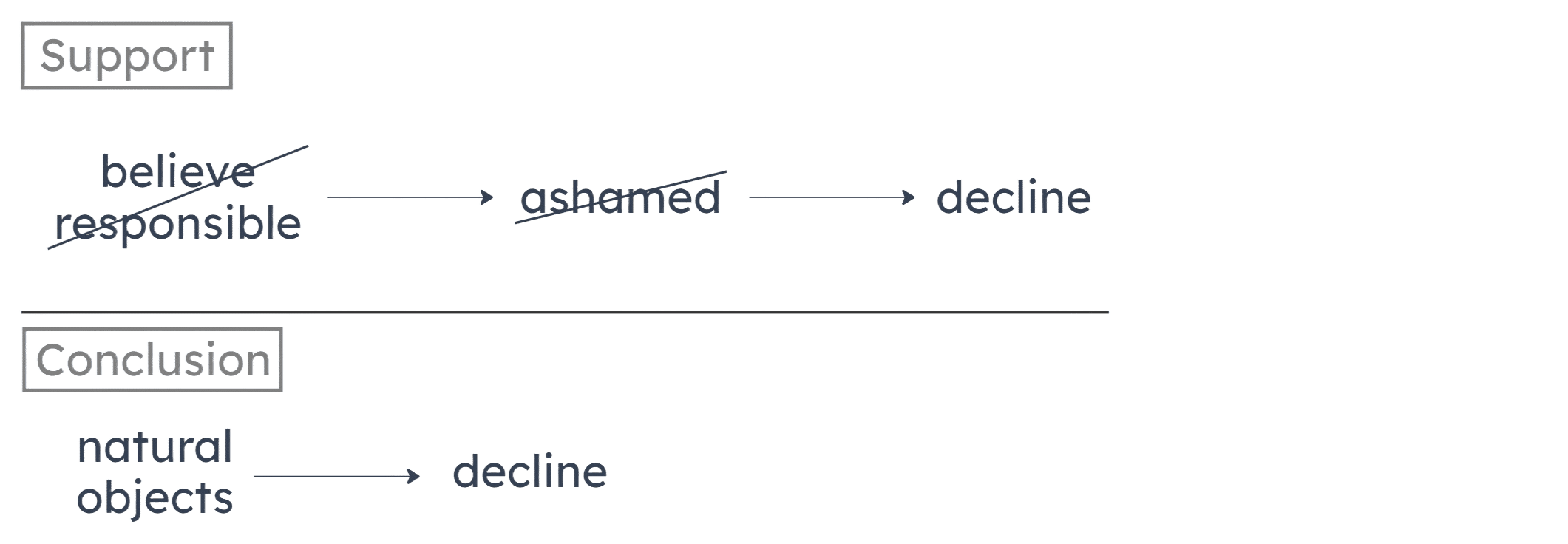
The conclusion is about theories that regard humans only as natural objects subject to forces outside of their control leading to a general decline in morality. However, the premises don’t discuss these theories. How do we get from the premises to the conclusion?
As shown in the above diagram, people not believing they’re responsible for their actions leads to them feeling unashamed when acting immorally, and a widespread failure of people to feel ashamed of their immoral actions leads to a general moral decline. To validate the conclusion that the theories in the stimulus lead to a general decline in morality, we just need to assume that humans regarding themselves only as natural objects subject to forces outside of their control leads to them believing that they’re not responsible for their actions.
The conclusion drawn by the ████████ █████████ ███████ █████████ ██ █████ ███ ██ ███ █████████ ██ ████████
Science does not ██████ █████ ██████ ██ ███████ ███████ ███████
This says nothing about humans being regarded as natural objects, so it can’t be right. The conclusion is about humans being regarded only as natural objects, yet the premises say nothing about this. The correct answer must discuss how humans being regarded only as natural objects will lead to a moral decline, but (A) doesn’t do that.
Human beings who ██████ ██████████ ████ ██ ███████ ███████ ████ ██ █ ██████ ████ █████ █████ ██ ██████████████ ███ █████ ████████
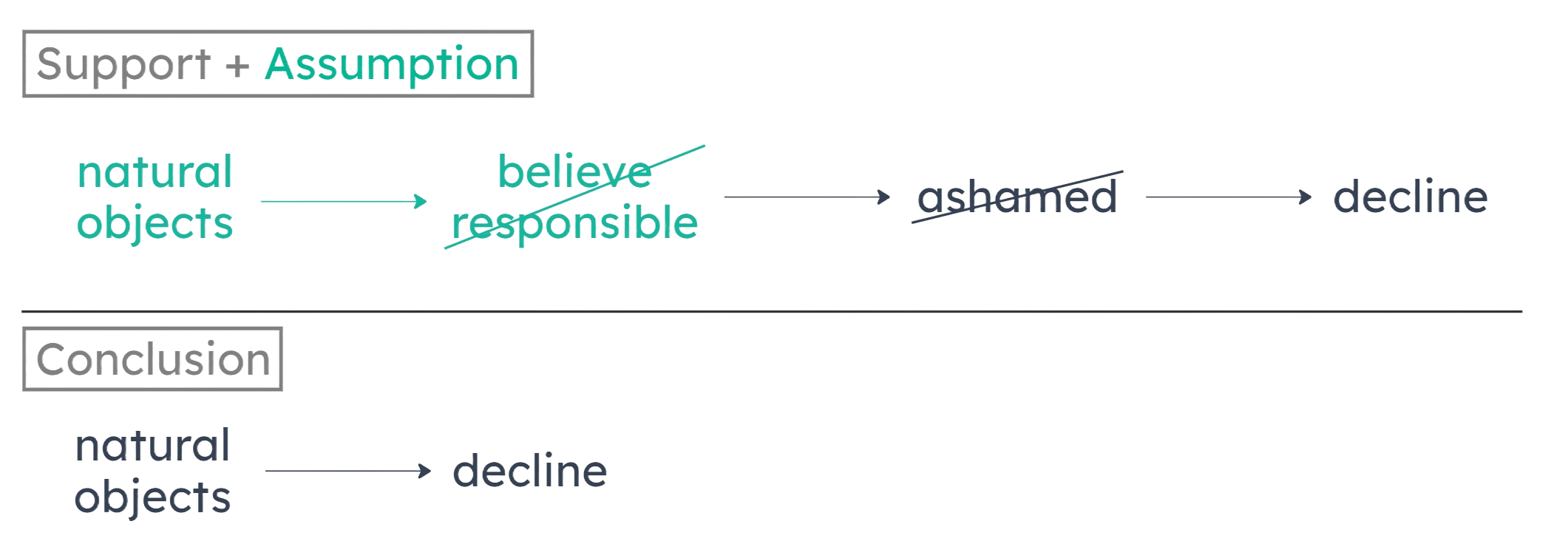
We know from the argument’s premises that when humans lose their sense of responsibility for their actions, it leads to a general moral decline. (B) adds that humans who regard themselves only as natural objects will lose their sense of responsibility for their actions, so humans regarding themselves only as natural objects will lead to a general moral decline.
People who have █ █████ ██ █████ ███ █████ █████ ██████████████ ████ ████ ███████████ ███ █████ ████████
The argument doesn’t address people who have a sense of shame for their moral transgressions. The argument only discusses people who feel unashamed when they act immorally.
Some scientific theories ████ ████ █████ ██████ ███ ███ ███████████ ███ █████ ████████
The argument already says that some scientific theories hold that human beings aren’t responsible for their actions. The correct answer choice must explain how acceptance of these sorts of theories, where humans are just beings that are subjected to forces outside of their control, leads to a general moral decline.
Scientific explanations that ██████ █████ ██████ ██ ██ ████ ████████ ███████████ ██ ███ ████ ██ ██████ ████ ███ ████ ██ █ ███████ ███████ ██ █████████
The argument doesn’t discuss scientific explanations that regard human beings as in some respects independent of the laws of nature. The correct answer must discuss how humans being regarded only as natural objects will lead to a moral decline, but (E) doesn’t do that.
Answer five questions and we'll estimate your score.
It takes about five minutes.
Take the free diagnosticWant to know why the right answer is right?
7Sage membership unlocks explanations of every question. Every answer choice. On every official PrepTest. Start with a free account.
By signing up you agree to our
terms of service.
This site is protected by reCAPTCHA and the Google
Privacy Policy
and
Terms of Service
apply.