


Economist: Support Real wages in this country will increase significantly only if productivity increases notably. █████ ██ ██ ████████ ████ ████ █████ ████ ████████ █████████████ ██ ███ ████ ███████ █████ ████ █████████ ██████████ ███ █████████ █████████ ████ ██████ ██ ███ ██████████ ███ ████ ███████ ██ ██████ ██ ████████ ███ ██ █████ ███████ ████ ██████
The economist concludes that it’s unlikely that wages will significantly increase soon. She supports this by saying that wages will only significantly increase if productivity increases. (That is, if productivity does not increase, then wages will not increase.) She then notes that businesses are only investing a little into new technology.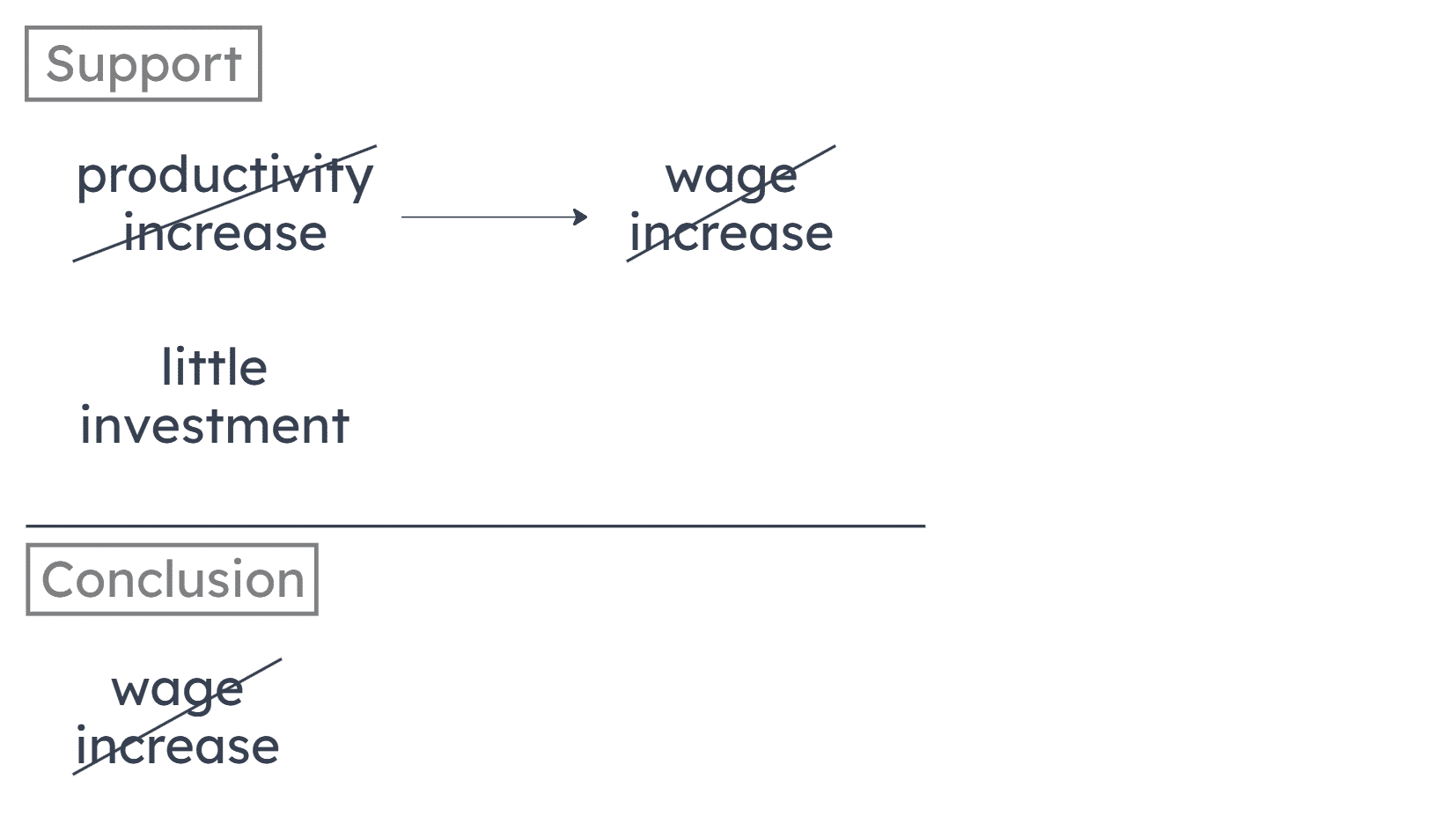
The economist’s premises establish that wages won’t increase if productivity doesn’t increase. But her conclusion says that wages won’t increase because businesses aren’t investing much into new technology.
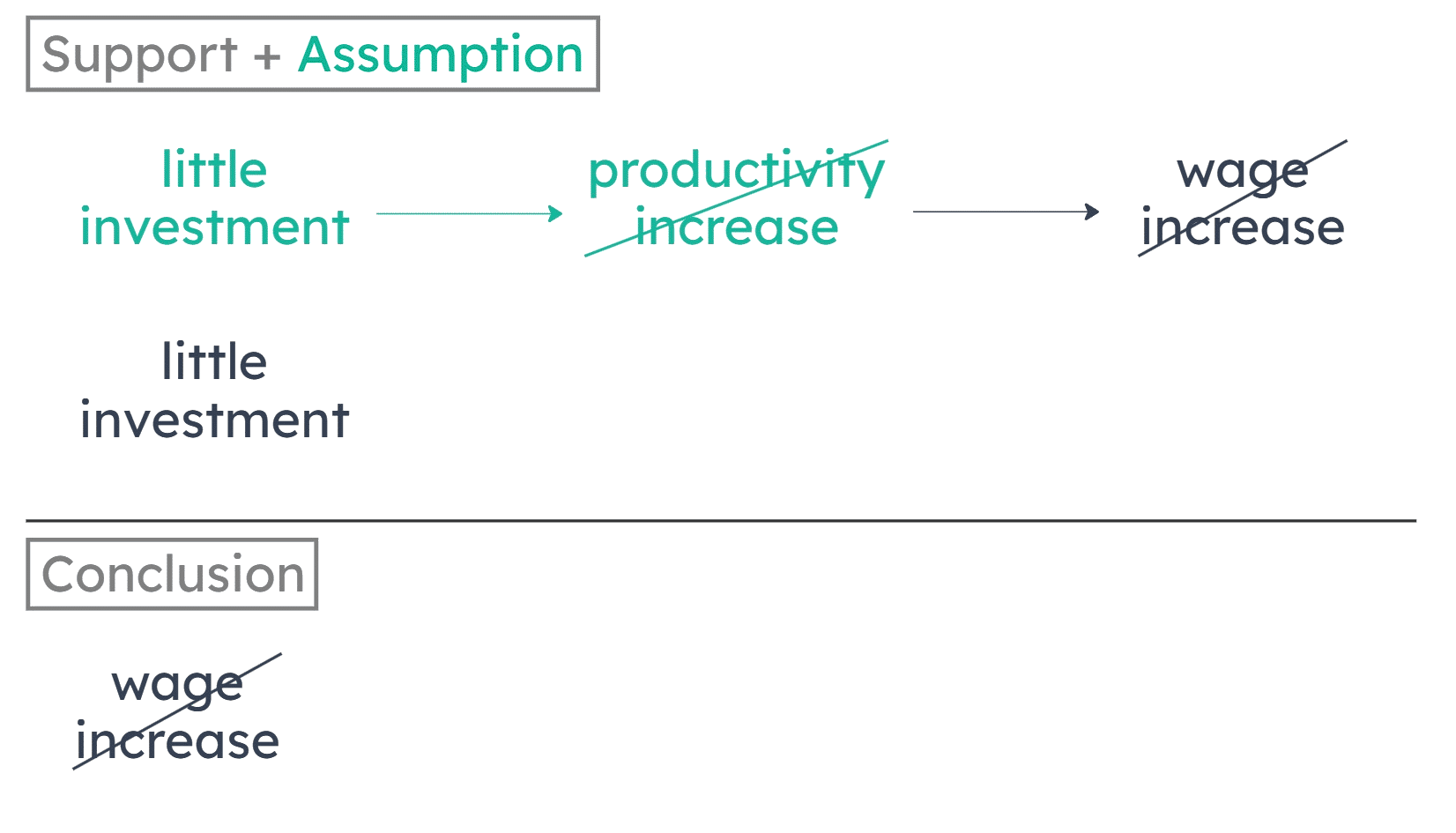
To get from her premises to her conclusion, the economist must assume that if businesses don’t invest much into new technology, then productivity will not increase. This then leads to her conclusion that wages will not increase.
Which one of the following, ██ ███████ █████ ███ ███████████ ████████ ██████ ███ ███████████ ██████████ ██ ██ ████████ ██████
Neither real wages ███ ████████████ ████ █████████ ██ ███ ████ ███████ ██████
This doesn’t establish that little investment into new technology means that productivity won’t increase in the near future. The economist is only addressing whether wages will increase in the near future; it doesn’t matter whether they’ve increased in the last several years.
Real wages will ████████ ███████ ██ █ ███████████ ██████ ██ ███████ ███████ ███ ██████ █████████ ██ ███ ███ ███████████
The economist is arguing that wages will not increase. Also, she doesn’t say anything about workers acquiring the skills to use new technology. Even if (B) is true, it still doesn’t tell us whether little investment into new technology means that productivity will not increase.
Sooner or later ████ █████ ████ ████████ ██████████████
Even if wages will increase “sooner or later,” this doesn’t prove the conclusion that wages will not increase in the near future. Instead, we need to know whether little investment into new technology means that productivity won’t increase.
Productivity will not ████████ ██ ██████████ ██ ███ ████ █ ███████████ ██████████ ██ ███ ███████████
We know that if productivity does not increase, then wages will not increase. So, if little investment into new technology means that productivity will not increase, then it also guarantees the conclusion that wages will not increase.
The new technology ██ █████ ██████████ ███ █████████ █████████ ██ ███ ████████████ ██ ██ ████████ ██ █████████████
Even if new technology isn’t contributing to increased productivity, this doesn’t prove that productivity won’t increase if businesses only invest a little. In other words, just because the technology isn’t causing increased productivity doesn’t mean that productivity will not increase.
Answer five questions and we'll estimate your score.
It takes about five minutes.
Take the free diagnostic