


On the Discount Phoneline, Support any domestic long-distance call starting between 9 A.M. and 5 P.M. costs 15 cents a minute, and Support any other domestic long-distance call costs 10 cents a minute. ██ ███ ████████ █████████████ ████ ██ ███ ████████ █████████ ████ ████ ███ ████ ██ █████ █ ██████ █████ ██ █████ █ ███████
At its core, this is an eliminating options argument: there are exactly two options, and it’s not option 1, so it must be option 2.
P1: 9 - 5 calls are 15c (option 1)
P2: All other calls are 10c (option 2)
________
Con: If a call isn’t 10c (option 2), it’s 15c (option 1).
This argument structure is notable enough that it’s quite reasonable to roll into the answer choices with a low-resolution model, just looking for the one that follows the eliminating options pattern. I don’t even think you need to diagram anything at this point, since comparing the eliminating options structure to, say, a conditional chain, is straightforward to do in your head.
But it turns out the answer choices are all structured in a pretty eliminating-optionsy way. And in fact, they all start out with the exact same two-part opening sentence (for real: highlight the whole first sentence of (A) and hit ctrl+F), only differing in the conclusions they draw. Once you see that, you’ve gotta loop back around and build a more precise stimulus template, getting super clear on which puzzle pieces go where. Like this (plz don’t mock my handwriting I am very sensitive):
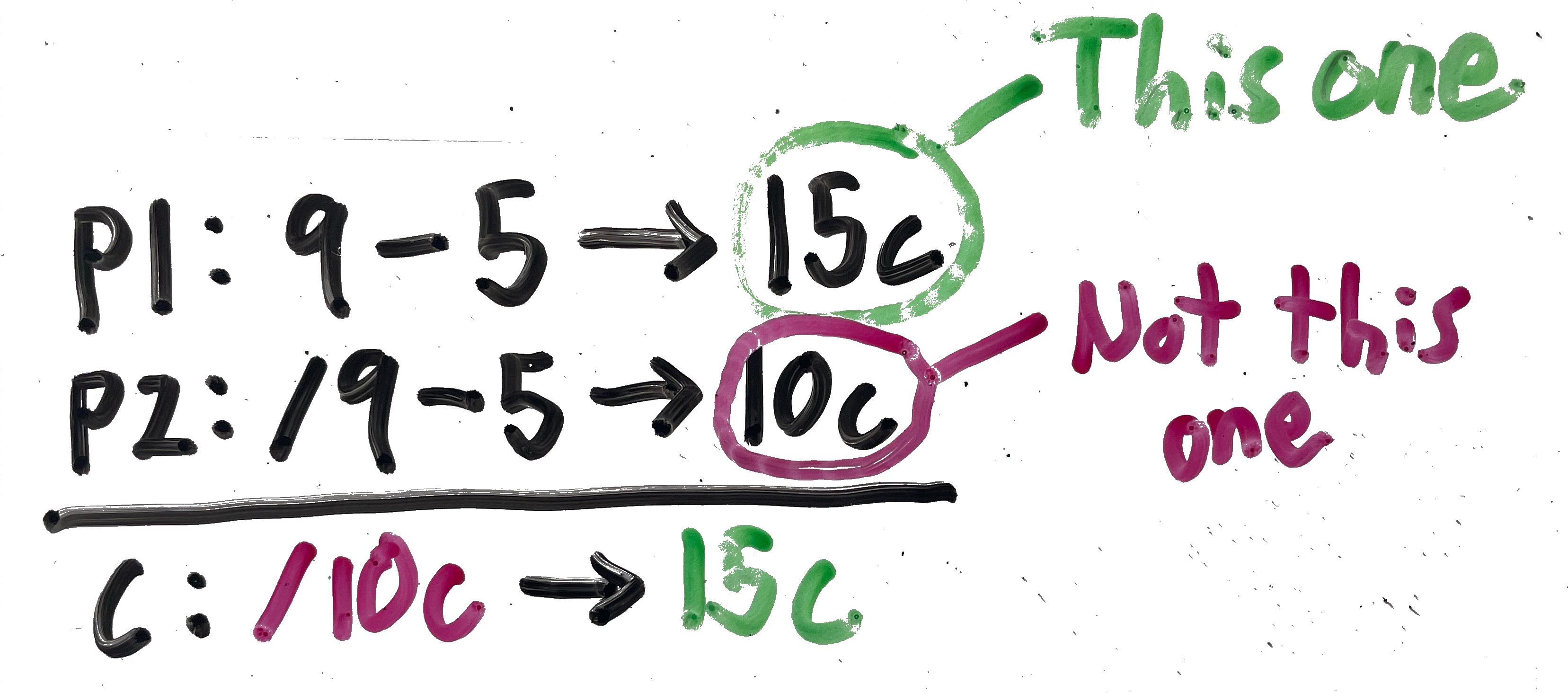
This is essentially the same structure as before – we’re just nailing down exactly which pieces the stimulus connects in its conclusion. Our conclusion doesn’t touch either sufficient (9 – 5) condition; it links the two necessary (15c and 10c) conditions together, saying “if not this, then that.”
As mentioned, all the answer choices share the same opening sentence, which sets up Premises 1 and 2. So let’s build a template for this Labs & Classrooms argument too:
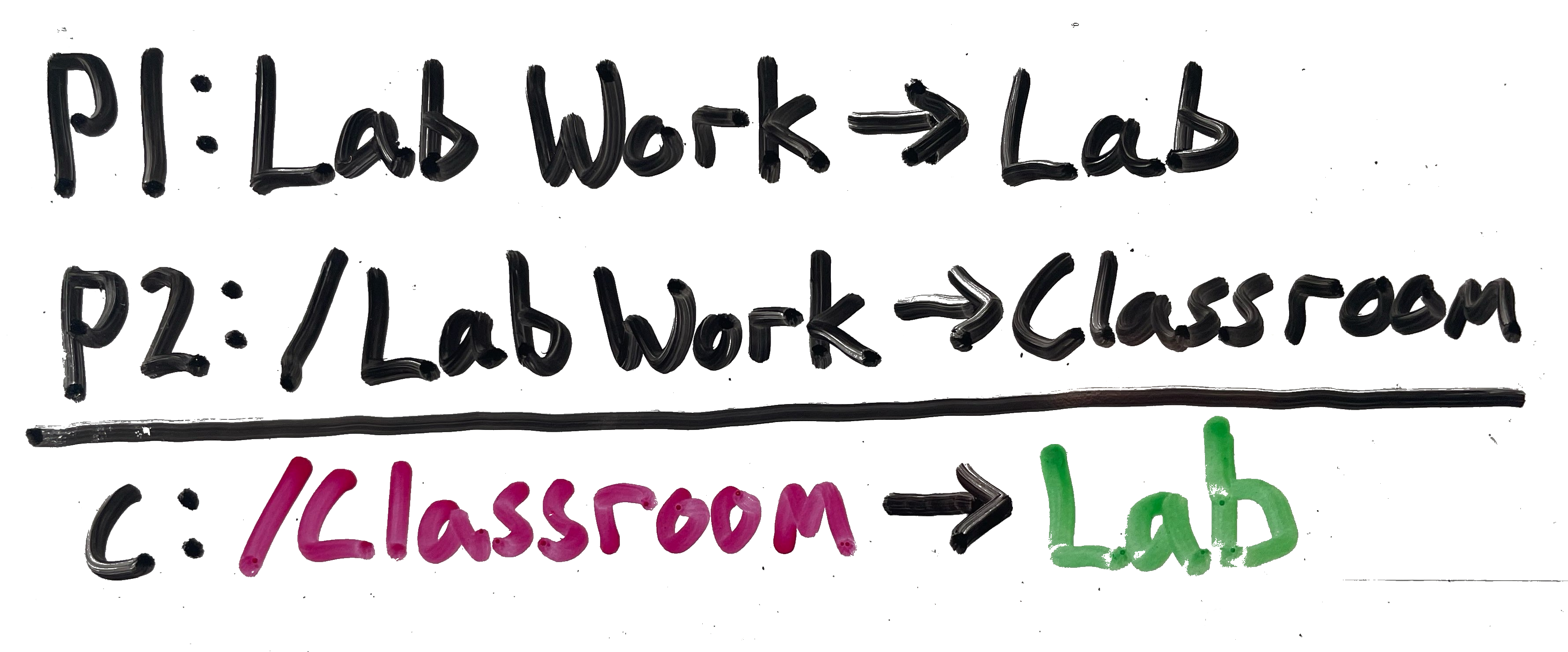
In the above diagram, we get P1 and P2 from that shared first sentence, and then we proactively map out the appropriate conclusion to match our template from the stimulus, connecting the two necessary conditions with “if not this, then that.”
Now it’s time to go back to the answer choices and look at each last sentence. We’ve even got a sense of some probable wrong answers. For example, anything involving the sufficient conditions (Lab Work or /Lab Work) will be wrong.
The pattern of reasoning in █████ ███ ██ ███ █████████ █████████ ██ ████ ███████ ██ ████ ██ ███ ████████ ██████
If a university █████ ████████ █████████ ███ █████ ███ █████ ████ ██ █████████ ██ █ ███████████ ██████████ ██ ████ ██ █████████ ██ █ ██████ ██████████ █████ ██ █ ██████████ █████ ████ ███ ███████ █████████ ███ █████ ██ ████ ███ ██ █████████ ██ █ ███████████
We want: /Classroom → Lab
(A) says: /Lab Work → /Lab
You might have picked (A) because it struck you as a valid conclusion. And if we assume classes can’t be held in both Labs and Classrooms, it is valid.
But this isn’t a Most Strongly Supported question – our job is to match the stimulus, and (A) doesn’t match.
If a university █████ ████████ █████████ ███ █████ ███ █████ ████ ██ █████████ ██ █ ███████████ ██████████ ██ ████ ██ █████████ ██ █ ██████ ██████████ █████ ██ █ ██████████ █████ ██ ███ █████████ ██ █ ██████ ██████████ ██ ████ ███████ █████████ ███ █████
We want: /Classroom → Lab
(B) says: /Classroom → Lab Work
Just a reminder that “Lab” means conducted in a Laboratory and “Lab Work” means involves extensive lab work. They’re different things. That little distinction seems like the most likely reason you (the person who just clicked the little light bulb) picked (B).
Anyway, (B) is just the contrapositive of Premise 2.
If a university █████ ████████ █████████ ███ █████ ███ █████ ████ ██ █████████ ██ █ ███████████ ██████████ ██ ████ ██ █████████ ██ █ ██████ ██████████ █████ ██ █ ██████████ █████ ██ █████████ ██ █ ██████ ██████████ ██ ████ ███ ██ █████████ ██ █ ███████████
We want: /Classroom → Lab
(C) says: Classroom → /Lab
You might have picked (C) because it struck you as a valid conclusion. And if we assume classes can’t be held in both Labs and Classrooms, it is valid.
But this isn’t a Most Strongly Supported question – our job is to match the stimulus, and (C) doesn’t match (because it’s the inverse of the conclusion we want).
If a university █████ ████████ █████████ ███ █████ ███ █████ ████ ██ █████████ ██ █ ███████████ ██████████ ██ ████ ██ █████████ ██ █ ██████ ██████████ █████ ██ █ ██████████ █████ ████████ █████████ ███ █████ ██ ████ ███ ██ █████████ ██ █ ██████ ██████████
We want: /Classroom → Lab
(D) says: Lab Work → /Classroom
You might have picked (D) because it struck you as a valid conclusion. And if we assume classes can’t be held in both Labs and Classrooms, it is valid.
But this isn’t a Most Strongly Supported question – our job is to match the stimulus, and (D) doesn’t match.
If a university █████ ████████ █████████ ███ █████ ███ █████ ████ ██ █████████ ██ █ ███████████ ██████████ ██ ████ ██ █████████ ██ █ ██████ ██████████ █████ ██ █ ██████████ █████ ██ ███ █████████ ██ █ ██████ ██████████ ██ ████ ██ █████████ ██ █ ███████████
We want: /Classroom → Lab
(E) says: /Classroom → Lab
Which… yeah. Recognizing (E)’s correctness once you’re solid on the template is pretty straightforward – building that template in the first place is the real crux.
Answer five questions and we'll estimate your score.
It takes about five minutes.
Take the free diagnosticWant to know why the right answer is right?
7Sage membership unlocks explanations of every question. Every answer choice. On every official PrepTest. Start with a free account.
By signing up you agree to our
terms of service.
This site is protected by reCAPTCHA and the Google
Privacy Policy
and
Terms of Service
apply.