


Support In 1996, all ResearchTech projects were funded either by the government or by private corporations. ███ ██████ ███████ █ ████████████ ████████ ███ ███ ██████ ██ ███ ██████████ ███ ███ █████████ ██ █████ ██ ████ █████████ ████ ████ ██████ ██ ███████ █████████████
The argument proceeds by presenting a conditional statement that applies to ResearchTech projects (If they were conducted in 1996, then they were either funded by the government or private corporations). It then gives the presence of the sufficient condition and the absence of part of the necessary condition to validly conclude the presence of the remaining part of the necessary condition.
Which one of the following ██ ████ ███████ ██ ███ █████████ ██ ███ ████████ ██████
Legal restrictions on ████████ █████████ ████ █ ███████ ██ █████ ███ ████████ ████ ███ ██████████████ ███ ██████ ███ ████████ ██ ███████ █████ ██████████ █████████ ████ █ █████ ███████████ ██ ███████ ██████ ████ ███ ███████ █████ ██████████ ██ ████ █████████ ██ ██████████████
Mismatched premises. (A) presents two “some” statements (some legal restrictions on consumer purchases aim to be paternalistic, and some are designed to protect civil liberties). It then invalidly concludes that a legal restriction on consumer purchases that does not satisfy one of those statements must satisfy the other, without actually limiting us to those two options. The stimulus however, presents a conditional statement that does limit us to only two options, so (A) doesn’t match.
Legal restrictions on ████████ ██████████ ████ ██ █████████ ████ ███ ██████ █████████████ ██ ███████ █████ ██████████ █████████ ███ ██ ███ ██████████████ ██ ██ ████ ███████ █████ ██████████
(B) proceeds by presenting a conditional statement that applies to legal restrictions (if they are on consumer purchases, then they must either be paternalistic or protect civil liberties). It then gives the presence of the sufficient condition and the absence of part of the necessary condition to validly conclude the presence of the remaining part of the necessary condition.
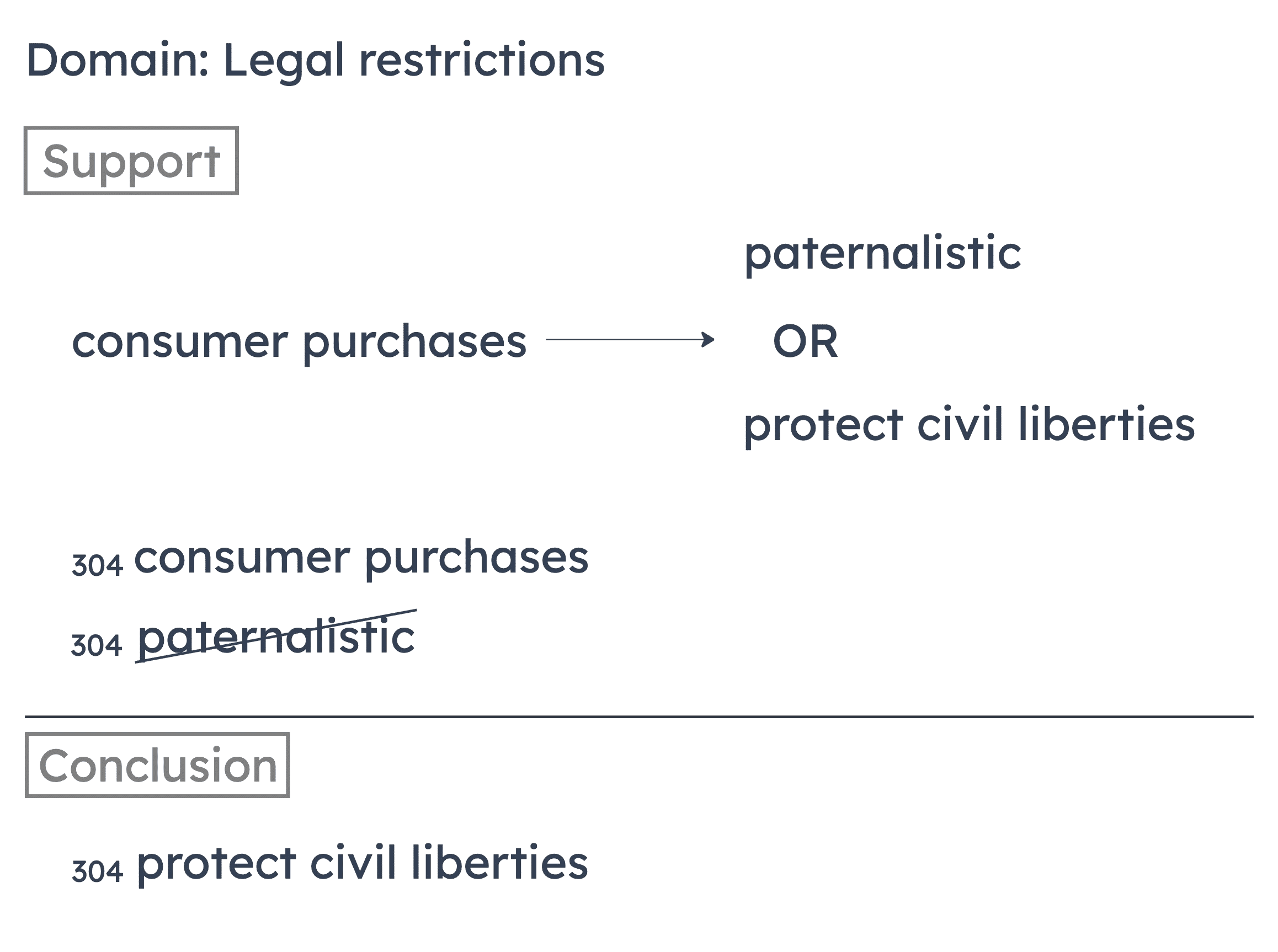
Ordinance 304 is ███ ██████████████ █████ ███ █████ ████████████ ██ ████████ █████████ ███ ██████ █████████████ ██ ████████ ██ ███████ ███ ████████████ ███ ███████ ██ █████████ ███ ████ ███ ██ ██ ███████ ███ ████████████
Mismatched conclusion. (C) correctly sets up a conditional statement that applies to legal restrictions (if they are on consumer purchases, then they must either be paternalistic or designed to protect the environment). It then invalidly concludes the absence of part of the necessary condition based on the presence of the other part. The stimulus, meanwhile, validly concludes the presence of part of the necessary condition based on the absence of the other part, so (C) doesn’t match.
Legal restrictions on ████████ █████████ ███ ██████ █████████████ ██ ████████ ██ ███████ █████ ██████████ ███ ██████████ ██████ ██ ████ ███ ██████████████ █████ █████████ ███ ███ ██████ ██ █████ ██ ████ ██ █ █████ ███████████ ██ ████████ ██████████
Mismatched conclusion. (D) correctly sets up a conditional statement that applies to legal restrictions (if they are on consumer purchases, then they must either be paternalistic or designed to protect civil liberties), but it then gives us the presence of one of the necessary conditions to invalidly conclude the presence of the sufficient condition. The stimulus is a valid reading of a conditional statement, so (D) doesn’t match.
Ordinance 304 should ██ █████████ ████ ██ █████ ██ ███████ █████ █████████ ██ ██ ███████ █████████ ████ ██████████ ███ ███████ ████ ████████ ██ █████████ ███ ████ ███ ███████ █████ ██████████ ██ ██ ████ ████ ████ ████████ ██ ███████ █████████ ████ ██████████
Mismatched premises. (E) correctly sets up a conditional statement with a disjunction in the necessary condition (if ordinance 304 should be used, then either intend to protect civil liberties or intend to prevent consumer self-harm), but we don’t know if the sufficient condition is met. Just because the mayor did use the ordinance doesn’t mean he should have, so we can’t conclude it was intended to prevent consumer self-harm. The stimulus, meanwhile, is a valid reading of a conditional statement, so (E) doesn’t match.
Answer five questions and we'll estimate your score.
It takes about five minutes.
Take the free diagnostic