


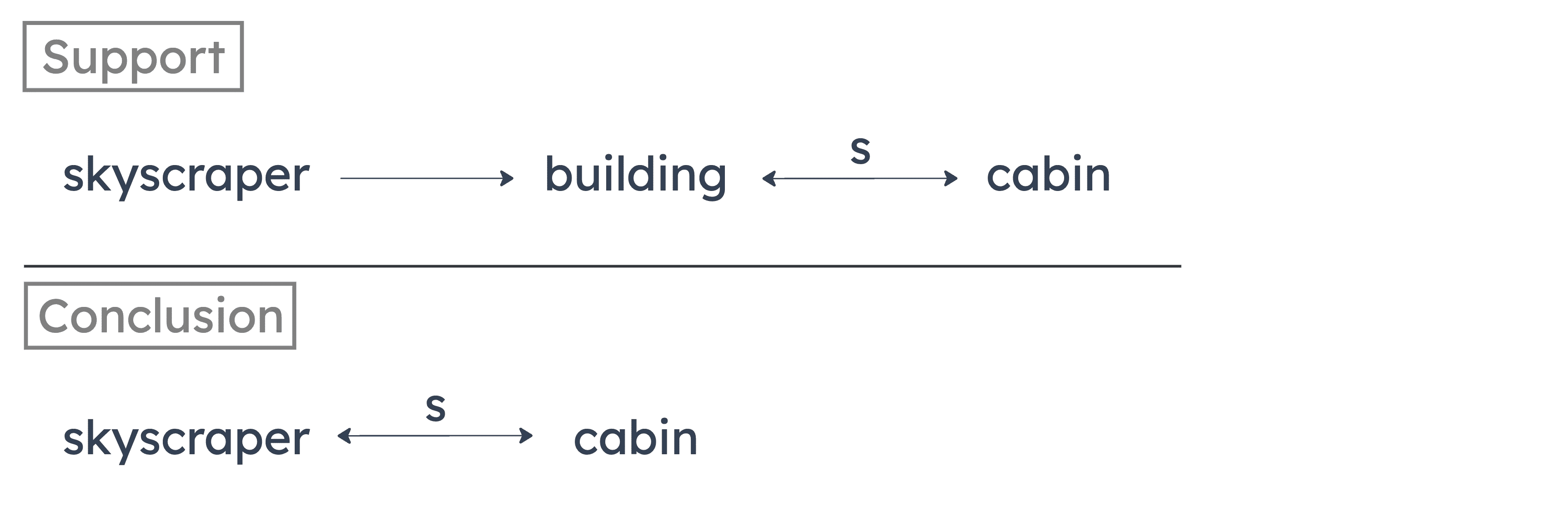
Three million dollars was recently stolen from the City Treasurer's Office, and, from what we know so far, we can conclude that Conclusion some members of the mayor's staff are suspects. ███ ████████ ███ ███ ██████ █████████ ██ ███ ████ ███████████ ███████ ███ ███ ███████ █████ ████████ ██████ █████████ ██ ████ ███████
The argument presents two premises: a conditional statement and a “some” statement. It then chains the two statements together to draw another “some” statement as a conclusion. 
This argument features bad conditional reasoning. If the “some” statement was in the first part of the diagram and followed by the conditional statement, then we could validly infer a “some” relationship between the first and last variables. But in this argument, a conditional statement is instead followed by a “some” statement, which is invalid. It’s like concluding that some middle school students play for the NBA, since all middle school students live in America, and some Americans play for the NBA.
The flawed nature of the ████████ █████ ███ ████ ███████████ ██ ████████████ ██ ██████ █████ ██ ████████ ██████████ ██ █████ ████████ ████
some painters are █████████ █████ ████ █████████ ███ ██████ ███ ████ ████████ ███ ██████
Wrong flaw. (A) incorrectly chains up two “some” statements to draw its conclusion. The stimulus, however, chains up a conditional statement with a “some” statement, so (A) doesn’t match.
some cabins are ███████████ █████ ███ ███████████ ███ █████████ ███ ████ █████████ ███ ██████
(B) presents two premises: a conditional statement and a “some” statement. It then incorrectly chains them up to draw a “some” conclusion. The stimulus also chains up a conditional statement and a “some” statement to draw an incorrect “some” conclusion, so (B) matches.
some tables are ██████ █████ ███ ██████ ███ █████████ ███ ███ ██████ ███ █████████
Wrong flaw. (C) sets up a conditional relationship: If something is a table or a chair, then it’s furniture. It then concludes that there is some relationship present between the two sufficient conditions, which is unsupported. The stimulus, however, chains up a conditional statement with a “some” statement to reach its conclusion, so (C) doesn’t match.
all supermarkets sell █████████ █████ ███ ████████████ ████ ████ ███ █████████ ██ █ ████
Wrong flaw. (D) sets up a conditional statement (if supermarket, then sell food) and a some statement (some foods are asparagus). It then invalidly concludes that all supermarkets sell asparagus. The stimulus, however, chains up a conditional statement with a “some” statement to reach a “some” conclusion, so (D) doesn’t match.
all animals are ████ █████ ████ ████ ███ ████ ███ ████ ███████ ███ ████
Wrong flaw. (E) incorrectly chains up two “some” statements to draw its conclusion. The stimulus, however, chains up a conditional statement with a “some” statement, so (E) doesn’t match.
Answer five questions and we'll estimate your score.
It takes about five minutes.
Take the free diagnosticWant to know why the right answer is right?
7Sage membership unlocks explanations of every question. Every answer choice. On every official PrepTest. Start with a free account.
By signing up you agree to our
terms of service.
This site is protected by reCAPTCHA and the Google
Privacy Policy
and
Terms of Service
apply.