
Subscription pricing
Columnist: Conclusion Video games are not works of art. ██ ██████ ███ ████ ███ █████████ ██████████ ████████ ██ █ █████ ████ █████ ███ ██ ██ ████████████ ███████ ████ ███████ ████ ██████ ███ ███████ ██ ███ █████ ███ █████████ ██ ██ █ ████ ██ ████ ██ ████ ███████ ██ █████████ ██████████ ████ ██ ██████████ ██ ███ ██████ ██ ███████ ███ ███████ ███ █████
Summary
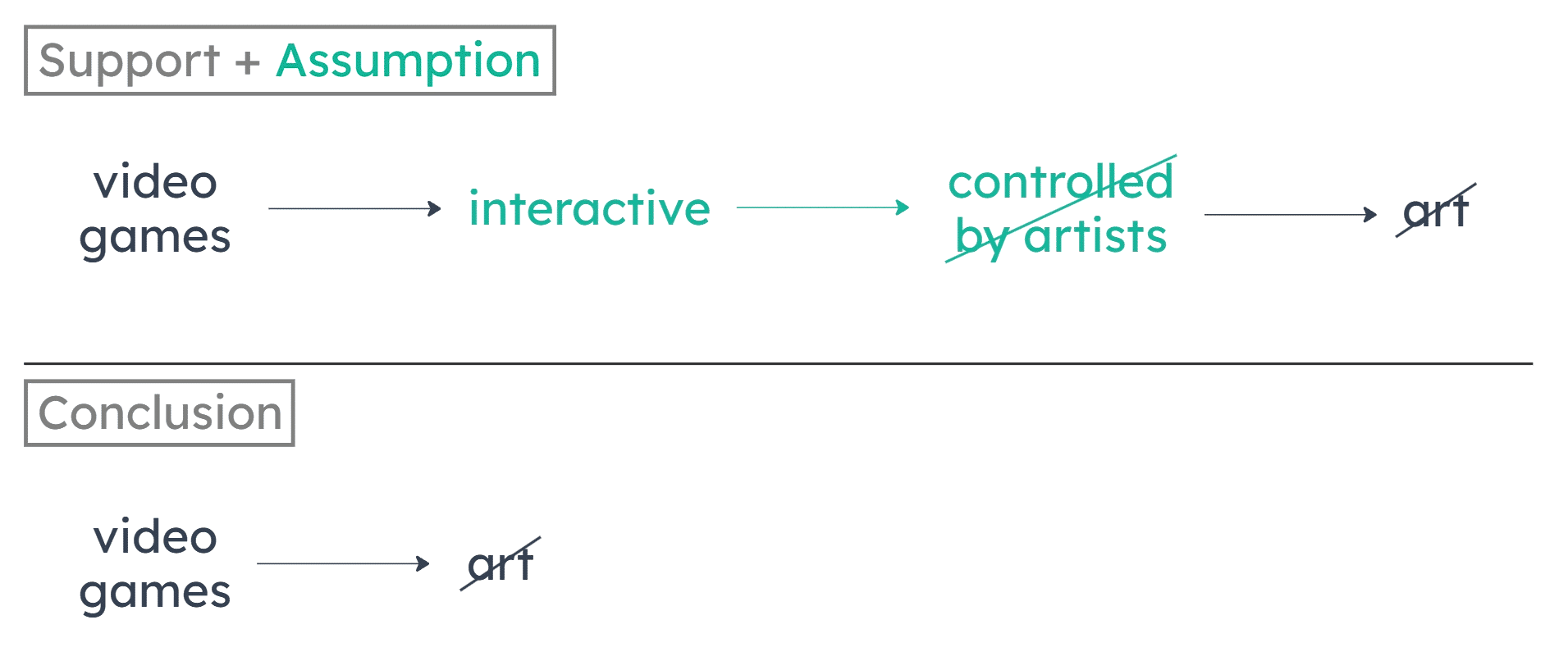
Video games aren’t art. Why not? Because they’re interactive experiences. Art, meanwhile, must be an experience controlled by its creators. (Contrapositive: if it’s not controlled by its creators, it’s not art.)
Missing Connection
We know that something fails to be a work of art whenever it’s not controlled by its creators. But what does that have to do with video games? All we know about video games is that they’re interactive. Does being interactive mean the experience isn’t controlled by its creators? The author doesn’t say.
The conclusion would follow if we knew for sure that when an aesthetic experience is interactive, it’s not at all controlled by its creators.
9.
The conclusion of the columnist's ████████ ███ ██ ████████ █████ ██ █████ ███ ██ ███ █████████ ██ ████████
a
Most video game ████████ ██ ███ ██████ █████ █████ █████ ██ ██ █████ ██ ████
b
An aesthetic experience ██████ ██ ████ ███████████ ███ ██████████ ██ ███ ██████ ██ ███████ ███ ███████ ███ █████
c
For something to ██ █ ████ ██ ████ ██ ████ ███████ █ ████ █████████ ███████████
d
Typically, video game ███████ ██ ███ ██████████ ██████ █████ ██████
e
Players' choices that ████ ██ ██████ ██ ███ ███████ ██ █ █████ ████ ███ ██████████ ██ ███ █████████ ██████████ ████████ ██ ████ █████