


Economist: Conclusion Unemployment will soon decrease. ██ █████ ██████████ ████████ █████████████ █████████ ████ █████ ███ ███████ ████ ██ ██████████ ██ ███ █████ ████ ███ ████████████ ████ █████████ ███ ██ ███ █████ █████ █████ ██████████ ████████ █████████████ █████████ ████ █████ ██████████ ████ ██████ ████ ██ █████ ████████ ██ ███ █████ ████ ███ ██████ ████ ████████ ███████ ██████████ █████████████
The author concludes that unemployment will soon decrease. This is based on the following:
If total gov. spending significantly increases next year, unemployment will decrease.
If total gov. spending significantly decreases next year, unemployment will decrease.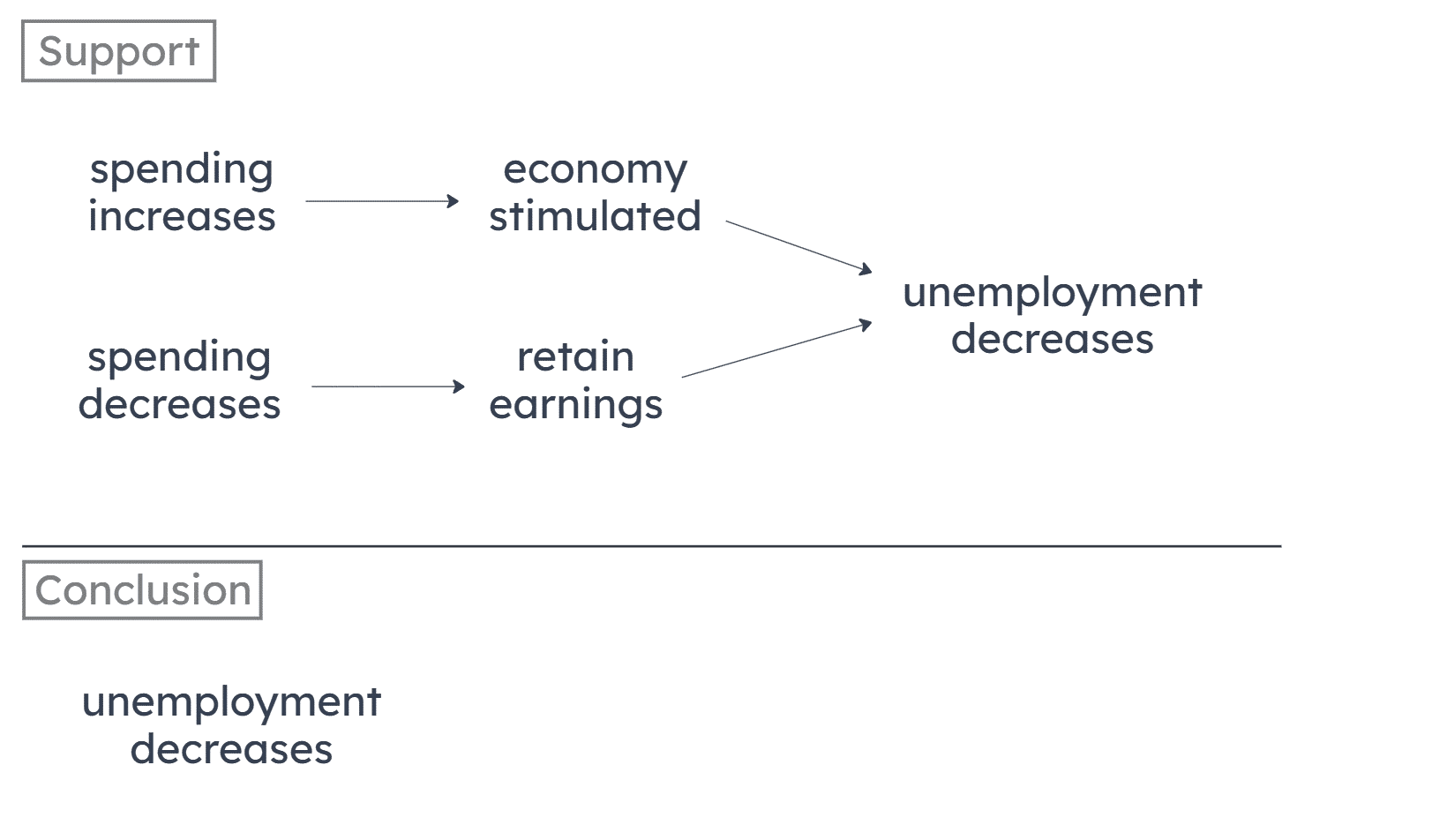
We have two triggers that can prove unemployment will decrease — gov. spending significantly increases or it significantly decreases next year. But do we know that either of those will actually occur? No. So to make the argument valid, we want to know that next year, gov. spending will significantly increase or it will significantly decrease.
The conclusion drawn by the █████████ ██ ████████ ████████ ██ █████ ███ ██ ███ █████████ ██ ████████
Either total government ████████ ████ █████████████ ████████ ████ ████ ██ ████ █████ ██████████ ████████ ████ █████████████ ████████ ████ █████
(A) establishes that one of the two triggers for a decrease in unemployment will occur. So it must be true that unemployment will decrease next year.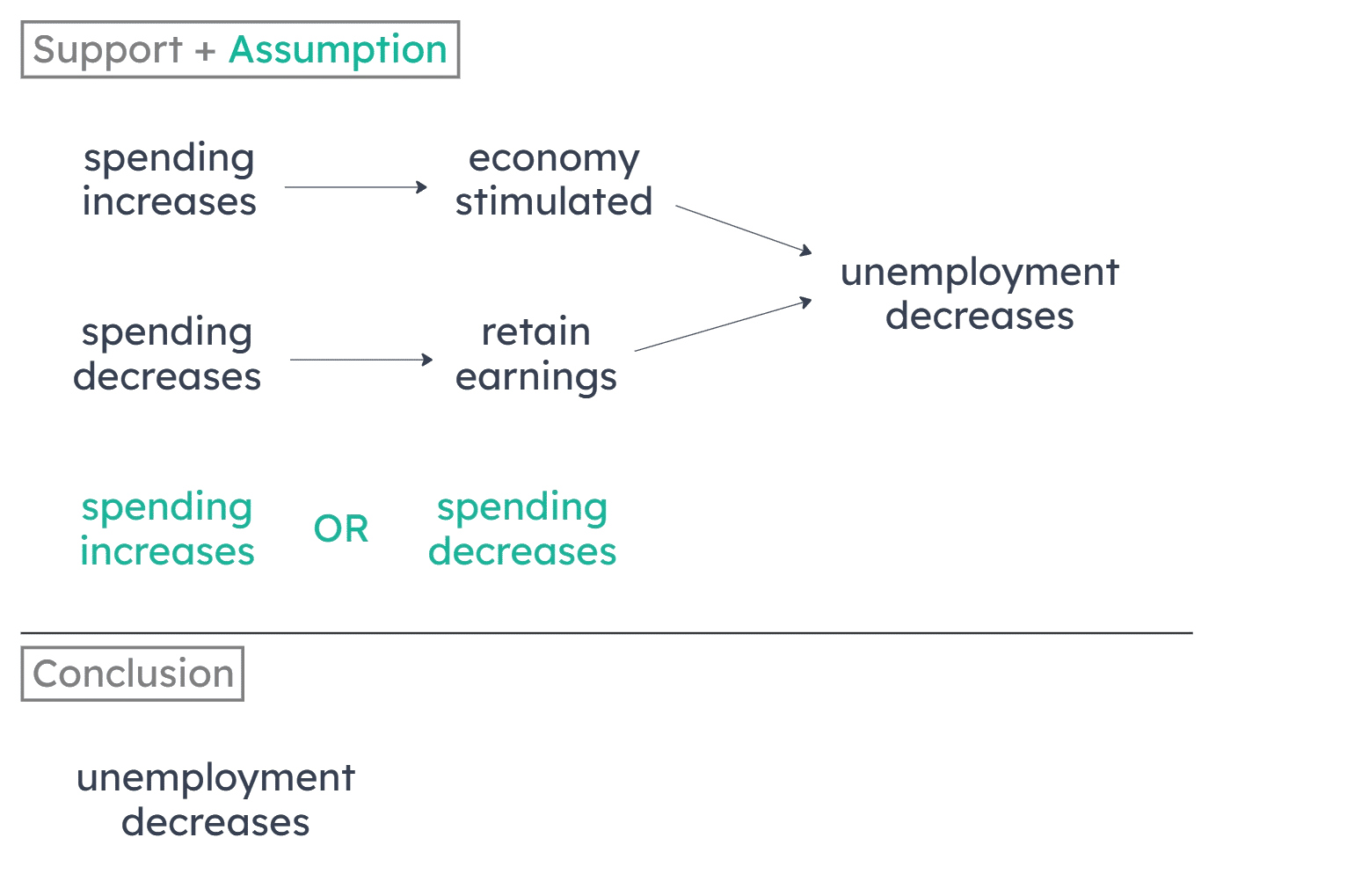
Government officials are █████████ ████████████ ████████ ████ ███ ████████ ██ ██████ █████████████
(B) doesn’t establish that one of the two triggers for a decrease in unemployment will occur.
If there is █ █████████████ █████████ ██████ ███ ████████ ████ █████ ████ ██ █ ███████████ ████████ ██ █████████████
Although (C) tells us that IF there’s a significant increase in demand for workers, there will be a significant decrease in unemployment, we don’t have a premise establishing that there will be a significant increase in demand for workers.
A significant increase ██ █████ ██████████ ████████ ████ ████ ███ ███████ ██ ███ ████ ████
(D) doesn’t establish that one of the two triggers for a decrease in unemployment will occur.
If the economy ██ ███ ██████████ ███ ██████████ ██ ███ ██████ ████ ██ █████ █████████ ████ ████████████ ████ ███ █████████
(E) doesn’t establish that one of the two triggers for a decrease in unemployment will occur. (E) is designed to reach a conclusion that unemployment will NOT decrease. But we’re trying to show that unemployment WILL decrease.
Answer five questions and we'll estimate your score.
It takes about five minutes.
Take the free diagnosticWant to know why the right answer is right?
7Sage membership unlocks explanations of every question. Every answer choice. On every official PrepTest. Start with a free account.
By signing up you agree to our
terms of service.
This site is protected by reCAPTCHA and the Google
Privacy Policy
and
Terms of Service
apply.