
Subscription pricing
Economist: Conclusion Unemployment will soon decrease. ██ █████ ██████████ ████████ █████████████ █████████ ████ █████ ███ ███████ ████ ██ ██████████ ██ ███ █████ ████ ███ ████████████ ████ █████████ ███ ██ ███ █████ █████ █████ ██████████ ████████ █████████████ █████████ ████ █████ ██████████ ████ ██████ ████ ██ █████ ████████ ██ ███ █████ ████ ███ ██████ ████ ████████ ███████ ██████████ █████████████
Summary
The author concludes that unemployment will soon decrease. This is based on the following:
If total gov. spending significantly increases next year, unemployment will decrease.
If total gov. spending significantly decreases next year, unemployment will decrease.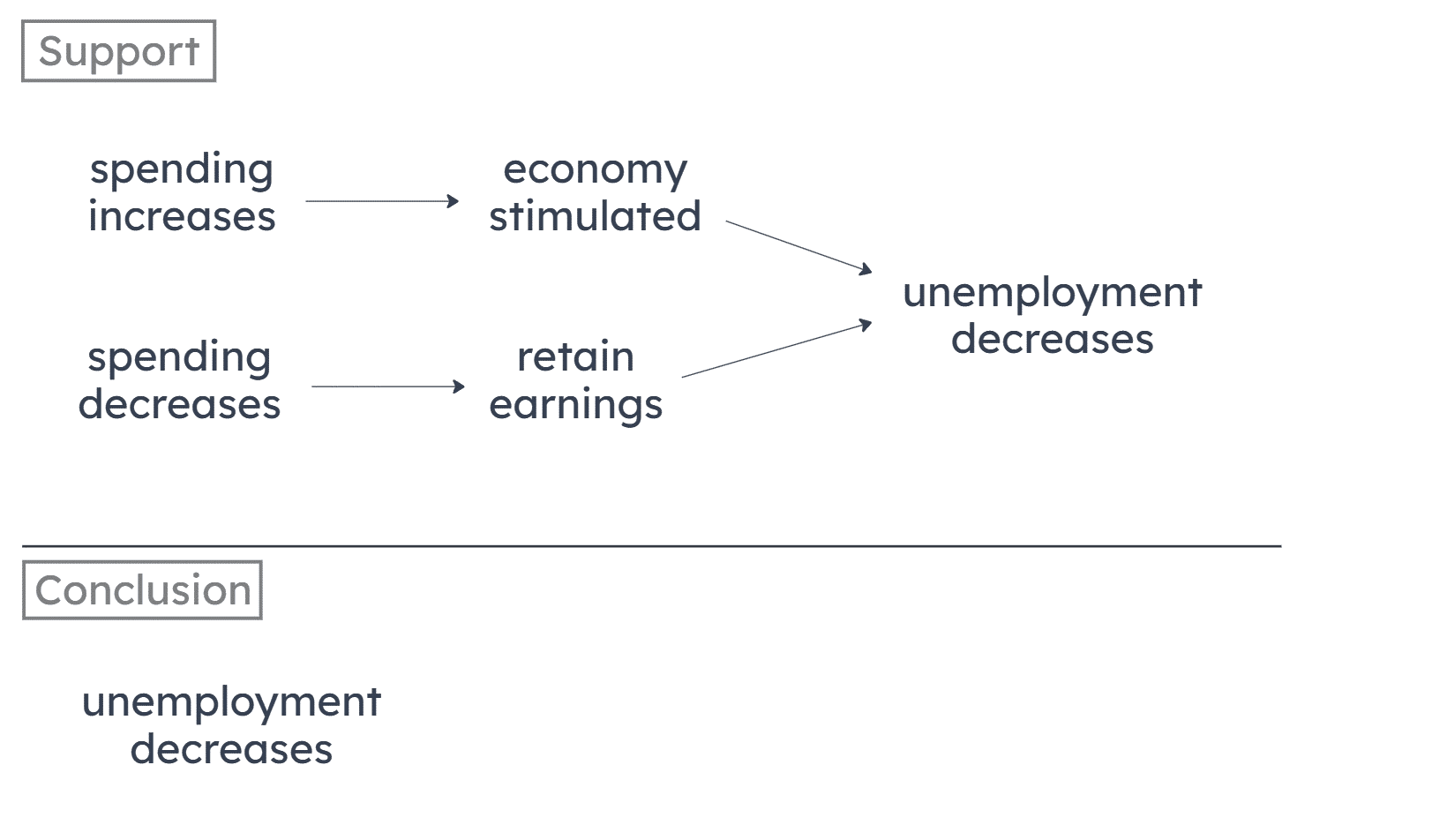
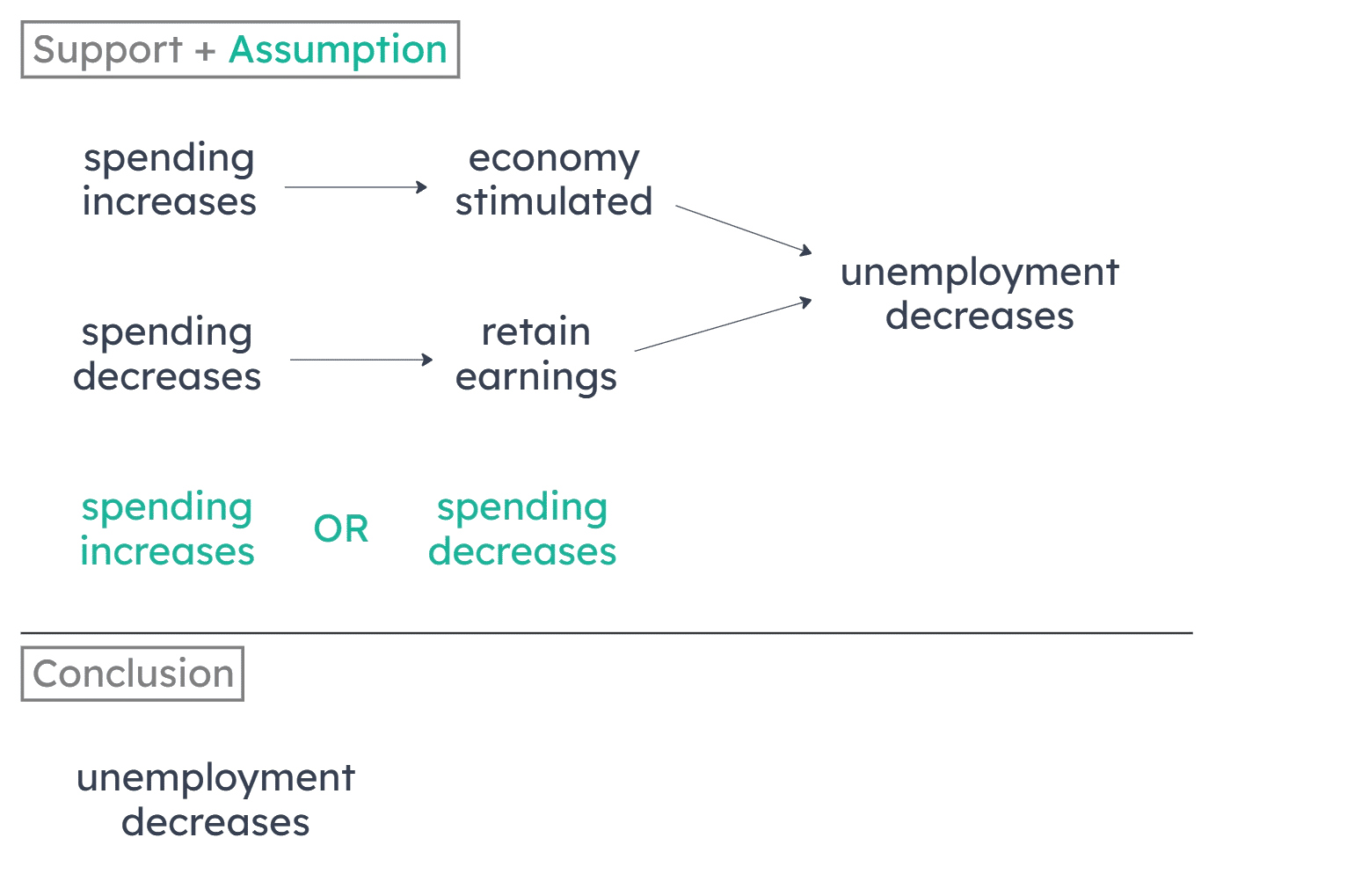
Missing Connection
We have two triggers that can prove unemployment will decrease — gov. spending significantly increases or it significantly decreases next year. But do we know that either of those will actually occur? No. So to make the argument valid, we want to know that next year, gov. spending will significantly increase or it will significantly decrease.
4.
The conclusion drawn by the █████████ ██ ████████ ████████ ██ █████ ███ ██ ███ █████████ ██ ████████
a
Either total government ████████ ████ █████████████ ████████ ████ ████ ██ ████ █████ ██████████ ████████ ████ █████████████ ████████ ████ █████
b
Government officials are █████████ ████████████ ████████ ████ ███ ████████ ██ ██████ █████████████
c
If there is █ █████████████ █████████ ██████ ███ ████████ ████ █████ ████ ██ █ ███████████ ████████ ██ █████████████
d
A significant increase ██ █████ ██████████ ████████ ████ ████ ███ ███████ ██ ███ ████ ████
e
If the economy ██ ███ ██████████ ███ ██████████ ██ ███ ██████ ████ ██ █████ █████████ ████ ████████████ ████ ███ █████████