


- Joined
- Nov 2025
- Subscription
- Live
Admissions profile
Applications


Discussions
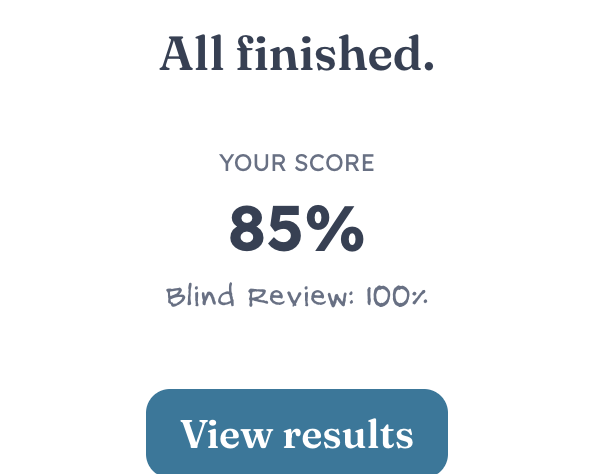

Shallow dip is helpful. I think the move for these is to flag them and come back at the end on the exam. And hope there isn't a lot of them lol
This is why I should just never feel confident lol.
I was undefeated through the lessons...felt good about the drill...then go 1/5.
Though only having difficult questions felt mean and disrespectful lol
I'm confused here, because in earlier lessons I thought it was mentioned that we assume "large study" is enough...
Or is it because they also had an age range and insomnia that makes it unrepresentative?
I'm sorry...
am I the only one that didn't know what "repudiates" meant?!
Lol, is there an LSAT vocab book somewhere?
@MarcosGuzman415 Sometimes I like to scroll to the bottom in the "Let's Review" section and the lesson takeaway that's pertinent and applicable to more than just the example is often written out!
So, the takeaway I get here is that identifying the type of logic used can help eliminate answer choices?
I.e - a formal logic argument will only have a formal logic flaw
So, when we see this... the causal logic answer choices are always false?
For me, it helps to use the highlighting tools in the software and I just mark up the stim.
Pink = Premise
Orange = Concession point, counterargument, or context
Underline = Main and sub-conclusions
Then, I highlight the first word and last word of the excerpt being questioned in yellow.
That way, I have a good understanding of the role at a quick color-coded glance and can eliminate answers that are absolutely not possible. Then I read each ac with the use of the word that I ID it as. (i.e. I see it's a premise...then look at all ac's that use the word premise (or claim)).
I'm confused on how you know which idea to make negate and make sufficient. Because the premises had "no" and "without" I actually worked in the contrapositive framework, because I thought that would be easier. But, I chose A.
Here is what I got on the map:
/Social Integrity --> /Freedom
/Social Integrity --> /Pursuit
------------------------------
/ROL --> /Freedom
So, do we just always work to not be in a contrapositive or what? Can we get more resources/practice on just mapping?
I chose B here because when I read "routine correspondence that could be delayed," I thought it was saying that the communication (i.e. information) being received would be delayed and therefore potentially significant.
I see how there's a lot of assuming in that thinking though...
I got it right in BR.
@Disney I like to re-open the question and toggle the option to "show analysis" of the stim. Then, I see if that's enough to help me understand why I missed something or confirm that I at least interpret the stim correctly. Then, I click on the lightbulbs to see the explanation for the answer choices that I chose or were stuck on. This also helps me confirm that I eliminated certain answers for the right reasons!
If that is not enough, I like to watch when I get it wrong or don't understand. But once I confirm I eliminated some answers correctly and for the right reasons, I only watch the explanation of the stim and the answer I chose + the correct answer.
Sometimes I skim the typed out explanation to see if anything is bolded (i.e. important) to takeaway.
Hi, apparently a lot of concerns around these issues were heard by LSAC and they are fixing the bugs and re-releasing the format this month. Here is their latest video on what they're fixing:
https://www.lawhub.org/prepare-for-the-lsat/about-the-lsat/upcoming-changes-lsat-process-aug-2026
Hope this helps!
LSAC recently released this video as well. It looks like they're fixing a few reported issues:
https://www.lawhub.org/prepare-for-the-lsat/about-the-lsat/upcoming-changes-lsat-process-aug-2026
Here, I talked myself out of the wrong answer because of some of the other lessons. I thought A only addressed a subset of the problem in that it only looks at harm-to-crime ratios BUT NOT linking the two crimes mentioned in the stimulus. I think I thought the ideal answer would say something along the lines of A AND mention or affirm that theft and bribery were similar.
So, I then chose D. Because I thought it at least connected the two crimes in some way that allows you to eliminate the "puzzling feeling" like we do in RRE. Or support that the evident consideration was in fact valid?!
But as I type this out...I think I get why it was wrong and see the error of my reasoning.
But I'm nervous that I'll mix up tasks and approaches to the correct answer like this again (sigh).
2/5 originally and then 5/5 on BR. The three I missed because I talked myself out of the other answer I chose. I got each down to the last 2 and each time I had the right answer within the 2. But I think I lose track of my task in drills like this where I know I'm doing WSE only. Then, I assume the task instead of approaching each one as if I didn't know what's coming next.
Struggling with the concept of diagramming causal chains. Especially under time. I feel like this would just be a questions worthy of skipping...
Hi!
I'm wondering if there is a cheat sheet that exists to help coin what language indicates a specific task.
For example: "properly inferred" = Must Be True
I understand that for a lot of question stems there's more obvious wording (i.e. Which ... must be true = must be true) but I'm just curious if something like this exists and can be shared for the examples that aren't so readily apparent.
I have a cheat sheet with each question type and their approaches and would LOVE to be able to add this info to each.
Thank you!
I chose B, but not because of the claim discussing 17%
I thought B attacked the notion of "significant percentage of the population" portion of the final sentence.
"This shows that a significant percentage of the population would rather disrupt their travel plans than risk flying on a supposedly unlucky day."
So, if less than 5% of the population reports to believe in that day...then the people are not disrupting plans because of it being an unlucky day.
I understand that providing an alt reason would be ideal. And I hung on to option C in my head...but the "several major airports" to me seemed not inclusive enough of ALL airports i.e. ALL FLYERS. I understand that "several major airports" implies higher numbers of flyers. But I just thought that required a little too much extrapolation so I went with the more vague answer and talked myself out of it.
Here's what helped me:
HIGHLIGHTING KEY:
Yellow - Intro/First POV (ex. economists)
Pink - alternate voice/pov (ex. critics)
Orange - Author's tone or POV (ex. this is wrong)
Underline - Author's stance when applicable...AKA CONCLUSION (ex. that pov is misguided)
I do not highlight the entire sentence!!! Just the key words or phrases.
I highlight referentials in the color that it pertains to
If at any point in the passage 1 side addresses the other specifically (ex. by adapting X's pov) I highlight it in the color of that pov.