
Subscription pricing
Support If rational-choice theory is correct, then people act only in ways that they expect will benefit themselves. ███ ████ █████ ████ ███████████████ ██████ ██████ ██ ████████ ███████ ██████ ██ ████████ █████ ██ ██████ ██████ ██ ████ ████ ██████ ██ ██ ████████ ███████ ███████████
Summarize Argument
The author argues that rational-choice theory is not correct. She supports this by saying that if it were correct, then people would only act in ways that they expect will benefit them, but there are many examples of people acting in ways that do not benefit them.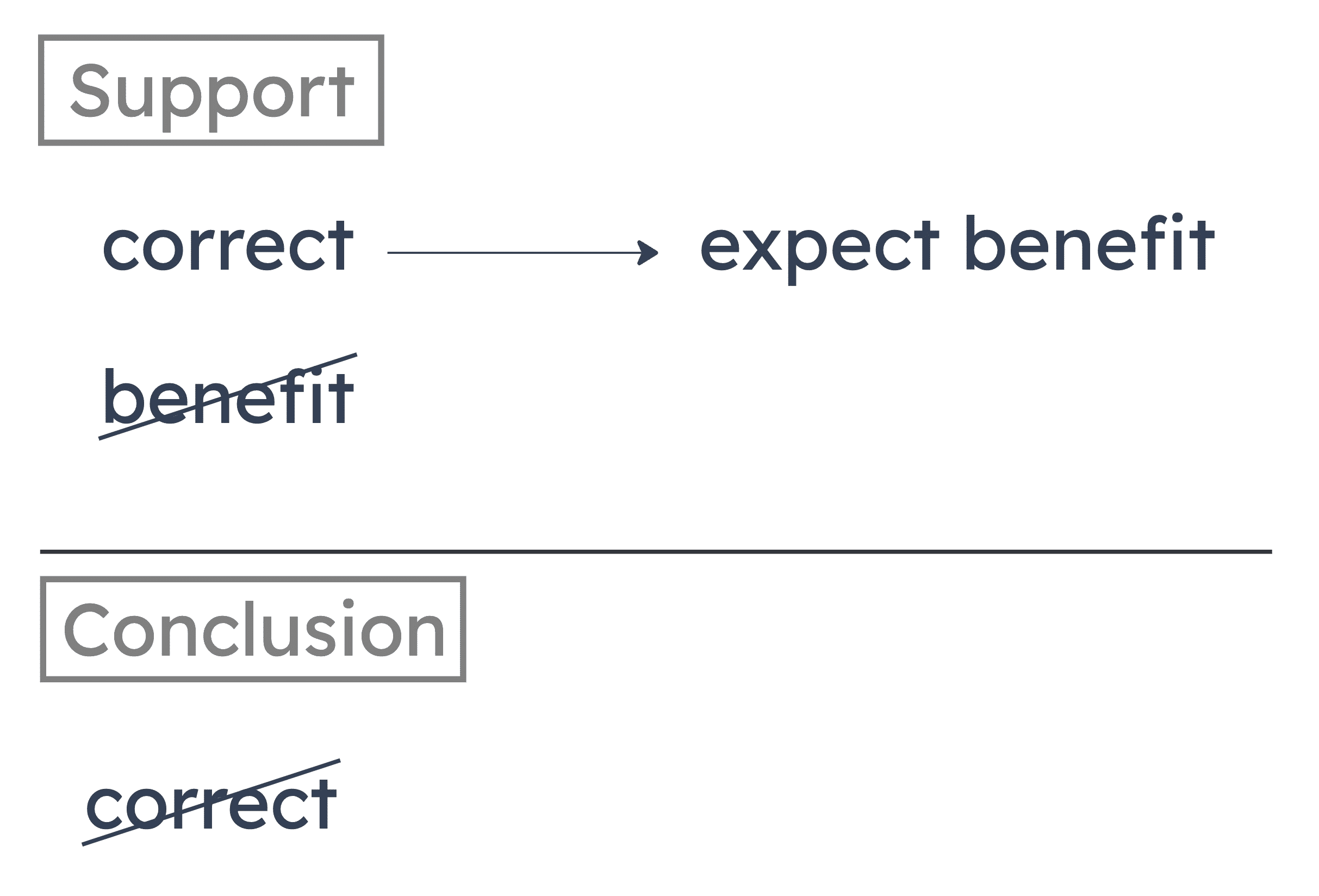
Identify and Describe Flaw
By showing that many people act in ways that don’t benefit them, the author assumes that she’s negating the necessary condition for rational-choice theory being correct. But in reality, the necessary condition is that people will always act in ways that they expect will benefit them.
It’s possible that people expected to benefit from their actions, even though they didn’t benefit. In this case, the author can’t conclude that rational-choice theory is incorrect.
7.
The argument above is most ██████████ ██ █████████ ██ ███ ███████ ████ ██
a
assumes as a ███████ ███ ██████████ ███ ████████ ████████ ██ █████████
b
concludes that a ██████ ██ █████ ██████ ██ ███ ███████ ████ ███ ████████ ███ ██ ██ ████████████
c
takes for granted ████ ██████ ███ ███ ██████ ██ ████ ████ ███ ██████████ ██████████ ████████ ████ █████ ███████ █████ ██ ██████████ ██████████
d
presumes, without justification, ████ ████████ ██ ██████ ██████ ██ ████ ████ ███ ███ ██████████ ██████████ ███████ █████████ ████████ ██ ██████ ██████ ██ ████ ████ ███ ██████████ ██████████
e
fails to consider ████ ██████ ██████ ██ ████ ████ ██████ ██ ██ ████████ ███████ ███ ███████████ ████ ████████ ████ ██████ ██ █████ ████ █████ ███████ ████████ ███████