


LSAT
New post300 posts in the last 30 days

Hello LSAT community!
I am writing to inquire about the accuracy and reliability of the "PT equivalent" calculation that is shown for drills and sections. Obviously if the sample size is larger it'll be more accurate and representative, and so the full lengths are more accurate, but how accurate is the ratings for during individual PT sections done in drills?
I ask because it would be nice to know whether I can be using these a guide for my progress. If I am averaging these PT equivalent scores around 160 with the range usually between 155-165, are these to be taken as progress indicators where I can expect to score around a 160?
For context, I am aiming for a 165 in the August LSAT, had a diagnostic of 149, and did my first real PT this week and got a 159. I understand I need to do more PT to get a good idea of my progress, but that is also why I am curious if I can put any weight into the PT equivalent scores during drills as I get those scores more frequently than the full PT scores.
Any tips or comments on how you use this metric would be helpful!

🎮 We just released two new games! Head over to https://7sage.com/games to check them out.
Expecto Negation — Build the exact negation of each enemy statement before it reaches your castle.
Logic Links — Sort 16 statements into 4 groups that secretly say the same conditional.
These join the four already in the lineup:
Logic Blitz — Judge whether an argument is valid. Practice your conditional and quantifier logic.
Flaw Hunter — Match the two arguments that commit the same logical flaw.
Argument ER — Diagnose the missing link in a conditional argument, then supply the assumption that makes it valid.
Numbers Blitz — Decide whether the numbers support the conclusion. No math involved.
💬 We welcome feedback on any of them! Just mention the game by name so we know which one you mean.

Just got an official 179!!! I am officially Elle Woods and can now die happily. Thank you 7Sage!! See you in the forums when admissions open


Hi there. I'm wondering if anyone else in this thread has used up all 5 LSAT attempts, and has any advice in approaching the final one.
I'm someone who has been PTing in the 170s since September 2025. I feel as if I know the test well enough to tutor others in it and have been very active in the discussion threads, etc. Regardless, my exam scores have never translated on the real thing. I'm not sure if anyone relates -- but it is definitely a soul crushing, stomach sinking feeling.
I only have one retake left, and am really scared to have the same thing happen again, especially with the new format changes and now having to go in person. Has anyone else taken all 5, and finally reflected their abilities the 5th time?
Feeling kinda lost and hopeless :(, particularly as I'm unable to diagnose what goes wrong on my real tests. It genuinely feels like someone else is sitting in the chair on exam day. Maybe burnout, maybe at one point going too slow, another too fast. I really don't know.

I got 169 on the real test in April (PT scores in my profile were taken in the beginning of the prep. I usually work on sections and don't take PT). In the past month, I was consistently getting -1 (and sometimes -2) wrong per LR section. My blind review had long been -0. But several days ago, I suddenly got -6 in an LR section under the same circumstance, which is the score I got when I started prepping in February, and I've been getting a lot more questions wrong than before. I'm also no longer getting -0 in BR.
When I was getting consistently near perfect scores, wrong answers were from the questions I felt confident about and moved on. Upon doing a review, I'd find out that I neglected one but important word (e.g., "less," which makes a statement comparative), and it seems like I'm now making same errors four to six times per section. And I even make this error again during the BR, only to figure out what I was overlooking during the review of BR.
I'm thinking I must be burnt out. But I honestly don't know what to do about it. If I were a student, I'd take a week off, feel recovered, and come back, but I work full-time in the military. I consistently work 12 hours a day, often responds to the last minute request from the top, and I have no fanciness to study at work most of time. And the workplace drama wears me out. I also have a staff duty this weekend and needs to wake up at 3:30 am on Saturday to go to work. lol So I don't think I'd feel recovered at all even after getting rest from LSAT for a week or so.
Moreover, I barely have time to study during the week, so I just drill five or so questions before I go to bed. So I feel like I don't study enough, and I don't feel comfortable just not studying (especially when not studying doesn't help with recovering from a burnout, as I mentioned above).
If you're a non-trad full-time worker, how did you manage burnout that comes from work, not just an LSAT prep? It's not like I can take a break from work like I take a break from LSAT, and I have another LSAT coming up in August. I honestly don't know what to do.

Need some advice. I scored a 164 on the LSAT. The school I'm applying to a school that has a median LSAT of 161 and a 3.8 GPA, while I have a 3.7 GPA from a less well-known school. I'm considering retaking the LSAT to try for a higher score since i really want a full ride, im considering retaking it. About 18% of admitted students receive full scholarships in this school. Do you guys think it's worth retaking?

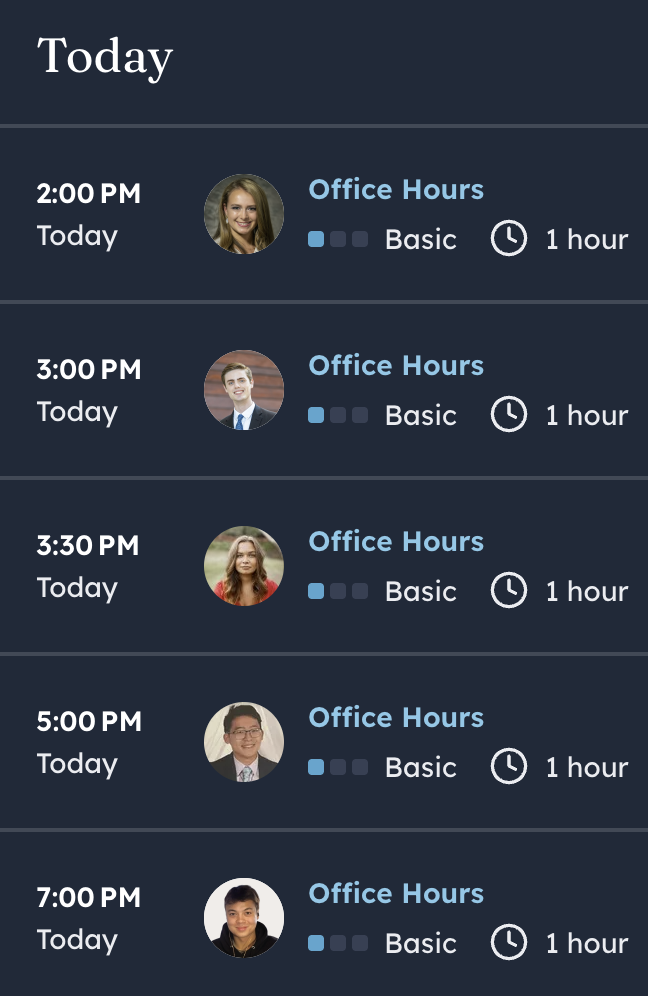
Hi all, we're hosting a bunch of office hours today because of score release yesterday. Here's the schedule. Come if you have any questions related to June score release!

I underperfomed on the June LSAT. I want to start all over again and dedicate more time and energy to get my desired score. However, I don't really know what my next steps should be other than keep drilling, blind reviewing, and PTing.
So I wanted to ask those who have more experience than me on this test what things helped them out tremendously. My biggest dream is to break into the 170s. I know that I can do it, and I know it takes a lot of work. The problem is that I don't know how to get there. I feel as if my studying process is not good enough since I haven't seen a major improvement. What can I do?
Any tip would be highly appreciated.

Hey hey!
Any Latinas starting to process of getting into their legal careers, or deep in LSAT studying? I wanted to create a space to connect, debrief, help each other, and maybe even do some study sessions together. I know we're out there, and regardless of where you are in this process know that I'm so F-ing proud of you!!!

170PlusRyan
Independent TutorFree LSAT RC Class Tonight — Learn the Patterns Top Scorers Notice
Hello everyone!
I’ll be hosting a free LSAT Reading Comprehension class tonight, open to anyone who would like to attend :) Hope to see you there!
RC Class
Thursday, June 25 · 7:30 – 9:00pm
Time zone: Eastern
Google Meet joining info
Video call link: https://meet.google.com/dvz-wxnu-ger
Or dial: (US) +1 240-366-5287 PIN: 873 992 246#
More phone numbers: https://tel.meet/dvz-wxnu-ger?pin=8314499385941

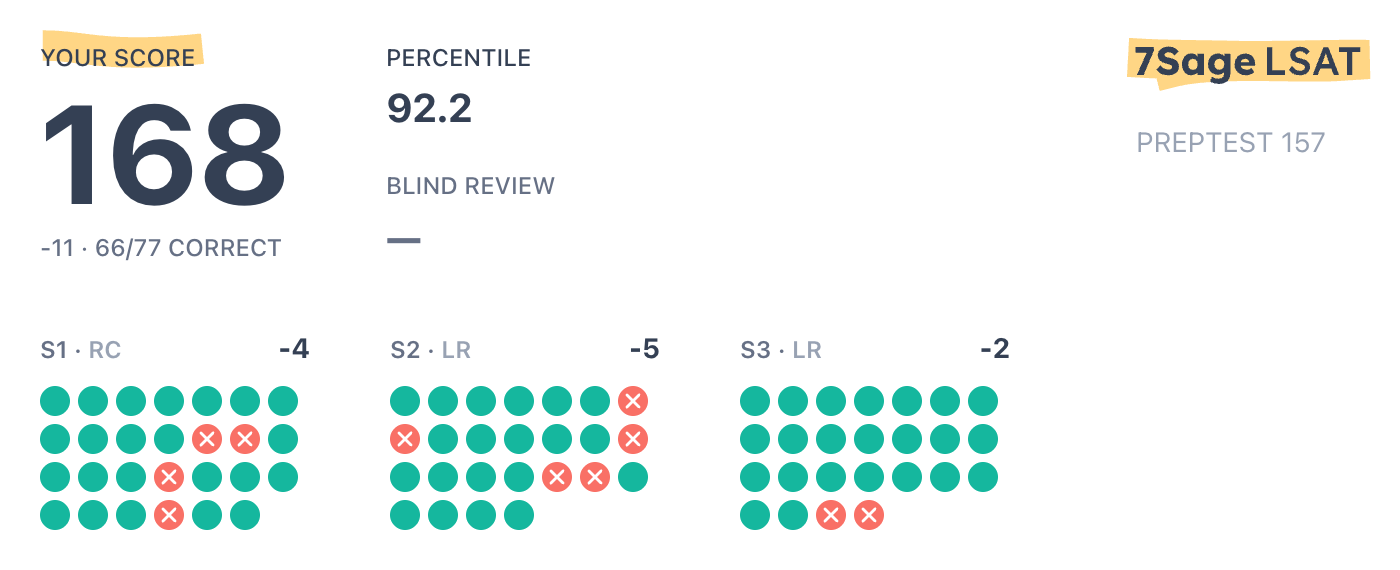 PRACTICE DOES PAY OFF! I've been studying for this test for 3+ years, but I finally got into the real groove of things this past year. I am aiming for a 170+ on August's administration, and I started off with an official score of 152. Be patient. Be diligent. Rome wasn't built in a day.

Going through the core curriculum, I am understanding that a huge part of WSE questions is understanding and recognizing assumptions the authors make in the stimulus. But I am having immense difficulty trying to do so. Anyone have any tips for getting better at this?

After scoring back-to-back 173s on PT128, PT138, and PT147, I finally broke 175, scoring a 176 on PT149!! Highest score I've achieved thus far. Hoping I continue to see progress before August. Best of luck to everyone!! Happy studying

Hey folks,
I got my June score back, and it was as I expected based on the difficulty of the exam. However, I’ve taken nearly all of the “modern” LSAT practice exams and all of the recent ones. I am kind of puzzled as to how to prepare for the real thing, because it has become very different from the last exam administration we have materials from (2020).
I was shocked by how time-consuming the questions were and the total focus on causality/phenomenon-hypothesis over anything else. Nothing I’ve ever practiced with feels remotely comparable, so I feel like all the drilling I do is on easy mode.
June exams were all new content (no reused content other than a single RC passage) which could explain the new style, but I haven’t really seen anyone else with this take, so I might just be hallucinating.
Does anyone have any advice on how to prepare for August?
My observations:
1) Parallel reasoning without formal logic to make the answer choices less strong
2) High amounts of wordy causal reasoning and phenomenon hypothesis questions with much more intense answer choices than I’ve seen before
3) A much harder time crunch on LR, but RC has remained the same
4) An emphasis on quantifiers/math style questions

Got a 143 today. Currently in LSAT purgatory. Trying to stay positive. Gearing up to enroll in 7sage tutoring for July, and aiming for an August LSAT retake. We got this. As a nontraditional applicant, current full time professor, I am not looking at rank or prestige. Just get me in a classroom! 😬

Hey guys,
I have been at the LSAT for about 2 months. Got a diagnostic of 156 and now average in the low 170s in my drills but honestly, I dont know how to improve my score from -2/-3 per LR section. It's like I make a new mistake every single time and I dont have an apparent question type weakness or anything as such.
If any of you have been through something similar and managed to get to -0 or -1, please let me know.

I am taking my second attempt in August but I feel like I have exhausted most of the questions and PTs available on 7sage. A lot of questions I can probably revisit because it has been a while since I first saw them, but I am worried that when I take a full length PT I will be thrown off by the familiarity of certain RC passages or LR stimuli.
What is the best way too approach studying for a retake after having gone through so much of the available content the first time around? Are there any other sites (lawhub, demon, etc) that have a solid amount of unfamiliar content?

Got in the low 150s. After PT in the late 150s-160. Feel hopeless

Just took the June lsat, scored in the mid 150s, aiming for early 160s. Anyone have a good study schedule to prep for the September test? Feeling defeated before I even start :(

Hi everyone!
I took my first LSAT this month and received a 158, which is 7 points below my average PT score. I actually felt I had bombed the test as soon as I finished it, so the result wasn't too surprising...
In hindsight, I probably didn't prepare it in the best way. I was short on time and ended up taking seven full PrepTests in the ten days leading up to the exam, which may have contributed to burnout and underperformance. My highest PT score was a 171, and the 158 is lower than every PT score on record.
My dream schools are in the T6, and I'm planning to retake in August. Given this context, would you recommend canceling the 158 or keeping it?
I'd really appreciate any advice - thanks so much in advance! :)

I took my first LSAT back in February and scored a 161 which was at the lower end of my range I was PT around the high 160s low 170s but again during the actual test day I started 4 hours later than my expected test time. I made sure to correct and anticipate all of the technical issues I experienced for the JUne test and started on time and it was all going well till I experienced an external noise distraction during the RC section which is typically my best section and choked on the last 2 passages I mean I didnt even get to the last passage and ended up with a 160 I know this not a reflection of my potential and Plan to retake but im trying to decide if canceling is the right thing to do

SCOTT_LEBO
Independent TutorJune Score Release: Happy to Talk Through Next Steps with Anyone Who Wants To
I know that today's score release was tough for many of you.
If you got a score that wasn't what you were hoping for and you're trying to figure out what to do next, I'd be happy to have a free 15-20 minute conversation with anyone who wants one.
No tutoring pitch at all. I'm just looking to help in some way if I can. We'll talk through what happened, how you are feeling, what your options are, and what I think makes the most sense moving forward based on your situation.
I've been through score disappointments myself, and I've worked with a lot of students who have as well. Sometimes having a second set of eyes on the situation can make the next step much clearer.
Feel free to DM me if you'd like to chat.
"Fight on, my men," says Sir Andrew said, "For a little I'm hurt, but I am not yet slain; I'll lay me down and bleed a while, And then I'll rise and fight again!"

The night before I took the LSAT, I put together a series of concerns that I had been hoping to address the days leading up to taking the exam. In the morning, something in my head flipped the concerns into motivation. I posted them in the 7sage forums in a burst of inspiration before I shut everything off in the morning to leave for the in-person exam.
What happened next was a blur. I definitely took 4 sections and remember appreciating how prepared I was, but the imposter syndrome was real.
I sat in the parking lot afterwards trying to separate myself from the whole experience. So much stress was replaced with relief and exhaustion.
Even though I’m cautiously optimistic, I’m prepared to accept that I’ll need to take it in August. I’ll wait until tomorrow to make that decision…until tomorrow:
May your score arrive before your anxiety has time to settle in.
May the number on the screen reflect the work, not the nerves.
May the wait feel shorter in hindsight than it did in the moment.
May the jitters be proof of how much it mattered.
May those with a score hold find it lifted.
May those without one remain without one.
Whatever your score is, it will be the beginning and not the end.
---
Update: Scores are in. I outperformed my PrepTest and section averages leading up to the exam. Seriously, it's a solid win.
I'd be lying to say that I'm not bummed, but not about the score. I'm bummed about having to postpone working on applications while I jump back into the study oven - I'm not done yet!
Currently processing the positives in my progress and planning on getting back into my study cycle this weekend.
Until then, I've got some dogs to hug.

See you in August!

Hi all my analytics tell me that I struggle the most w phenomenon hypothesis LR and Causal reasoning and when I do drills this is true. How have people improved in these areas?

If you are at the LSAT median for your goal schools, should you retake? Is the goal to be above the 50% median? I've heard these two being conflated, so not sure if there was general guidance for it.