

- Joined
- Sep 2025
- Subscription
- Core
Admissions profile
Applications


Discussions
Hi all,
Since I've already done the more recent PTs which better reflect what I'll see on test day (PT 153 to PT 159), is there much benefit in taking older tests? I feel that the more recent tests are harder, so I'm not sure if my performance on an older test will accurately reflect my future score 😞.
For reference, I'm taking the LSAT in October and need advice, thank you!

I've noticed this happens to me 99% of the time when I convince myself to switch from my original answer! Best practice is to thoroughly pick an answer choice and stick with it! Sometimes you talk yourself out of an answer which can cause this.
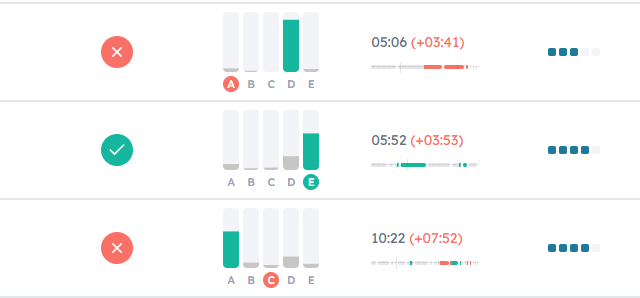
I made that mistake twice today by switching from the correct answer to the wrong one and it makes me feel silly every time lol! Just trust yourself!
@RyanKelly I'm late to this, but thank you so much! This is super helpful!
@Zanderantochow Thank you!
The first thing I had to force myself to do was become engaged with/interested in the passage. My eyes used to glaze over the text after a while, especially if the passage was a bit more complicated (science especially), but you have to really make sure you're reading everything intentionally. If I read a passage about horses being able to fly for example, in my head, I go "wow how interesting" or "I wonder why that is" and it works wonders for me lol. In essence, I have to react to the passage with faux interest to keep engaged. (Many people also say to read dense text outside of the LSAT to practice too, I think someone commented this!)
READ SLOWWWWW. Initially, I thought reading slower was going to waste a lot of time, but if you take the time to read and understand after each word, you'll speed through the questions faster than you think. Additionally, after I finish each paragraph I take notes on what the paragraph is doing (ex: introduces an argument, then discusses 2 sides of it). Once I finish the entire passage, the FIRST thing I do is summarize in my head what the passage was about in a sentence using my notes. If you're able to form an idea of the main point in your head, you're in a great position to answer the questions! Additionally, make sure to keep note of any opinions/feelings the AUTHOR might hint at or explicitly say in each paragraph as well. This is important because in many passages, the author might introduce the views of OTHER people (critics, scholars, scientists, etc.) and you HAVE to be able to differentiate between what the AUTHOR thinks and what the people mentioned think (or if they have similar views).
One thing that has helped me a lot was noticing that many RC (minus comparative) passages have a pattern. The passage will either (1) Introduce a concept/phenomenon and explain it, (2) Introduce a problem/argument and explain two sides of it (and maybe the author picks a side or gives own opinion), or (3) Introduce a common/traditional belief then show how a recent idea/discovery may go against it. This might not be an exhaustive list, but I've noticed this a lot during drilling.
RC for me took a LONG time to get better at but keep in mind that RC is essentially an open book test: the passage is always there for you to reference so don't try to memorize things. I've noticed the test makers loooooove to put answer choices that seem sooo similar to something in the passage, but when I reference my notes and check the passage it was never there! IMPORTANTLY, make sure that when you pick an answer, you can reference WHERE in the text supports it.
TL;DR:
(1) Become engaged with/interested in the passage (even if you don't care for the topic lol)
(2) Slow down when reading: understand each paragraph and understand author opinion and opinions of others, if stated
(3) I feel that RC passages have a pattern to them, be on the lookout for how the passage is set up.
(4) Don't try to memorize anything, make sure you always refer back the text.
(5) Make sure you can point to WHERE in the passage the answer you pick is supported.
I understand if this could be confusing so do reach out if I can clarify anything!
*apologies if there are any typos lol!
@og8888 Awesome! I'll give untimed practice more emphasis so I can work on accuracy! I noticed I don't actually read much anymore outside of practice, so this might be my sign to pick up reading again, thank you 😊!
@ANP These are all great ideas, thank you so much! I'll definitely need to work on making sure I can reference back to the passage when choosing answers!
@ANP To be very honest, I actually don't BR 😞! I don't think it helps me much, since my BR almost always mirrors my score 😢. I do make sure to take the time to read the explanations on WHY I got it wrong, but I'm not sure what else to look at 😢.
Hi everyone,
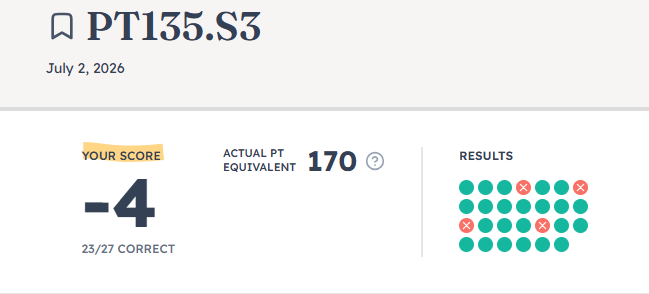
I've been consistently getting -4 on RC lately and I have no clue on how to improve my accuracy, since the question types I get wrong on each practice section differ.
Has anyone else dealt with this issue and have advice to share? I'm aiming for the September test and hope to improve by then!
I chose A, but that was because I thought that if the microdiamonds are the oldest fragments found (yet), that means in the event there ARE older fragments found (ex: 4.3 billion years ago), it would still be less than 300 million years of crust formation in relation to Earth's formation (4.5 billion years).
@Isabella! Thank you! I self-studied since that was the cheapest option lol. I actually didn't feel the need to go too deeply into the ENTIRE core curriculum, since I had previous experience with the LSAT years ago when LG was still a section; I mainly just focused on question types I struggled with (ex: Flaw/Weaken/Strengthen). I didn't really have a specific system for which questions I studied first (because of past experience), but I would move on to a different type once I got comfortable in my thought process for answering it (ex: get familiar with the right type of flaw answers and get them correct more often than not).
Initially I would do around 5-10 questions of a given type a day to practice until I felt I knew how to predict answers after reading the questions. When you move on is really up to you but definitely trust your gut. If you find yourself struggling less or not at all with a question type AND you're confident, you're probably golden!
C!
Some statements have the double-sided arrow, so they can be read both ways! C would read like this: writers <-> readers. So some writers are readers, and some readers are writers.
@Zach_bramble It really depends, but I don't study for more than 2 hours a day, that's my maximum! Some days might be 30-45 min when I drill, other days could be longer.
@danjpeach96 I've been studying for around ~7 months and I personally found it easier to go from 140s → 150s (a little over a month) by building a general foundation of all the question types, and go from 150s → 160s (around 2-3 months) by learning which question types appear the most and paying particular attention to that. The hardest past has been the past 2-3 months where I saw myself moving from low 160s → to mid/high 160s, but never actually breaking 170, which I think stemmed from a lack of confidence in my thought process. I feel that scoring in the 160s shows I definitely know the material, but just need more exposure with constant PT'ing to hit 170 which I (finally) have!
@iselachavezg Thank you! It still feels surreal! Interestingly, my hardest struggle was actually leaving the 160s and the best I could really do to break 170 was just being disciplined about PT'ing! I PT once a week on weekends, but use the other days of the week for untimed drilling/PT review. I've started getting better and spotting (some) trap answers and usual right answers for the question types and I think that's what will really push you over 170! If you're focusing on accuracy during untimed practice and letting yourself form a solid thought process, it gets sooo much easier!
@DestinyLindsey Scoring in the high 140s/low 150s might indicate that you need to shift your focus to the foundational concepts of the exam. When I was scoring within the 140s/150s range on PTs, I realized it was because I never really sat down and learned the different question types and how to tackle them. That might need to be your focus first instead of mixing questions together and doing drills. I know at least for LR, when I first started studying, I learned about flaw Q's then studied them over and over until I had a grasp on it, then moved on to other question types and did the same thing. You might just need to develop a good foundation FIRST. I hope this helps even a little!
@j_w180 Definitely! Even now I still struggle with that, but you WILL do better once you trust your thought process!
@KMayo Nope! I still have around 15+ to use, including ones that were originally specified for drills! I do my best to test every weekend, but ONCE in a blue moon I won't PT on a busy week, so I still have material!
@j_w180 Getting all the questions right untimed is a GREAT sign! It shows you have some good understanding of the material and a solid thought process!
As you mentioned, sometimes anxiety causes dips in performance, but you honestly have to start trusting yourself: If you can get it right untimed, you CAN do the same under timed conditions. Use the confidence you had in the untimed practice and apply it to the timed practice. It's easier said than done, but once I slowly started doing this, I started having EXTRA time towards the end! It might also help (in my opinion) when practicing to focus on ACCURACY and ignore the time. That way, when you review and you've done, let's say, only 10/25 questions, you can at least be sure that the majority of those 10 questions are correct to understand your thought process and why it might be slowing you down.
I would also advise that if you're someone who feels they may need accommodations, maybe you can request additional time to alleviate some of the anxiety.
I'm interested!