


General
New post65 posts in the last 30 days

My study plan keeps changing dates. I am not sure why... I started May 8, and then it changed to say my day 1 was May 10, and now it has updated to day 1 being May 11. I am not sure why this keeps on happening or if there is a way to fix it?
Thanks!

Find study partners, compare your progress to others', and snoop on your peers' results with our new People page.

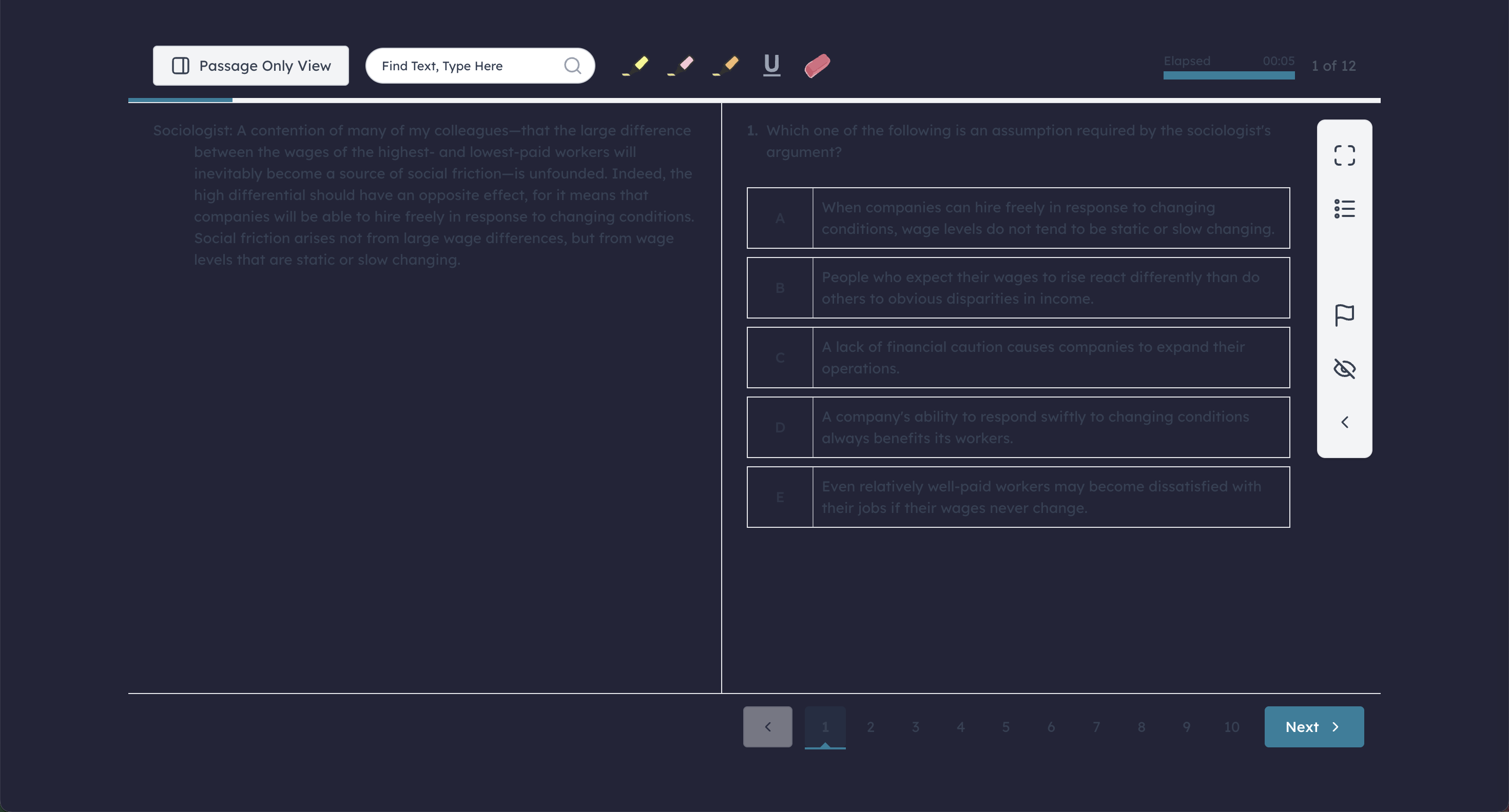
When I try to practice using the new post-August 2026 law hub display, it automatically goes into night mode. Is this just a glitch that occurs because the feature is in beta testing or is there a way to change the color of the background?

I am having issues with custom drills. i tried a different browser and on my ipad, nothing is working. only first 12 questions are loading

There are so many aspects of the new format that do not make any sense. First off, on RC you have far more scrolling to do. Everything is squished. The only solution is to make the words microscopic...
Second, the toggling to hide answers does not make any sense. Who thought that was a good UI change?
I saw one guy recommending making the background purple just to see everything better? I mean my word... what have we come to
Third, I dont even know... im just ranting at this point.

Hello everyone!! I just took an argumentative writing test on Lawhub for the first time, and I want to know how is this from your perspective. I have less than a month to study for taking the real test. I would love to hear every advice you can give me!!!! Here is my writing:
-----------------------------------------------------------------------------------------------------------------------------
Emphasizing career preparation over teaching general, broad knowledge would be a serious mistake which is to be avoided at all costs. The general knowledge acquired through one's university studies are so valuable that those without it could find moving in life a lot difficult. The university education is an investment in the first place. This investment, while partly being about having a good career path, is still, a beautiful way for discovering and building oneself.
Building upon this argument I will be in an agreement with the ideas from the second perspective. University is a place and time where you discover yourself, where all the knowledge acquired is stepping tool not only for getting a great job after graduating, but also for finding who you are and what your own perspectives are. Illustrating from my own experience I would emphasize how transformative the university experience was for me. Before starting my degree I thought only about what kind of job I will get and how much it will pay me while not even thinking about if I would like what I will do or not. I have acquired broad range of knowledge even from my first year of university which helped me realize of how little I know about my own self and about everything else. Every opinion, every perspective I had before starting the university has been redefined or at least, changed in some way. This change not only helped me in understanding my own values but also helped me to change my career path. I realized that I am not who I was before and I, probably, never even wanted this career path. This realization was only possible through acquisition of broad knowledge that was given by the university. If we consider the alternative option, if my university was fully focused on teaching me about my career and how to excel in this path, I would have chosen a path that wasn't mine to follow. So, broad knowledge might not directly influence how strong of a candidate or how successful employee one will be, it, nevertheless, directly guides one to the path one should and ultimately wants to take.
As we can observe in perspective one, the emphasis on career education leaves out the opportunity of discovering oneself. While I fully recognize that the argument stated in this perspective regarding today's job market is probably correct, still such a view of university education leads one to live for work and not use work for living. Another interesting point is made regarding contributions, specifically - contributing to society which is something that will be achieved even without career education. The knowledge acquired through university creates broad skills that can be useful in so many instances that one could contribute to society in so many different ways rather than being professional in only one route.
While I defend broad teaching by universities, I, nonetheless, understand that a lot of students have sole motivation to be as successful as they can in their respective career path. This motivations would lead one to emphasize career readiness more than knowledge of different subjects. But this is mainly what I was arguing in the preceding paragraphs, this is the example of someone who found their own way and wants to follow it. But while teaching broad knowledge could help diverse range of students, such approach as career education is mainly beneficial to those students who have already found their way and their identity. This is while being unjust, is also depraving career focused students from discovering a lot more than they think is possible. Even if they don't discover anything new, nonetheless, they will be certainly sure on their chosen path and ideas.
As I defend teaching broad knowledge, I must emphasize, in case there is a counter argument that this way is not creating ready students for their career, that this broad knowledge leads one to be able to adapt to different environments, and in turn prepares one to take on wide range of career paths and responsibilities. The skills acquired from broad knowledge are essential for achieving a beautiful and wholeheartedly desired life, while skill for career success can be earned through working, The time in university is not unlimited, thus it would be best used to acquire as much knowledge as possible and discover deeply who one is and what life they desire the most.

Hi, on the internet and in the past, it seems like users were able to make custom drill sets. When I go to drills, however, I don't see any buttons to do this. It has drill templates at the bottom but I don't know how to make one. When I go to questions and add filters, there is no button to create a drill set. Can somebody please help me figure this out?

Is it possible to blind review the questions you got wrong on PT's that you import from Lawhub? Trying to figure it out but it seems like there's no official blind review just the ability to review the blank question itself. Any guidance would be super helpful!

Hi all! I am going to be in DC from May-August doing an internship. I will also be studying for the LSAT and would love to put together a group that is available to meet in person consistently. If you are in the DC area and would be interested in a study group, please message me!

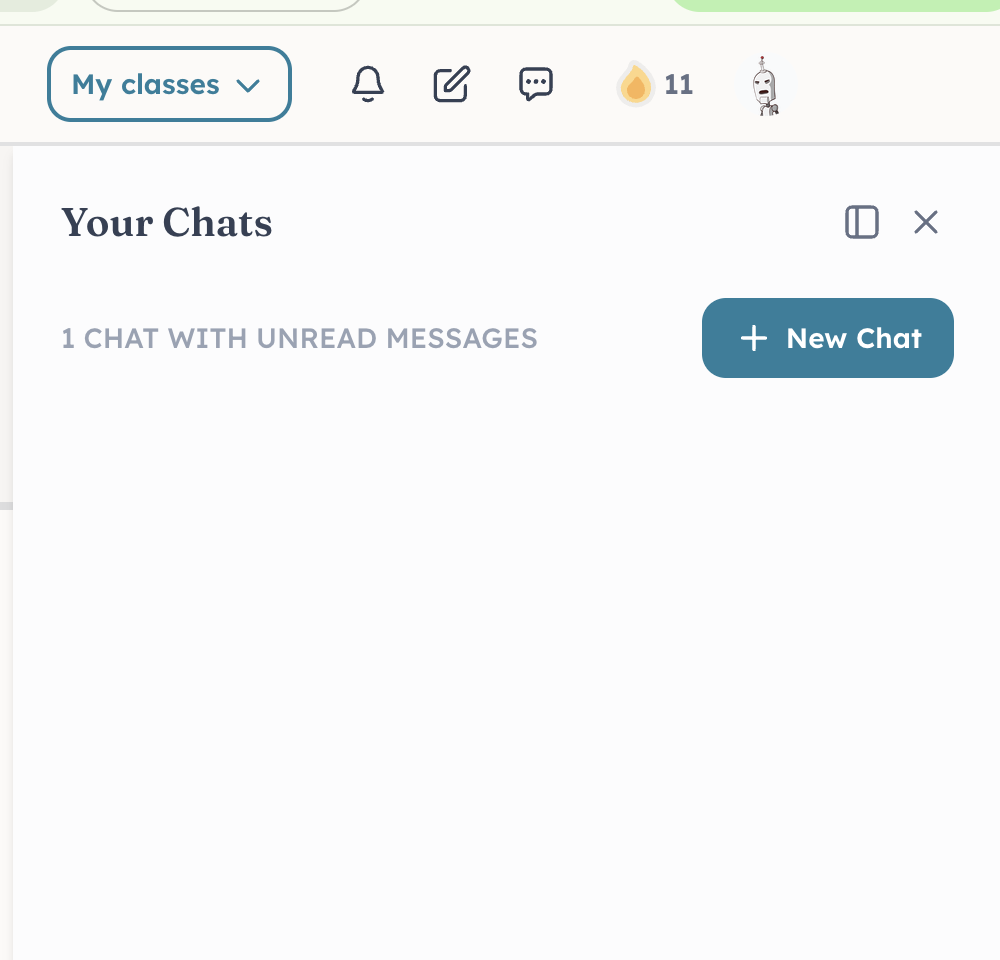 Hi! how do I see my messages

Hey, hope everyone is doing well! Will 7SAGE be updating their website to use the same interface that LSAC will be changing to for the August 2026 exam? That would be super helpful and make it much easier to get used to! Thanks!

Hi All,
I have only been on the platform for the LSAT for about 4 days and I am still getting a sense for best practices. Is it typically recommended to start with the 7sage study plan or to go through the foundations section of the lesson library.
Thanks!

Just the title...

Hello everyone,
I wanted to know if there was a best time to do the adaptive drills for the previous segments. I'm nearly halfway through the lessons portion and noticed that from my previous completed days I have adaptive drills that are available. I wanted to know when is the intended or ideal time to complete the drills?
Thanks!

I've been consistently scoring in the 152-156 range on practice tests, but upon blind review I'll score 165-170. This happens to me on drills too. I'll miss several questions, then get them all right when I review. This tells me I have the knowledge that I need to perform well, but lack accuracy under time constraints. I'm sitting for the June test and need to break this cycle! Any tips?

I am on week 8 of practice blocks and there is no preptest in the block. Is this a glitch?

My name is Amber, I am currently a full time worker looking for some study friends to help keep me accountable. I am taking might LSAT in September of 2026. As well as some advice on where to begin.
I just recently started this app a couple of days ago and I have a study plans set up to begin on Sunday April 26. I’m looking for anyone to give me advice or guidance, towards what live classes would be best for a beginner who has no knowledge of anything in regards to logical reasoning and reading comprehension, that kind of coincides with a study plan. The study plan I have set up, starts with foundations and then moves onto logical reasoning, and then reading comprehension. So I was wondering if anybody had any ideas as to which pre-recorded or live classes go best with foundational, information, Grammar, and. any other beginner foundational classes.
As far as study friends to keep me accountable, mainly just looking for a solid group of people who can learn off of each other, and possibly study together virtually. Thank you so much!

Hi everyone! I’ve been on the self-study live plan for about 8 weeks now, and I’m currently in week 8 of 11 of the foundations phase. I actually started studying back in January 2026 on my own, then joined 7Sage in February.
I feel like I’m improving, but I haven’t had a clear checkpoint yet to see how I compare to my initial diagnostic, which is making me a little unsure about where I stand. When do you all usually start taking practice exams? Is that something the schedule will guide me into, or should I be starting on my own around this point?
Just want to make sure I’m on track and not falling behind, would really appreciate any advice!

Hi!
I am a first year teacher getting ready for the EOC exam and trying to study for the LSAT, my biggest problem is juggling work and my crippling self-doubt. I know I wanna take my test closer to August or September but I need help on just getting over myself and setting a real plan.

Hi everyone! I’m wondering whether there is a way to adjust the balance of LR vs RC drills in the practice section of your study plan. Right now it gives me basically 3.5 days a week of LR and 1.5 of RC, but I’m pretty solid on LR and need more RC practice. Is there a way to customize your practice schedule to achieve a more even balance without ignoring my study plan and just doing drills outside of it? Would like to have them laid out for me automatically and be able to track how many I’ve done/have yet to do for the day/week. Thanks!

To preface, I may just be very tired and dramatic right now.
I have been steadily studying the core curriculum for the last 5/6ish months with the hopes to finally make it through to the "Next Steps" tab after the on and off journey I've had with 7Sage since I started studying in early 2025. I was really excited to get to that tab and learn about the methods recommended to continue studying and prepare to actually take the test, but with 7 hours left of RC, its GONE!!! 😭 😫 😫
Did it move to a different area? Is it on another page of the site? Where can I find it? I was really looking forward to that, and I'd really like to still go through those modules as I begin to start drills & PTs!!
If anyone knows where I can find those modules, please let me know!

Hi! I am going between Pace, Hofstra, and Albany for law school. Albany is non conditional but the other two are conditional. What should I do?

Woww screaming, crying, throwing up!! As someone who has used 7sage since 2024 and has taken the LSAT more than 4 times thought I owed it to myself to let everyone know who struggles with this test that there is light at the end of the tunnel lool.
Quick shoutout to some amazing tutors that, although I never did one-on-one tutoring with them, when I got the chance, I always tried to attend their classes. Big shout out to Alvin!! Another BIG shoutout to Bailey!!! Both of whom were super effective and encouraging during this longg process.
A couple of tips, as someone who has taken this test (a lot), I find that although 7sage is AMAZING, the best way, at least to me, to go about studying is a combination of resources! Don't shy away from the books! (Loophole by Ellen Cassidy, LR Perfection Dragon Test Prep, and Powerscore RC Bible are some of my favourites).
There aren't a lot of Law schools in Canada, so if any future Canadian lawyers or applicants for the next cycle want to reach out pls do!
Congratulations to our April Community Lottery winners!
Your $50 gift cards are on their way!
Want to win in May? Post or comment on the forums, add a profile picture, and track your applications if you've applied to schools this cycle—that's it!

I clicked on the "Consulting Admissions" ad on 7Sage and saw the $3,000 - $8,000 price tag. I'm absolutely floored. Who can afford these price tags? I am sure the team did a due diligence on the market and have a SWOT analysis somewhere that points at the feasibility of these prices. (Well-- I assume this is the case!) But peeps like me? Heck, I'm using my healthcare benefits rewards program to pay for the 7Sage subscription. (Every step counts!)
At first I felt intimidated. I have to compete against people that can afford ultra professional consulting? But then reminded myself that some people can very much pay $3k and still not get an acceptance to their dream school (ouch). Others don't pay anything and get scholarships (goals). These are competitive and unpredictable cycles. Who knows what next year will look like.
To this I say: Amor fati, my fellow applicants!
**If you're able to afford these prices, please DM me if you're hiring. Or would like to sponsor.