


LSAT
New post300 posts in the last 30 days

When it finally clicks... Finished undergrad in May after being out of school for almost 20 years. (I went into the Air Force after HS, then into my profession.) Originally I planned to take the summer off then start studying, but I felt it was better to strike while the iron was hot. If anything, I'd get an idea of the areas where I was weak/strong. Since my degree was in IT with focuses in data analytics and health informatics, all of this was foreign for the most part. I started around 152-ish but hovered around the 158 mark since June. Having ADHD, I was more encouraged than worried. Personally I felt like I just needed to have that moment when my mind could lock in and find that strategy that made the questions come alive, rather than me just reading them. And when that happened I reinforced it, until it became personal. Me vs the questions! I test on the 7th. DIALED IN!! 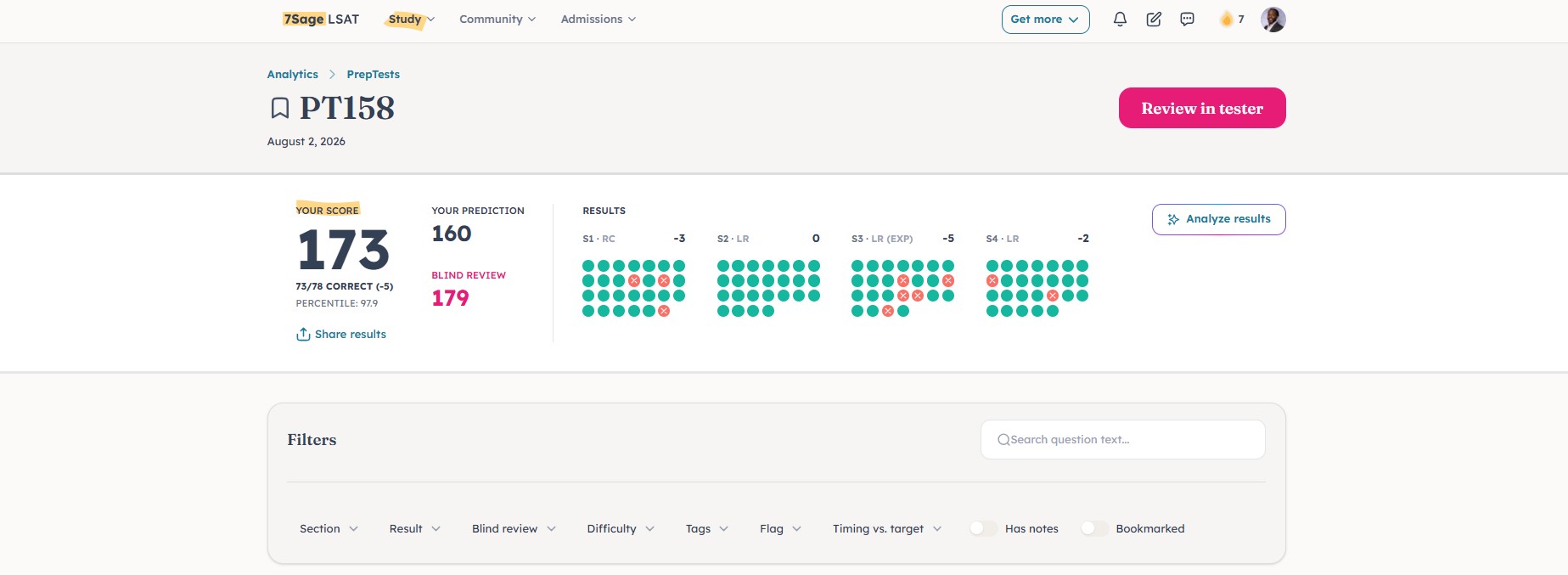

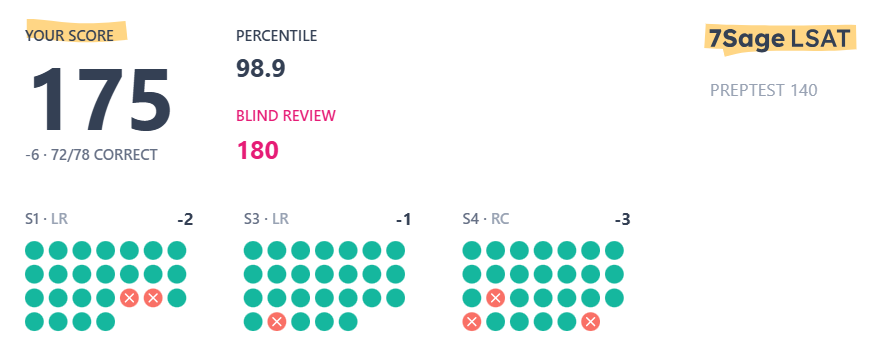 Don't know if I should laugh or cry.. Is this real life?!?!

I am feeling so frustrated and defeated while drilling Reading Comprehension questions because, as suggested in lessons, I create a very low-res summary for each paragraph, and I do not just skim--I read thoroughly so that, allegedly, I don't have to go back and re-read several times. However, lately I finding my low-res summaries not helpful in the least because several question stems ask for specific dates, singular words, etc. So I am wondering what is the point of creating a very brief summary to reference for the questions when I still have to hurriedly search back through the text for all of these specific numbers, words, stated facts.

I didn't do well on my last PT, which is a contrast to my performance on the one before, where I did very well, my second-best score. My biggest drop is RC, which I am usually strong in.
Edit: I spend so much time and money on this, and what happens if it's all for nothing? What happens if I don't go to law school? What do I do?
Edit: I wanted to take the exam is Oct and thought since I was making improvements I could get a better score than I thoight I would but nope

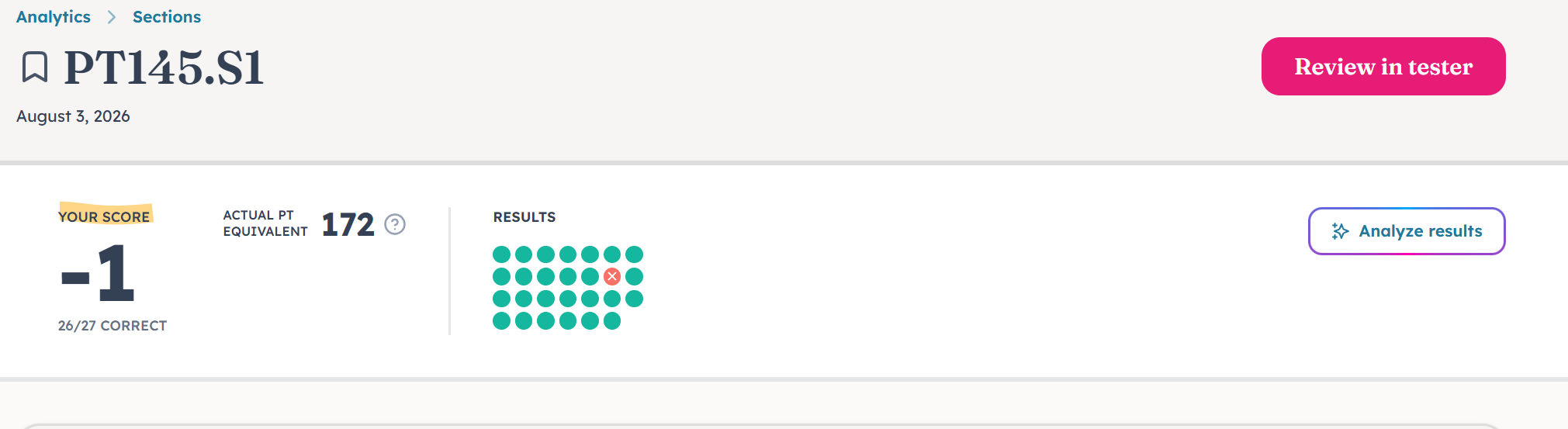
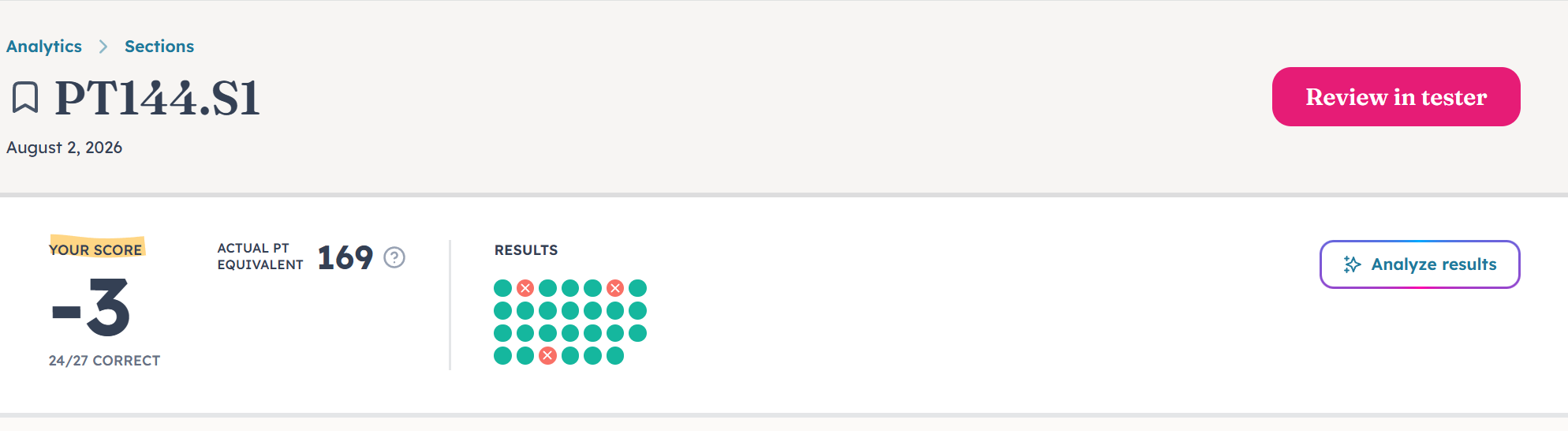
RC is usually my weakness but I received a -3 on a practice section yesterday and then a -1 today. Sharing this it makes me feel happy and confident going into this week's exam and I love this supportive community!!!
For others struggling on RC, I've found that what has improved my score is not taking notes of the passages because it's a time guzzler (again, at least for me) and to spend more time reading them and the questions. I also have found that correct RC answer choices won't include information that's not in the passage, so allotting enough time to check the passage for what it states is key.

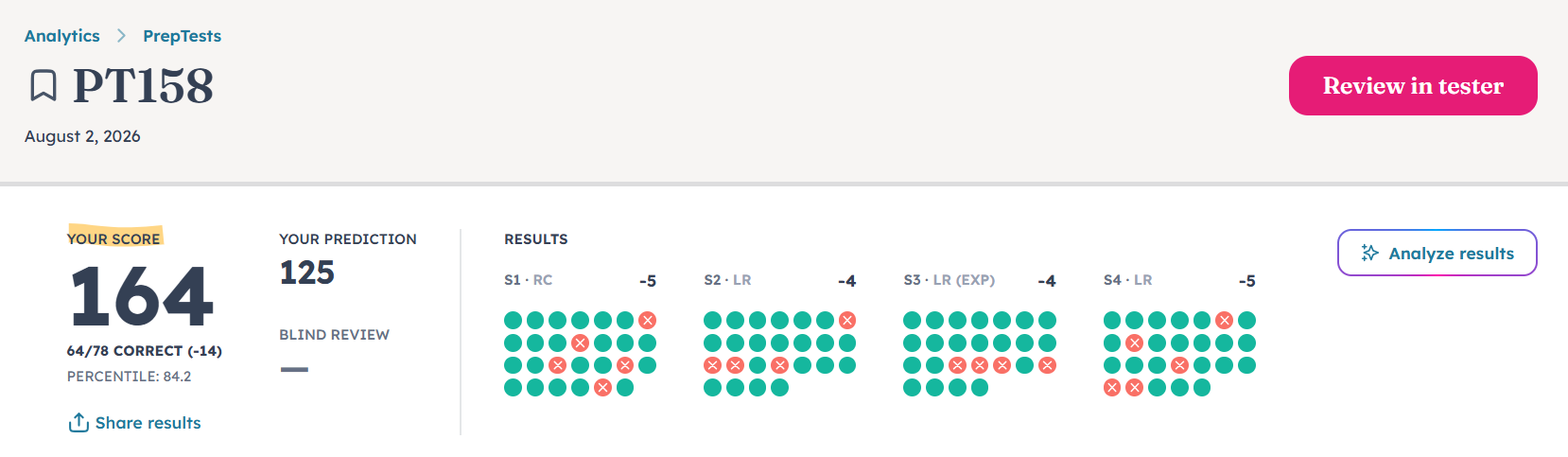
I've made some really solid progress in LR and RC, and I'm definitely not upset with my score. That said, I am a little disappointed because I really want to break into the 170s. After reading through the explanations, I realized that, aside from a few random misses, my thinking actually lined up with the correct reasoning most of the time. Do you have any advice on what it takes to make that jump and consistently score in the 170s?

I'm looking for more perspective on this older question for which there isn't much help online––
Being a Principle question, it has a clear "should" gap. After reading the stimulus, I immediately started looking for an answer choice that says something like steps should be taken to educate people...
The only answer choice to do that is (B), so I picked it. I admit that "formulating ethical guidelines" is not the same as educating people, but it does count as a step toward educating people, which is what the stimulus' conclusion is about. Hence, no red flags stood out to me with (B).
Yet, somehow, surprisingly, (A) is the correct answer. Despite the fact that it misses the "should" gap. All it does, in my view, is strengthen the argument's reasoning by asserting a link between "education" and "increasing one's moral responsibility."
Clearly, (A) and (B) have their own weaknesses. (A) lacks a "should," and (B) is less precise than (A). How do I choose between two imperfect answers? Which weakness is greater?
Is there perhaps a definitive lesson can I conclude from this question to decide between two imperfect answers in the future? Happy to hear anyone's thoughts.

Hey guys, I've been practicing for a long time now and I'm running out of PTs. I'm taking the August test, but I'll definitely need to retake it a few times to get to the score I'd want. I'm currently scoring in mid 160s in timed PTs and getting near 180 on BRs. I'll def need a lot more practice to close the gap..
Anyone thoughts on what I should do with the weekly PTs moving forward? Should I a) retake some of the earlier ones that are not being used for drills (e.g. PT 130-), b) using legacy (e.g PT 7-17) but fresh tests, or c) something else?
Thanks in advance!

Hi guys! A few days ago, I took a 165 PT which is a personal high for me (yay!!!)! I felt so good about it, as I'd been averaging around 158 for a while and it seems my studying was working. However, two days ago, I took another one and got a 152 (my lowest). I'm very confused, and during the test I felt kinda overwhelmed. My first test is Friday. I really don't want the 165 to be an outlier.
Feeling kind of defeated. Is this normal? What do I do?

Dears,
[please respond only after reading GTown and GW Law's evening program admissions details on their website]
Does anyone here actually know someone (or have personal experience) that has received entry into this GTown or GW Law Evening Programs on this “LSAT-optional” route? Notably, the route under the policy that enables such optionality due to extensive work experience. Any considerations or details that would be useful to share? I am interested in the facts of the policy and its application or implementation by the law schools during admissions cycles, not any personal opinions or feelings.
Thank you so much.

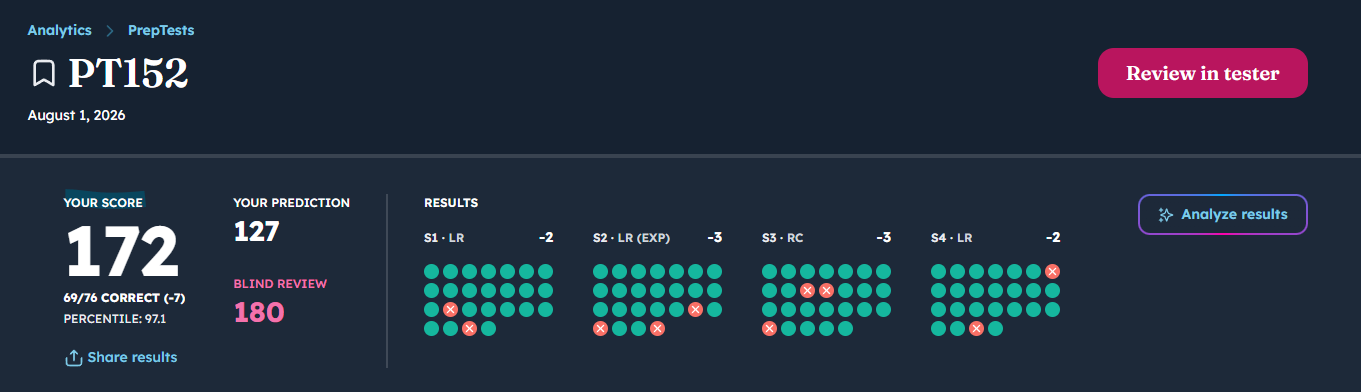
im feeling like D Rose when he scored 50 when he was on the Timberwolves

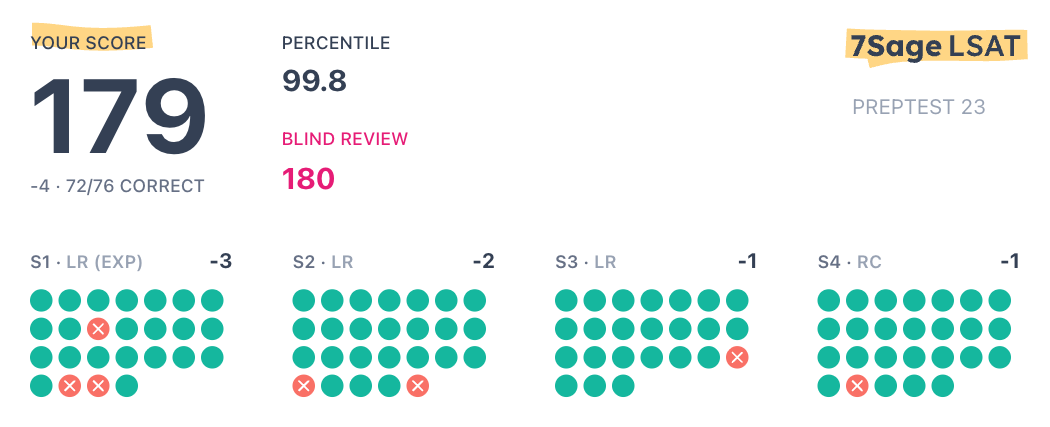

Is anyone else having trouble with logical reasoning ?
If anyone has any tips please let me know

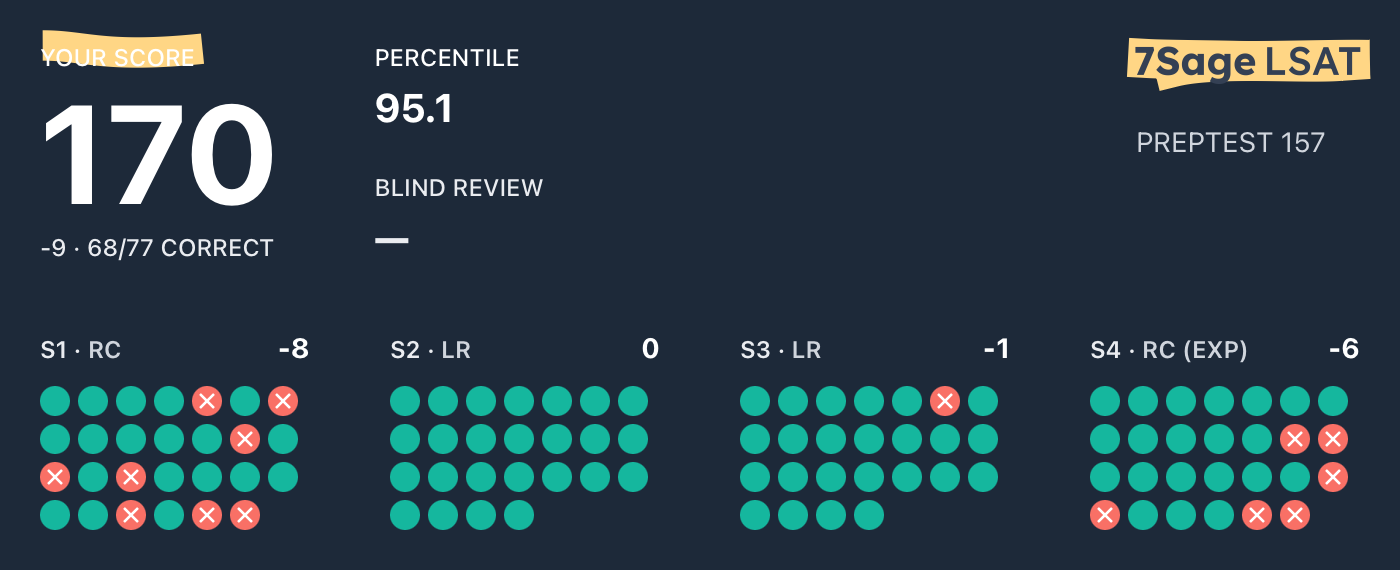

How do I start reaching my blind review score? Is it just practice?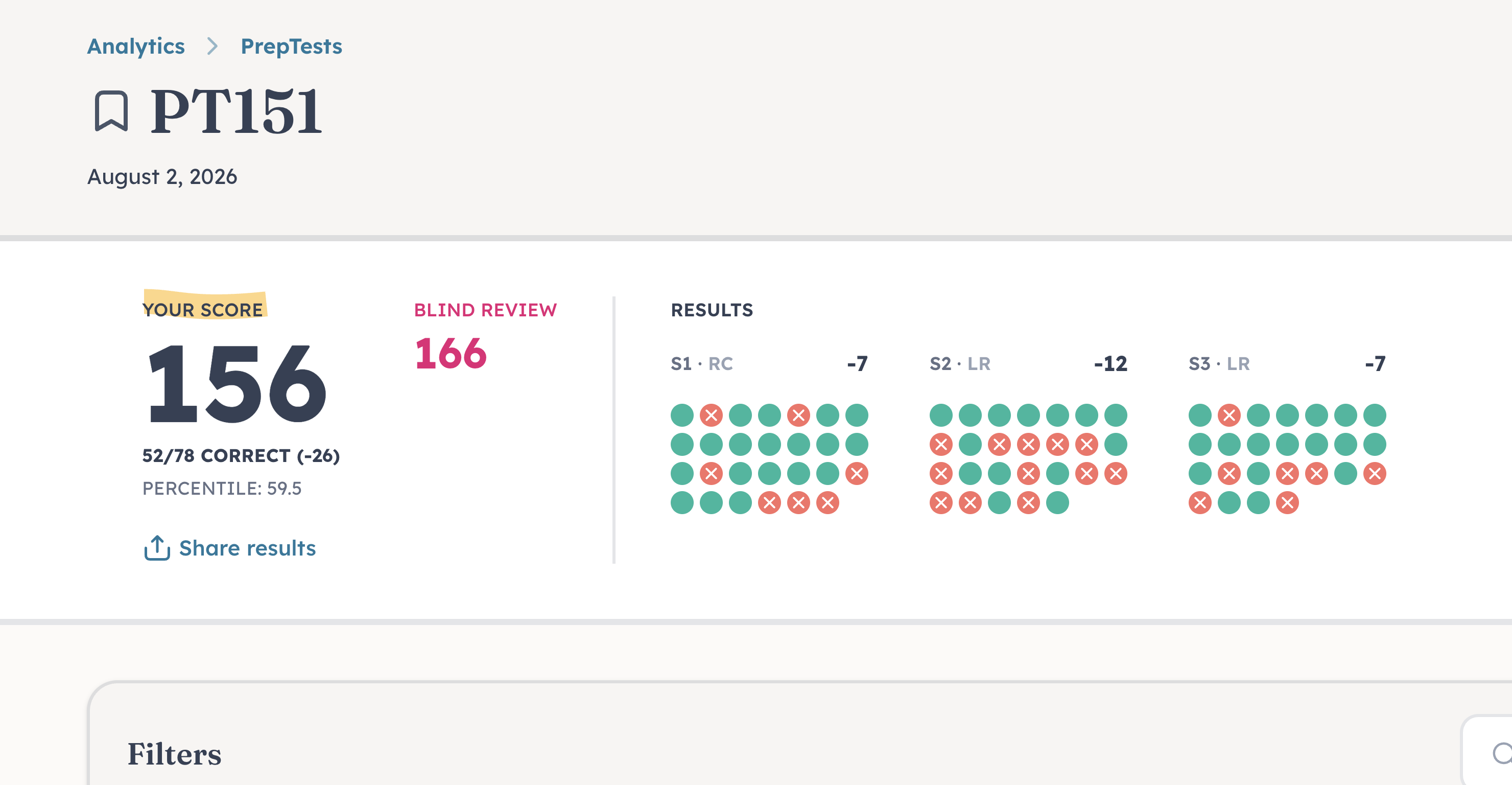

I just want to be sure I have all the right things. If anyone has taken this in the past, I would greatly appreciate hearing what you brought!!!

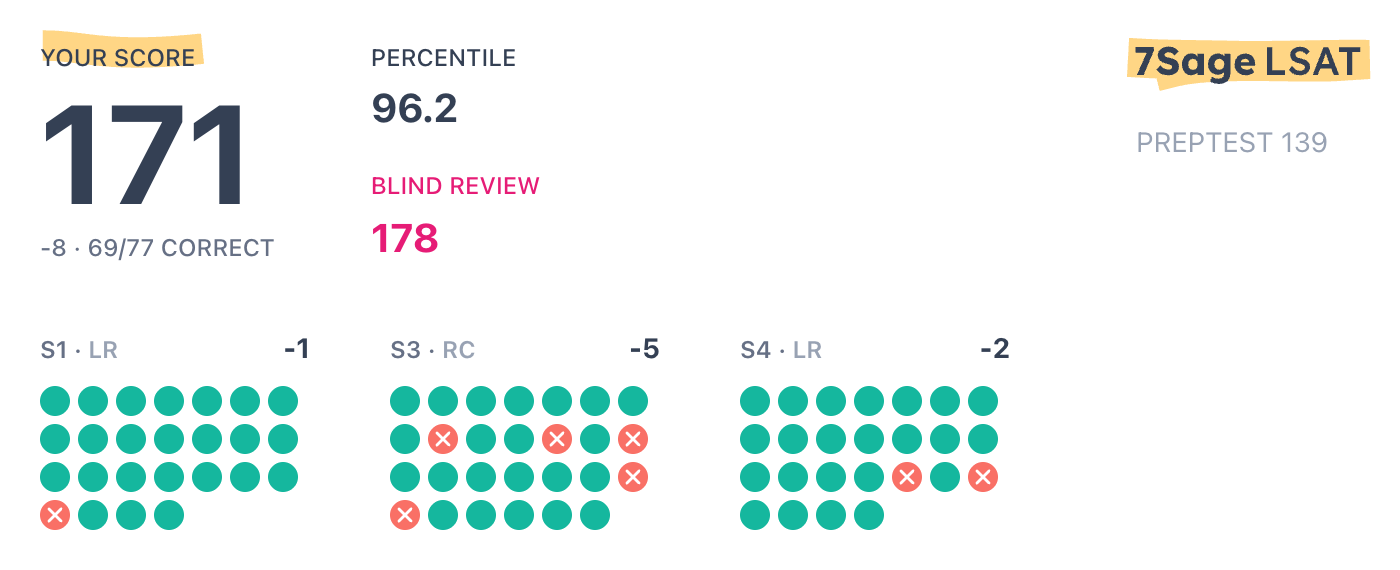 This is the first time i've ever broken the 170s, my highest PT so far before this was a 165 i'm actually in shambles because i was going to move my september test 😭 never give up kids

Author ''overlooks the possibility'' vs ''takes for granted that''
Can you give examples so we understand how to discern these during the test
Thank You

I am running out of fresh content, but I frequently get questions I've taken before wrong- regardless if I got it right or wrong before, and it's because I think oh I got it wrong last time bc of this blah blah even if I didn't. I have tried to tell myself don't think about the last time you took this question, when I familiar questions, but it doesn't help, does anyone have advice?

Hey Everyone!
I'm hoping to hear from some people on how to break out of a plateau in the 160 range. I have done like 5 full lengths over the past month and a bit and I keep hovering in the 160-161 range despite me reviewing my mistakes and drilling my weaknesses. Is this a common occurrence? Is there any general advice that can be provided, or is it really dependent on me personally?
I've signed up for the August and October test dates. I am going to use my August attempt as a test run for the format and getting comfortable in the testing centre, and then hopefully my score will closer to 164-165 by the October date. I thought I would be able to hit 165 by August, but this plateau is holding me back and I just can't seem to shake it!
Any help or tips or comments are greatly appreciated. Goodluck to all the other August test takers this week!!!

 I FINALLY broke out of the 150s a week before my exam. Honestly started tearing up because I have never scored this high, are there any tips that I should keep in mind before the official test? I feel like I was skipping questions that I found difficult and that really helped me but I am just so happy with this final score.

Can someone find me the link the tool predictor that 7Sage released recently that shows the average number of tests it takes for a user to get to a certain score based on their current score?
I’ve looked everywhere but can’t find it! Thanks!!

Hi! I'm about halfway through the LR curriculum, and I recently started taking one PT every two weeks. My current PT score is 149.
One thing I've noticed is that I put a lot of effort into the first 15 questions of each LR section. By the second half, I start feeling the time pressure, which causes me to rush. There are even some questions I don't get a chance to look at. During my latest PT, I tried prioritizing quality over quantity, focusing on answering fewer questions more accurately rather than rushing through all of them.
Overall, I feel much more confident and composed during the first half of each section, but the second half is a different story. I can recognize question types fairly quickly now, but I still struggle to remember the best strategy for each one. I'm thinking about making flashcards to reinforce those approaches.
For those of you who have been through this stage, I'd really appreciate your advice.
How did you improve your timing overall? What strategies worked best for you?
Could you share any tips and habits that made a noticeable difference during your timed PTs?
For context, I study about three hours a day.
Thank you!

Do drills account for time when giving you scores from 120-180

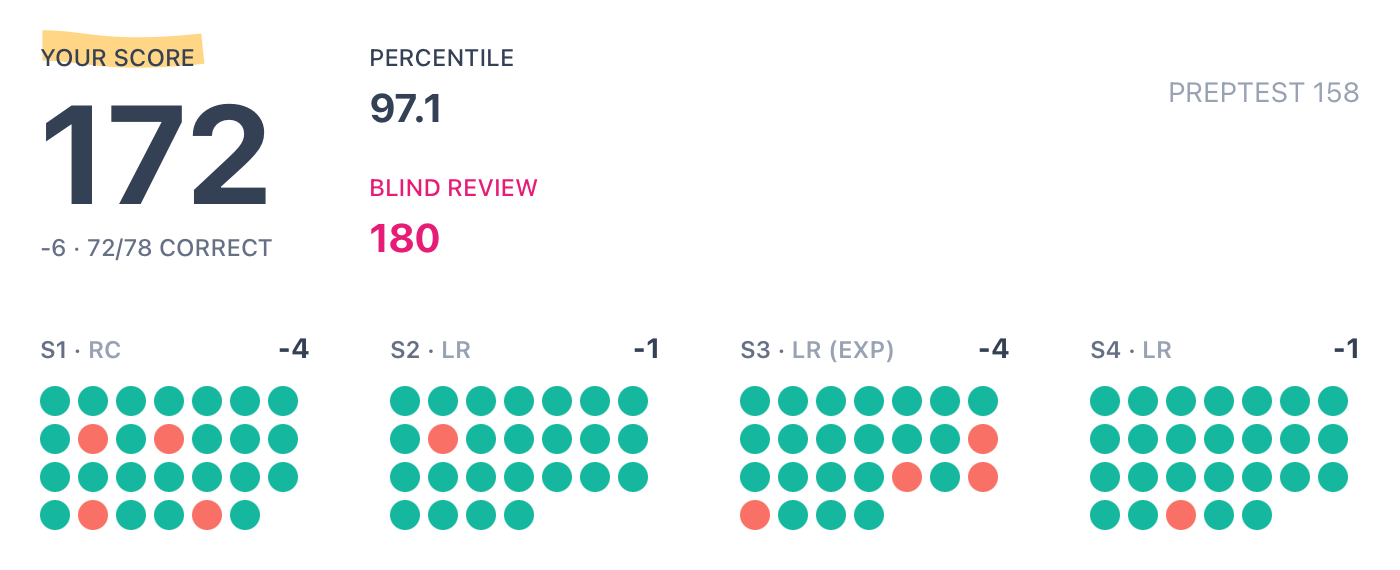 First time breaking 170 and a big confidence boost on my last PT before August test day--got lucky with the experimental section but I'll take it! I would be thrilled with this on test day. Any tips for carrying this momentum forward over the next week?