


- Joined
- Nov 2025
- Subscription
- Free
Admissions profile
Discussions

other things that help is to translate into plain English:
precondition = necessary (group 2)
so "It has been argued that freedom of thought is necessary for intellectual progress"
invariably = always
so C would read:
In societies that protect freedom of thought, thinkers always lack intellectual discipline.
When an argument says
X is required for success
and then concludes:
Therefore Y (another supposed requirement) fails
The assumption almost always looks like:
Y prevents X
Which is exactly what happened here:
discipline required for progress
freedom supposed to help progress
Intellectual discipline is required for intellectual progress, therefore the argument that freedom of thought is required for intellectual progress fails.
So the assumption:
freedom prevents discipline
Another way of thinking about it that helped me is to connect the chain in this way:
intellectual progress -> full implications -> intellectual discipline -> /freedom of thought
so for C we get a correct contrapositive:
freedom of thought -> /intellectual discipline
@JKang bro it literally says "Classically trained opera singers number in the thousands. People who are not so trained number in the billions."
no wonder you guys need videos to make it through - was just trying to add visuals to a section with all text. best wishes.
Another tip I got was to diagram every question or drill, even if I thought I understood it, until the patterns became intuitive. If you don't understand the reasoning, you can always memorize rules.
What helped me was to read these and if they didn't intuitively make sense, sit with them for as long as it took until it clicked.
Write them down on paper, poke holes in the why, ask Chatgpt for more examples and drills, look up common answers for flaw questions, etc.
Here are some more complex examples of invalid arguments that you may see on the test:
(1) Confusing Sufficiency for Necessity:
All published constitutional scholars have advanced training in legal theory. Dr. Morales has advanced training in legal theory. Therefore, Dr. Morales is a published constitutional scholar.
(2) Denying the Sufficient Condition:
If a company qualifies for federal renewable-energy subsidies, then it uses solar or wind technology in its operations. GreenTech Industries does not qualify for federal renewable-energy subsidies. Therefore, GreenTech Industries does not use solar or wind technology.
(3) Affirming the Necessary Condition:
Any policy proposal that significantly reduces urban air pollution must limit emissions from private vehicles. The new proposal limits emissions from private vehicles. Therefore, the new proposal significantly reduces urban air pollution.
(4) Most Statements Are Not Reversible:
Most peer-reviewed articles in leading medical journals are written by researchers affiliated with major universities. Therefore, most articles written by researchers affiliated with major universities appear in leading medical journals.
(5) All Before Most:
All constitutional law professors are law professors. Most law professors publish articles on legal theory. Therefore, some constitutional law professors publish articles on legal theory.
(6) All Before Some:
All marine biologists working in coral reef conservation programs are members of the International Society for Marine Science. Some members of the International Society for Marine Science specialize in deep-sea hydrothermal vent ecosystems. Therefore, some coral reef conservation biologists specialize in hydrothermal vent ecosystems.
(7) Most Before Most:
Most urban commuters who rely on public transit read digital news during their commute. Most people who read digital news during their commute closely follow international political developments. Therefore, some urban commuters who rely on public transit closely follow international political developments.
(8) Some Before Some:
Some historical linguists specialize in ancient Indo-European languages. Some scholars who specialize in ancient Indo-European languages conduct field research on endangered modern dialects. Therefore, some historical linguists conduct field research on endangered modern dialects.
@Mmagicss I think you're right, the key point is certainty vs possibility. In this case, it may be theoretically possible that A and C overlap, but there isn’t enough information to guarantee that they do. On a must-be-true question, we need something that is guaranteed based on the premises. In contrast, a strengthening question might allow an answer that introduces a plausible possibility, even if it isn’t logically guaranteed.
I think it helps clear this up to say: It could be likely — but it could also be unlikely. and thats the nuance of the LSAT.
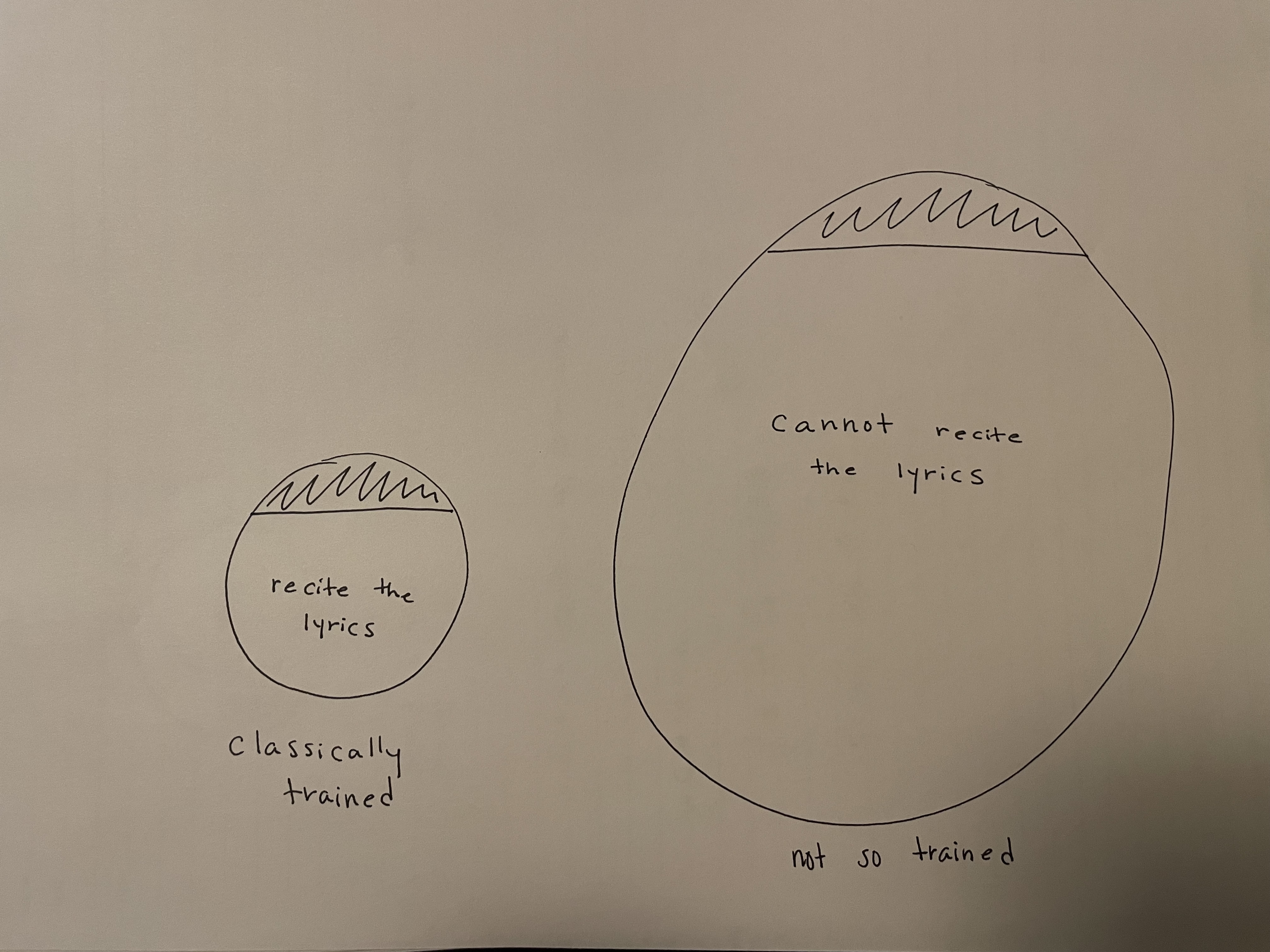 Based on the sizes of the supersets and "most people who have not received such training cannot" - "It seems likely that Anna was classically trained" sounds pretty reasonable to me
For those who have never seen Star Wars (me):
(1) All pilots can fly airplanes. Alex can fly airplanes. Therefore, Alex is a pilot.
This is invalid because someone could know how to fly planes and not be a pilot.
(2) Only pilots can fly airplanes. Alex can fly airplanes. Therefore, Alex is a pilot.
This is valid because anyone who can fly airplanes must be a pilot.
my first 3/3 question set where my time has considerably gone down. didn't think I'd see the day anytime soon
@yam I think your instinct makes sense in everyday language; “some” feels like it means more than one.
But on the LSAT, we’re dealing with strict logical certainty. Logically, “some” only guarantees at least one. That’s the minimum that must be true.
Could it be two people? Maybe. Could it be ten people? Also possible. But for a must-be-true question, we can’t go beyond what’s guaranteed. The only thing we know with 100% certainty is that at least one person can read.
I wouldn't say you need to rewire, just keep everything in context. If this were a strengthening question, then showing that two or more people can read might help.
wouldn't question #2 be:
capable of evolving -> well trained -> reach potential
I feel like 'evolve' and 'capable of evolving' are completely different.
I got a little confused on the contrapositive of #4 when thinking about sufficient and necessary conditions, so I wrote out this explanation to clarify my reasoning:
The premises form a conditional chain: if Sherlock Holmes visits the crime scene, he finds clues; if he finds clues, he makes useful deductions; and if he makes useful deductions, he solves the case.
From this chain, we can conclude that visiting the crime scene guarantees solving the case (visit → solve).
Taking the contrapositive of this statement gives us does not solve → does not visit.
This does not assume that visiting the crime scene is the only way to solve a case. It only relies on the fact that visiting the scene is sufficient for solving. Since visiting guarantees solving, if solving did not occur, visiting could not have occurred.
However, if solving did occur, it does not guarantee that he visited the crime scene, because the premises do not state that visiting is necessary for solving.
Does anyone else have days where they can't get any questions right? the drills are humbling me today. Im so scared im going to get to the test and be having one of those days
@CollinEsquirol You can use the idea of "translating" sentences with inferring so you could end up with something like The composition of seawater changes more slowly than it does in interglacial periods (as compared to what?) as compared to other periods. You don't have to use glacial periods verbatim.
The two classic LSAT mistakes
Mistake 1: Turning relative into absolute
“X is better than Y” → “X is good”
Mistake 2: Turning absolute into relative
“X is easy” → “X is easier than others”
Relative claims compare without making absolute statements. Absolute claims make standalone statements without comparisons. The LSAT traps you by converting one into the other.
Stayed on this question for 30 minutes before I realized E says physiological, not psychological