


- Joined
- Aug 2025
- Subscription
- Live
Admissions profile
Applications

Discussions

there isn't a drop down menu under "study" to create more drills. Where can i go to make drills? Where did the tab go
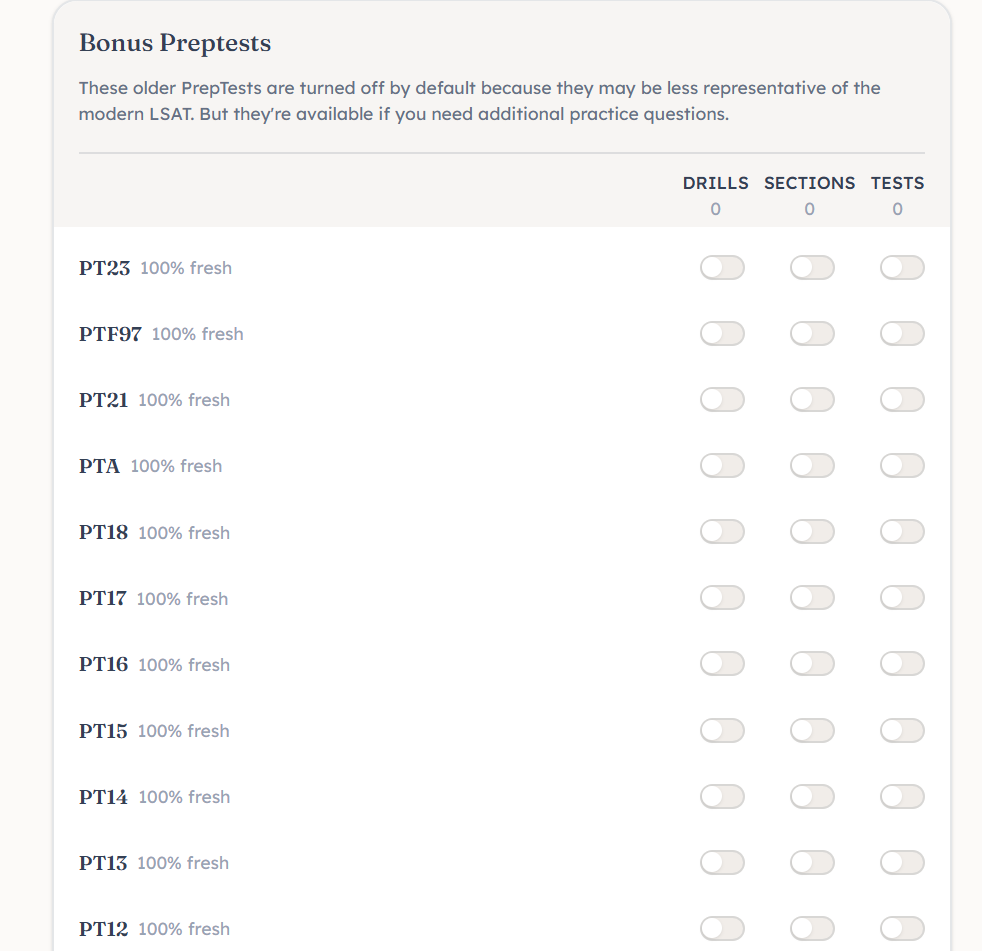 has anyone used any of these bonus materials and seen improvement/are they helpful? i am running out of fresh material and wondering if this would help.
Should I just use them for drills and sections or full length pts?
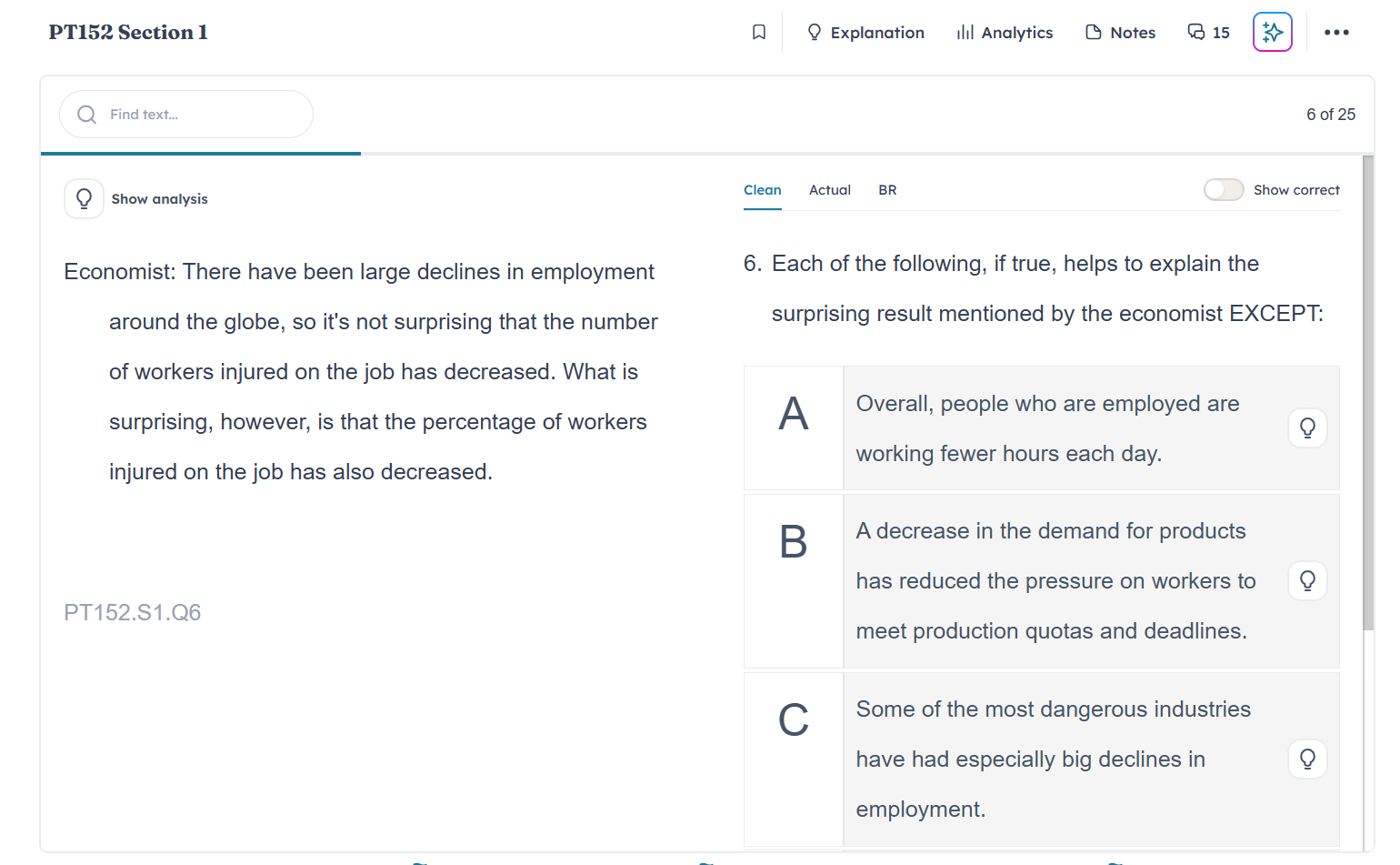
i had this issue a few weeks ago and it came up again while taking a practice section today

@CherryMayDelaCruz Thanks! I tried refreshing the browser and that didn't help. i can't join the meeting at the moment - please let me know when it is resolved!
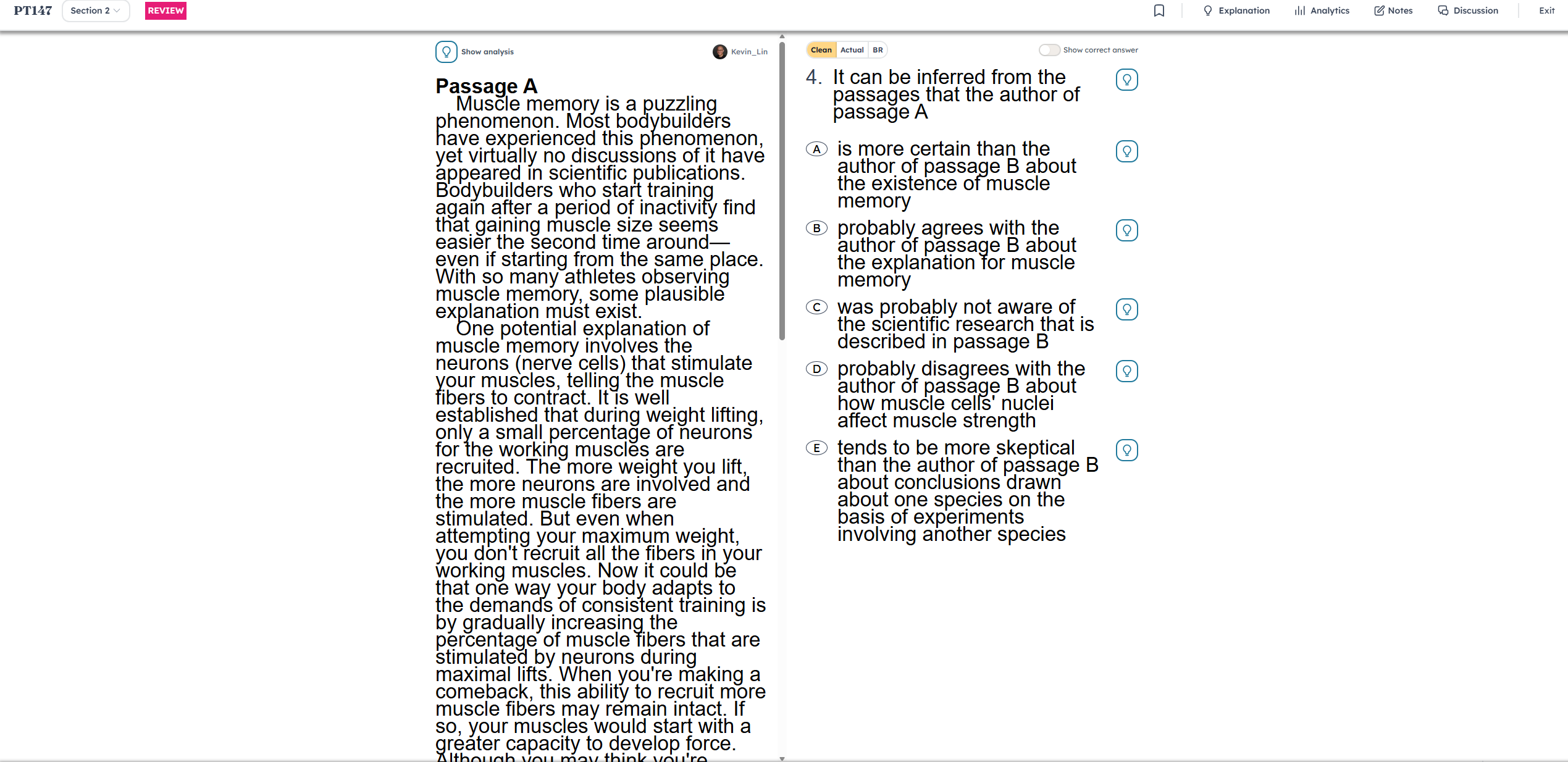 lmao dont know how this happened but how can i get the text to a normal size again LOL
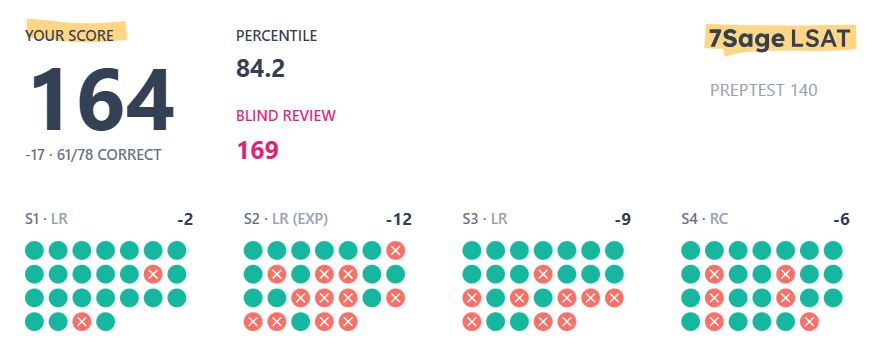 i have been getting -4 on individual LR sections but this PT completely upended my expectations. I even got a couple of the "easy" questions wrong. how do i fix this?????? Did anyone else also find PT140 to be particularly difficult?
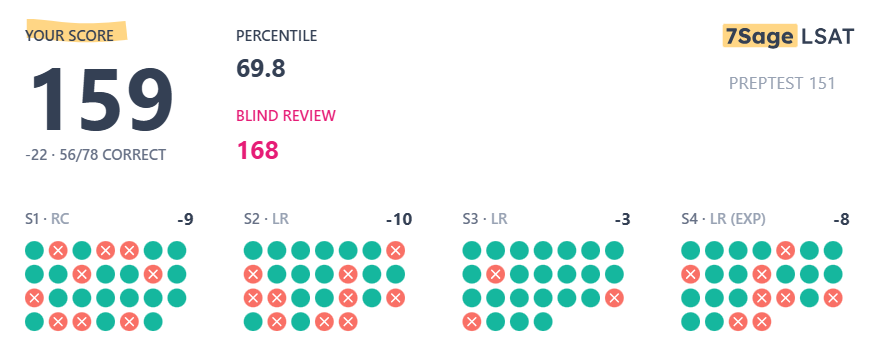
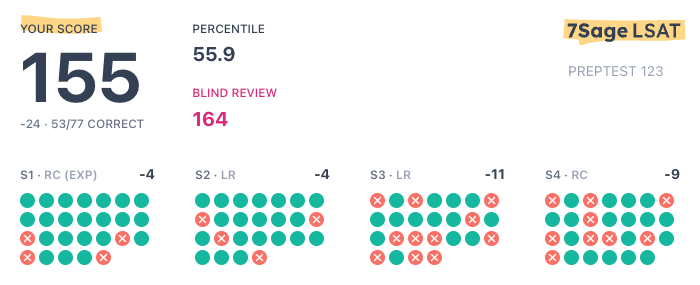
I just scored a 155 on PT123 (BR 164). I am aiming for 170+ by June.
I've been studying everyday for 3-6 hours since June 2025 (did the whole curriculum, read the loophole, blind reviewed a ton and do drills every day) and I just feel so discouraged. I really thought that I improved and understood the concepts better, but under timed conditions I just keep messing up. i suspect that S3 and S4 were worse due to fatigue and lack of concentration, but I'm still sad that I missed still missed so many.
Any advice?
For sufficient assumption questions I am a bit confused of whether or not we are allowed to use the contrapositives of the argument for the answer. For example if we have
A
B
the link we need to make is A->B but if one of the answers are /B->/A would that be the right answer choice?
I finished the 7sage Core Curriculum and read the loophole in October 31, 2025. In mid-November took a PT after and got a 156 (BR 163). My goal (even though it might sound crazy right now) is to get 170+, ideally in the mid to high 170s (aiming to take the test in April 2026). My main weakness is LR. After reviewing my incorrect answers extensively in my Wrong Answer Journal, I identified some recurring weaknesses, including 1) NA, 2) SA with conditional reasoning, 3) MBT/MSS questions and 4) parallel reasoning question types.
I work full time and study 2-4 hours a day after work and on the weekend I study 6-10 hours a day. However, I am not sure if I am using my time wisely. Could someone please give me some advice on the following:
When should I move on from drilling each question type? For the past week and a half, I've been doing 5 easy, 5 medium and 5 hard questions for NA (unlimited time) and then thoroughly reviewing why I got questions wrong and analyzing why each answer is incorrect/correct. My accuracy rate is about 80%-100% on the easy/medium questions but on the hardest ones it is more variable. Should I keep drilling until I get a 100% on all the hard questions? Honestly, I don't know when that is going to happen and I'm worried I will burn through all the material before I'm ready.
My plan is to focus on doing these 5 easy/5 medium/5 hard question drills and reviewing my wrong answers for the 4 question types mentioned above for the rest of December. After I finish that, should I a) drill all my weak question types under timed pressure, b) do a timed LR section, or c) do an entire practice test?
To ensure that I'm retaining the information I'm learning, should I be doing a mix of LR question type drills? (i.e. once I finish both NA and SA drills, should I do a drill with both question types together)?
If I am aiming for April 2026. when should I begin doing entire timed practice tests?
Thanks so much for your help!
So I thought the assumption here was that publicity campaigns need to elicit sympathy for the organisms in some way and I picked C which I thought bridges this assumption. Can someone explain why C is wrong?
how do i know if the drill i took was on "hard" or "easy" or "Medium" mode? #help
#help for this part "a decrease in the cost of living in the downtown area will guarantee that the number of consumers living there will increase"
why isn't it Number of consumers living there increase -> decrease in cost of living?
I thought "guarantee" meant that the "cost of living in the downtown area" was what NEEDS to happen in order for the number of consumers living there to increase, so it would be a necessary condition
for #4, i diagrammed it as
potions -m-> witch's hut are poisonous
potion <-s-> beneficial effects
i'm confused, why isn't the sentence "every potion has some beneficial effects"? Is it because "some" is quantifying the object of the sentence ("beneficial effects") and not the subject? do the diagramming rules only apply if the quantifier is modifying the subject of the sentence?
in other words, what do you do when there are multiple quantifiers like "every" and "some" in one sentence?
#help
thx